

By Our Reporter
Canada has hit back at the United States with retaliatory tariffs of up to 50 per cent on nearly C$28 billion worth of American goods, declaring that it will defend Canadian workers and industries after the collapse of trade negotiations with Washington.
The counter-tariffs, announced on Tuesday, will affect nearly 900 categories of US products, including steel, furniture, fresh tuna, and cotton T-shirts, and are scheduled to take effect on September 8.
Canadian officials said the measures were deliberately structured to match, dollar-for-dollar, Canadian products targeted by the latest US tariffs, describing Ottawa’s response as proportionate and strategic rather than an attempt to provoke a wider trade confrontation.
The action follows the decision by the administration of US President Donald Trump to impose tariffs of up to 50 per cent on a range of Canadian goods after negotiations between the two longstanding trading partners broke down on Friday.
Canadian Finance Minister François-Philippe Champagne said Ottawa could not leave the US measures unanswered because of their potential consequences for jobs, businesses, and communities across Canada.
“Those tariffs will have real consequences for Canadian workers, businesses, and communities across our nation,” Champagne said. “Canada must respond.”
He described the Canadian measures as “proportionate” and “strategic,” signalling that Ottawa intended to target American goods corresponding closely with Canadian exports affected by Washington’s tariffs.
The Canadian government also announced an additional C$7.5 billion in support for businesses and workers affected by the US measures, with programmes intended to minimise job losses and help companies withstand the disruption caused by higher cross-border trading costs.
The rapidly escalating dispute marks a dramatic deterioration in economic relations between two countries whose industries have been deeply integrated through decades of cross-border trade.
Canada and the United States share extensive supply chains, particularly in automobiles, steel, aluminium, agriculture, and manufacturing, meaning businesses and consumers on both sides could ultimately bear part of the cost through disrupted production and higher prices.
But Ottawa appears to have significant domestic backing for resisting Washington’s pressure, with opinion polls indicating that a majority of Canadians support the government’s decision to hold firm against the United States.
Questions nevertheless remain over precisely what caused negotiations to collapse. Canada’s Conservative opposition has demanded publication of the full draft agreement that was being negotiated with Washington, while businesses have warned about the potential consequences of a prolonged trade war with Canada’s biggest trading partner.
The White House blamed Canada for the breakdown, saying Washington had been prepared to grant its northern neighbour exceptionally favourable access to the American market.
“Instead of partnership, Canada chose unreasonable demands, walk-backs, and flat-out rejection,” the White House said.
Trump intensified his criticism of Canada in a series of posts on Truth Social on Tuesday, accusing the country of taking unfair advantage of the United States for decades and imposing steep tariffs on American farmers.
“I deal with many countries, and Canada is easily the most difficult and unreasonable,” Trump wrote.
He also revived his provocative rhetoric about Canada’s relationship with the United States and suggested renaming Lake Ontario “Lake America,” while saying Washington did not expect to conduct much business with Ontario.
Trump has further threatened to increase tariffs on Canadian automobiles to 50 per cent from January 1, potentially striking one of the most deeply integrated industries in the North American economy.
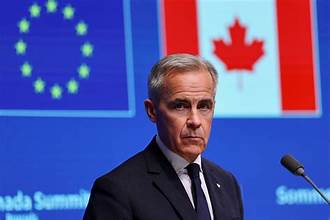
Canadian Prime Minister Mark Carney responded forcefully, accusing the US President of seeking to “destroy” important Canadian industries, including automobile manufacturing, steel, and aluminium.
Despite increasingly sharp rhetoric, there were signs on Tuesday that officials on both sides remained interested in returning to negotiations.
Ontario Premier Doug Ford, who had called Trump a “loser” during a news conference on Monday, subsequently acknowledged that tensions had become heated and emphasised his preference for reaching an agreement.
“Things got a little heated,” Ford told CNN. “But I want to make a deal — a good deal for the American people, a good deal for Canadians.”
The confrontation has also raised fresh questions about the future of the United States-Mexico-Canada Agreement, the continental free-trade framework governing much of the commerce among the three North American countries.
Mexican President Claudia Sheinbaum dispatched Economy Secretary Marcelo Ebrard to Washington for emergency discussions following the collapse of the US-Canada negotiations.
For Canada, however, the immediate strategy is clear: Washington’s tariffs will not go unanswered.
Discover more from Keeping Them Honest
Subscribe to get the latest posts sent to your email.