

By Olusegun Adeniyi
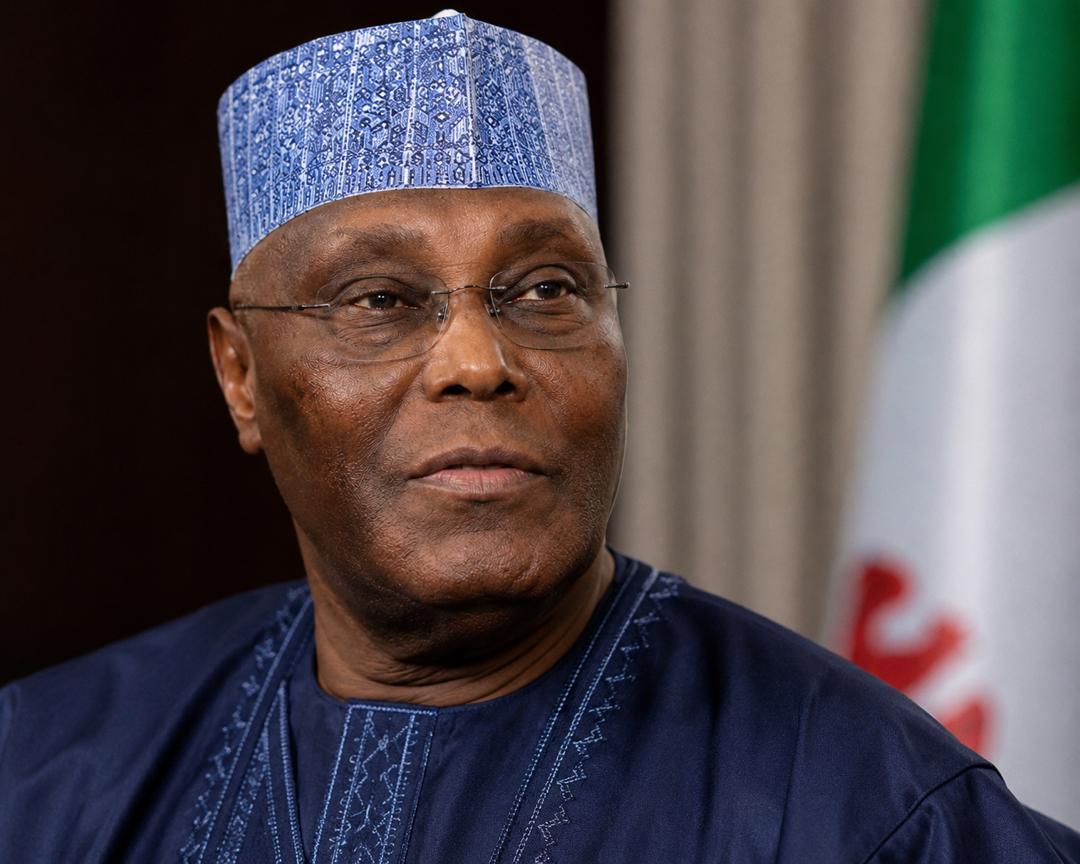
While campaigning for the Peoples Democratic Party (PDP) presidential ticket in the recently concluded 2011 general election, former Vice President Atiku Abubakar came up with what I considered the most fundamental statement I have heard from any Nigerian politician on how to redirect our economy and put public finance on the path of sustainability. He pledged that if elected president, his medium-term (a four-year period) strategy would be to ensure that recurrent expenditure was financed fully with non-oil revenue while every kobo earned from oil revenue would be devoted to investment in infrastructure, security, education and health.
Highlighting his plan, Atiku said: “Oil revenue is highly volatile and exhaustible. We must have a plan to wisely use it to build capacity for the future—invest in infrastructure and in the people—and not consume it today. We would also encourage all state governments to set an agenda and timeline within which they would no longer depend on oil revenue for recurrent expenditure. Our regional governments did not get oil revenue but massively developed the country. We must return to the responsible path. The FGN would develop an incentive system (grants-in-aid) to encourage states which are succeeding in making the transition. This agenda is fundamental to motivating all tiers of government to develop the non-oil sectors of the economy and hence diversify the economy.”
Although I was not in the country at the period Atiku made the proposition, I thought it would set the agenda for the electioneering campaign. I imagined that the media and other political contenders would take on Atiku and in the process create the basis for fighting the election on a contestation of ideas. That never happened. Now that the elections are over, I believe we should reopen the debate which is central to the future of our country…
=======================================================
After one year away on a Fellows Programme in the United States, following the death of my principal, President Umaru Musa Yar’Adua, I returned to Nigeria in June 2011. By then President Goodluck Jonathan had assumed office. And on 29th September of that year, I wrote the foregoing in a column titled, ‘The Atiku Abubakar Formula…1’. It was the beginning of what I planned to be a long series. Unfortunately, after the second part, published a week later on 6th October 2011, I started getting feedback from people in government that I had already launched the 2015 presidential campaign for Atiku! Since that was not my intention, I discontinued the idea.
However, it is noteworthy that at every election season, Atiku always brought out critical national issue for engagement, and we must commend him for it. Before and after the 2015 election, for instance, Atiku canvassed the idea of restructuring the country. “…there is indeed too much concentration of power and resources at the centre. And it is stifling our march to true greatness as a nation and threatening our unity because of all the abuses, inefficiencies, corruption and reactive tensions that it has been generating,” Atiku said in August 2012 while canvassing a review of the structure of the Nigerian federation, preferably along the basis of the current six geopolitical zones as regions and the states as provinces. Four years later in 2016, Atiku reignited the issue: “The call for restructuring is even more relevant today in light of the governance and economic challenges facing us…addressing the flaws in our federation will help us address some of those very economic and security challenges facing this country.”
I have recalled the foregoing against the background of Atiku’s latest pledge to restore fuel subsidy if elected president next year. A politician with his worldview does not suddenly become an apostle of fuel subsidy in the name of helping the poor. But for the first time since raising campaign issues, Atiku now finds one that resonates with many Nigerians. That his new position contradicts what he has earlier stood for is reflected in the fact that even his spokesman tried an extrapolation of ‘removing subsidy and reinstating it again’. Atiku, of course, has doubled down on an idea that is becoming increasingly popular with many Nigerians.
Before I continue, let me reiterate my position on fuel subsidy on which I have written dozens of columns, including once illustrating my point with a story from The Other Room, “Lend Me One from Tomorrow’s”. I have also done a series on a study commissioned in 2008 by the late President Yar’Adua on ‘subsidies and tariffs in Nigeria’ in five critical sectors: Electricity, Petroleum, Education, Health and Agriculture. The main objectives were to determine the effectiveness of subsidies in these sectors, examine the need or otherwise for continuity and finally, suggest the framework for a gradual elimination with the overall aim of improving the general welfare of Nigerians. The report was submitted shortly before Yar’Adua fell ill in 2009 and the rest, as they say, is history.
When on assuming office on 29 May 2023, Tinubu removed fuel subsidy, I endorsed the idea. That position has not changed. But those attacking Atiku also miss the point. As the late Mario Cuomo reminded us, “you campaign in poetry and govern in prose”. From the late President Muhammadu Buhari to Tinubu himself, weaponizing the emotional issues around fuel subsidy removal have become a secure route to Aso Rock. That, I guess, is what Atiku is also doing, and I consider it as no more than sheer hypocrisy for anybody in the ruling All Progressives Congress (APC) or the current administration to blame him. Atiku is only playing them at their game, no matter the pretenses to the contrary, and Nigerians are paying attention to him.
Many of us can still remember that while running for president in 2011, the late Buhari criticised former President Goodluck Jonathan’s proposal to end fuel subsidy, calling it a fraudulent policy. “Who is subsidising who? If anybody told me about subsidy, he is a fraud…the day I have to talk about it, I will invite a petroleum economist to come and tell me who is subsidising Nigerians,” Buhari said while promising to bring down the cost of petrol if elected president. Despite that rhetoric, not only did fuel subsidy payments continue under Buhari but the eight years he spent in office between 2015 and 2023 actually witnessed the highest amount of money expended on it with the figure put at approximately $25 billion (about N35 trillion). And fuel price went up by more than 100 percent under him!
Meanwhile, as perhaps the foremost opposition leader in Nigeria in January 2012, Tinubu had released a strongly worded statement to counter then President Jonathan’s attempt to remove fuel subsidy. Titled, ‘Removal of Oil Subsidy: President Jonathan Breaks Social Contract with the People,’ Tinubu said the Jonathan administration was tossing the people into the depths of the midnight sea. “Government would have us believe that every hardship it manufactures for the people to endure is a good thing. This is a lie. The hardships they thrust upon the poor often bear no other purpose than to keep them poor. This is such a time,” Tinubu wrote. “I am not calling President Jonathan an evil man. I do not believe he is perverse. However, the economic ideas controlling him are so misguided that they have a perverse impact. Because he is a slave to wrong-headed economics, the people will become enslaved to greater misery. This crisis will bear his name and will be his legacy.”
In a way, Atiku is now taking Tinubu at his word. While unveiling details of his proposed Atiku Economic Recovery Plan (AERP) 2027 last week, the opposition African Democratic Congress (ADC) presidential candidate argued that the current administration has failed to adequately account for the financial gains from the removal of the petrol subsidy hence the need for a new intervention. He also made a case about caring for the poor as opposed to helping the rich, which he accuses the Tinubu government of doing: “The government can protect a multibillion-dollar oil investment from risk, yet it says protecting the Nigerian worker from crushing hardship is bad economics. It can bend policy to make every barrel of crude more profitable, but tells a struggling mother that making the litre of petrol she needs to take her children to school more affordable is irresponsible.”
Whatever may be his motivation, not a few Nigerians are delighted that Atiku is hitting Tinubu where it hurts because while the removal of fuel subsidy may have brought more money into government coffers, it has only worsened the plight of the ordinary citizens. More money to the federation account has also encouraged irresponsible behaviour at all levels of government even when most Nigerians are finding life difficult. Yet, to the extent that the decision to end fuel subsidy regime and merge the exchange rates was never going to be cost-free, I had warned this government not to continue with the template of the past.
In my 5 July 2023 column, ‘My Convoy is Longer Than Yours,’ just about five weeks after Tinubu’s inauguration, I used his long convoys and that of the senate president, Godswill Akpabio, that were then trending on social media as a metaphor for profligacy and abuse of public resources that should have no place when millions of Nigerians were going through harrowing times. “It is important for President Tinubu and his handlers not to misread the public mood. That he has used his honeymoon period to strike when the iron is still hot on two critical policy issues may have earned him momentary applause on decisive leadership,” I wrote at a period. “But there are no predictable outcomes for those choices in an environment where several variables are beyond his control. So, there is a need for caution. Not hubris!”
The president obviously paid no attention to the idea of shared sacrifice. The situation is worse in many of the states where the jumbo funds that now come in from FAAC allocations are frittered. After appointing 4,800 special assistants without any specific functions to perform beyond just draining public resources, Governor Lucky Okpebholo of Edo State said it was part of efforts to deepen the participation of APC members in his administration. But Edo is not alone in this recklessness. Despite aggregate revenues to subnational governments increasing from N4.84 trillion in 2022 to N15.53 trillion in 2025, according to the latest report by the Seun Onigbinde-led BudgIT, that has not translated into improved welfare for the people and development of critical infrastructure in many of the 36 states.
Now, let me make something clear. Unlike Atiku, I would never advocate reinstating fuel subsidy even if it were possible. I also know that it is practically impossible to put the subsidy genie back in the bottle given our fiscal situation as a country. But for many of us, the idea of removing fuel subsidy was never to make more money available for irresponsible governance. It is to eliminate waste and corruption and correct the distortions that impede macroeconomic stability in the country. Therefore, the question Atiku is asking—which many other stakeholders are also asking—remains pertinent: Where are the gains of fuel subsidy removal?
For decades, fuel subsidy was the most tangible expression of the Nigerian social contract. Where the state failed to deliver on roads, power, security, or other public services, cheap petrol stood in as a dividend to citizens—the single point at which government presence was felt as a relief rather than as a demand. Yes, it was an inefficient contract and a corrupt one, but the benefits tricked down to the ordinary people. While removing it may have plugged the fiscal leaks; it also cancelled the previous ‘social contract’ to the people without offering an equivalent replacement. That perhaps explains why the sentiment beneath Atiku’s new position is one most Nigerians share, including those who believe the ADC presidential candidate is being driven by political opportunism.
Here is the point the Tinubu handlers fail to understand and demonizing Atiku would not wish it away: A reform is vindicated not by the reported receipts it generates, but by what those receipts translate to in people’s welfare. Therefore, until the gains of the current government reforms arrive at the household, in transport fares, in food prices, and in the cost of keeping small businesses open, fuel subsidy removal will potentially carry a huge political cost for the incumbent president and party in power. That, I believe, is the wager behind Atiku’s subsidy card. And, as we inch towards the 2027 general election, it is a potent one!
• You can follow me on my X (formerly Twitter) handle, @Olusegunverdict and on www.olusegunadeniyi.com
Discover more from Keeping Them Honest
Subscribe to get the latest posts sent to your email.