

By Seun Kolade
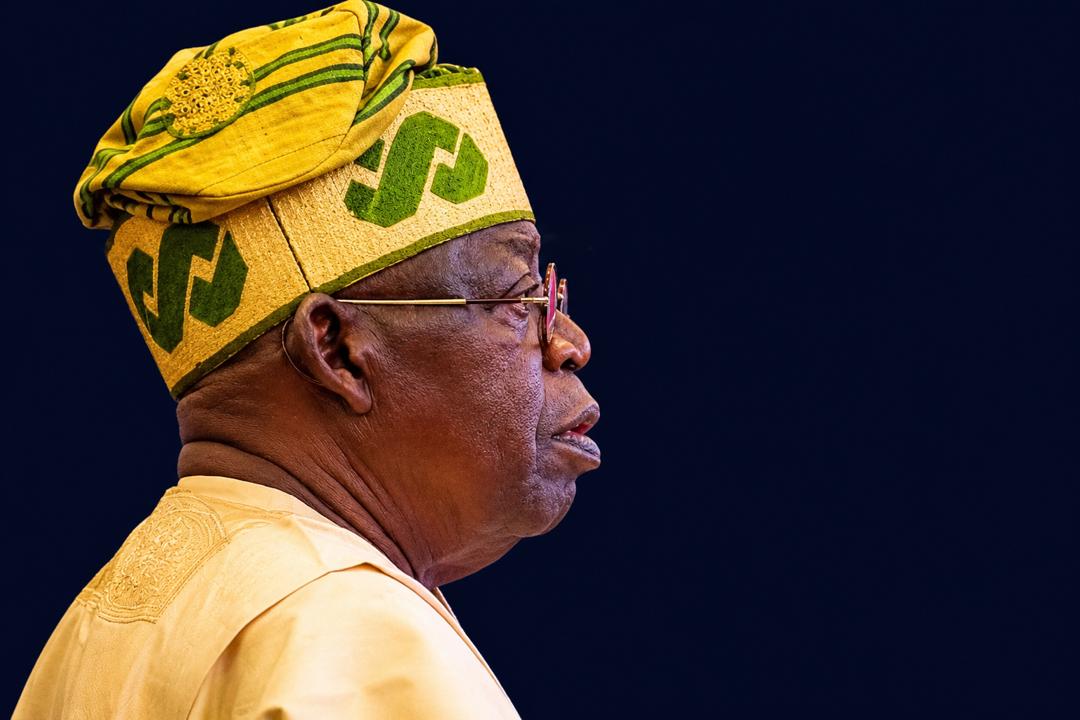
On July 28, 2026, leaders of the Catholic Bishops’ Conference of Nigeria visited President Bola Tinubu at the State House in Abuja. Led by Archbishop Matthew Ndagoso, the delegation raised concerns about insecurity, poverty, tertiary education, credible elections and democratic gains. President Tinubu disagreed with much of their diagnosis, insisting that the economy had stabilised and the security architecture was being repositioned to defeat terrorism, banditry and kidnapping.
Cardinal John Onaiyekan later gave a less harmonious account. Speaking on ARISE News, he said the bishops tried to convey the hardship borne by ordinary Nigerians but found the President resistant to their assessment. Tinubu, in the cardinal’s telling, insisted that the economy was recovering. He also raised the danger that those closest to the President may not carry into the Villa the full weight of suffering outside it. Anyone who knows a thing about Cardinal Onaiyekan knows that he is an equal opportunity critic who has always spoken truth to power across successive governments of various parties.
The presidency reacted sharply. In a response from its communications team, Cardinal Onaiyekan was accused of an “abuse of clerical privilege” for discussing a private audience. The bishops, the presidency argued, had been heard patiently; the President had answered them with facts; and disagreement should not be mistaken for arrogance. It stressed that Tinubu receives intelligence reports and maintains wide contacts.
There is a question about confidentiality. Not every closed-door conversation should be carried into a television studio. The bishops are also not infallible on economics, security or public administration. Their claims may be questioned and rebutted. But disagreement over the country’s condition should not become an accusation that civic interlocutors abused the privilege of being heard.
Indeed, the suggestion that a presidential audience creates an implied debt of silence is troubling. In a democracy, citizens do not receive the privilege of speaking from their leaders; leaders receive the privilege of serving citizens. Hospitality at the State House must not become a velvet gag. Nor should access to the President be treated as a favour whose price is silence whenever a visitor’s account proves inconvenient.
The sharper concern is that this response was not isolated. It increasingly resembles a habit of presidential communication: criticism is examined first for the offence it gives, rather than the evidence it contains. In February, presidential spokesman Bayo Onanuga told opposition parties to stop their “constant lamentation and unwarranted outrage”, describing their allegations as reckless and spurious. When Amnesty International later reported that 10,217 people had been killed during the administration’s first two years, the government disputed the figures, as it was entitled to do, but also warned that the report’s “overly alarming narrative” could damage Nigeria’s image and embolden criminals. Criticism from partisan opponents and non-partisan organisations alike is too often treated as hostility to be repelled.
A government may conclude that criticism is false, exaggerated or politically motivated, and may answer robustly. But if the President had indeed engaged the bishops with facts, the media team should simply have published the counter-evidence and allowed citizens to judge. I am not the only citizen that woud love to see the facts and counter-facts side by side. Instead, what we got from the presidency is wounded entitlement, emotive outbursts and veiled threats of recrimination that only obscured the case it claimed to possess.
Criticism is the smoke alarm of democracy. It may malfunction or be triggered maliciously. But smashing it because the noise is irritating does not put out the fire.
I hasten to say that this is not peculiar to President Tinubu or the APC. Nigerian politicians across party lines frequently bristle at contradiction while cultivating the praise that slowly blinds them. Oyo State Governor Seyi Makinde recently supplied an unintentionally revealing illustration. At his late father’s memorial service, he said his father had been the only person who could look him in the eyes and tell him the truth, even when he did not want to hear it. It was moving, but when you look underneath the surface, it is also an alarming description of political office.
Makinde is now the Allied Peoples’ Movement presidential candidate under a PDP-APM alliance. His relationship with “unwelcome” counsel therefore matters beyond Oyo State. If, among commissioners, advisers, party leaders, civil servants, clerics and associates, only one person could tell a governor an uncomfortable truth, what should Nigerians expect amid the walls and ceremonies of the presidency?
I wonder, for example, if someone around the governor has summoned the courage to tell him that local government autonomy was not merely a “distraction”, as he described the Supreme Court judgment in 2024. Perhaps someone has told him that democratically elected councils should receive and control the federal allocations intended for them, rather than remain financially dependent on governors. Productivity matters, as Makinde argued, but so does institutional accountability. Nigeria cannot strengthen democracy by keeping its lowest tier of government permanently on its knees.
To be fair, Governor Makinde may only have meant that his father’s candour possessed a uniquely intimate quality. Yet the statement resonates because it describes an environment Nigerians recognise fully well. Around many office holders gathers an ecology of courtiers. Truth is filtered, softened and perfumed before it enters the room. Bad news approaches on trembling feet; praise enters without an appointment. Eventually, the leader hears applause clearly and the country only faintly.
This culture produces more than poor decisions. It deforms citizens. Where politicians control jobs, contracts, appointments, scholarships and public resources as though these were personal gifts, citizens learn to approach elected officials not as public servants but as benefactors. Rights are repackaged as favours. Roads built with public money carry the politician’s photograph. Citizens are gradually reduced to beggarly spirits at the mercy of political overlords.
The intellectual damage is equally grave. Societies progress through the iterative process of learning and correction. Every contrary opinion is not wise, but every healthy country needs room for contradiction because error often first appears as certainty surrounded by applause. Paulo Freire captured this contradiction with devastating clarity in Pedagogy of the Oppressed: a government cannot, in the same breath, celebrate democracy and seek to silence the people; nor can it profess humanism while denying citizens the voice, dignity and agency through which their humanity is expressed. Such contradictions are not merely rhetorical; they are moral and consequential. When citizens are discouraged from speaking honestly, or punished through exclusion, intimidation, lost opportunities and reputational attack, the government deprives itself of information it urgently needs. Silence may protect a politician’s ego, but it also shields administrative failure. A country in which nobody can safely tell its leaders they are wrong will eventually discover its mistakes through catastrophe.
This is why independent civil society matters. Churches, mosques, professional associations, unions, universities, community organisations, independent media and civic movements provide alternative centres of knowledge and moral authority. They observe what official reports overlook, carry the voices of people without access, and speak where party actors are constrained by ambition. Their independence is part of democracy’s nervous system: it helps the country feel pain before the wound becomes fatal.
Of course, civil society is not inherently virtuous. Religious and civic organisations can be compromised by patronage, ethnic loyalties, institutional interests or proximity to government. Some discover moral outrage only when their preferred party is outside office; others convert civic platforms into disguised campaign organisations. Credibility requires consistency, evidence and equal standards for friends and foes.
Opposition politicians present an even clearer difficulty. They typically condemn in opponents what they defended while governing, and promise in opposition what they may resist once elected. Criticism then descends into opportunistic theatre: accusation answered by counter-accusation, failure excused by an earlier failure, and every serious question buried beneath tiresome whataboutism. One side does not answer the charge; it merely searches for an older sinner.
Even so, hypocrisy in the mouth of a critic does not make the criticism false. A compromised politician may correctly identify a failure. The credibility of the speaker and the validity of the claim are related, but not identical. Mature debate must ask both: who is speaking, and is what is being said supported by evidence?
That distinction makes non-partisan civic engagement even more important. Nigeria needs institutions capable of criticising the APC without becoming appendages of the ADC, questioning the NDC without becoming propagandists for the APC, and challenging every aspiring leader before access, appointment or fear purchases their silence. The country needs citizens who can speak respectfully without becoming servile, and leaders who can listen without mistaking contradiction for rebellion.
The presidency was entitled to dispute Cardinal Onaiyekan’s account, defend its record and clarify what it regarded as private. What it should avoid is the implication that those received graciously by government must thereafter speak graciously about government. Democracy is not sustained by courtesy alone. Sometimes love of country must arrive carrying an unwelcome report.
Nigeria’s leaders do not need fewer critics. They need better criticism – and the discipline to hear it. Citizens must reject both reckless abuse and servile acquiescence. Truth need not shout obscenities, but neither should it remove its shoes and crawl. The republic will grow only when its leaders understand that respectful criticism is not an insult to authority. Properly received, it is one of authority’s last defences against self-inflicted blindness.
Discover more from Keeping Them Honest
Subscribe to get the latest posts sent to your email.