

…Details How States Can Power Nigeria’s Economic Drive as Oborevwori Places N140 Billion Bet on Delta’s Investment Boom
By Chike Ofili
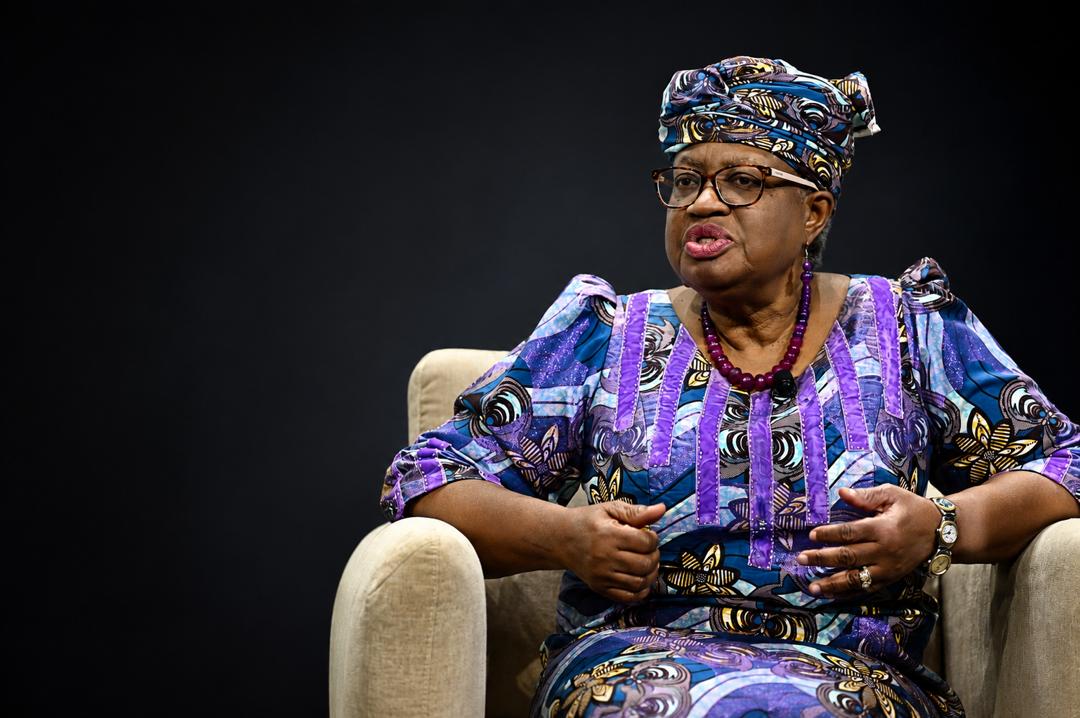
Director-General of the World Trade Organisation (WTO), Ngozi Okonjo-Iweala, has called for a fundamental shift in Nigeria’s economic development strategy, declaring that the country must deliberately build strong industrial and commercial hubs outside Lagos if it is to unlock its full economic potential and compete in an increasingly competitive global marketplace.
Speaking at the Delta State Economic and Investment Summit in Asaba on Monday, Okonjo-Iweala said Nigeria’s future prosperity depends on creating multiple centres of growth across the federation, arguing that the rise of new economic hubs would strengthen, not diminish, Lagos’ position as the country’s commercial capital.
“I am convinced that Delta possesses the ingredients to become Nigeria’s next great industrial hub, standing alongside Lagos as an engine of the national economy,” she said.
“The emergence of a new growth pole here in Delta State would be good for Nigeria as a whole.”
She said global shifts in trade and manufacturing have created a once-in-a-generation opportunity for Nigeria to attract investment, warning that the country must move quickly before those opportunities are captured by competing nations.
“The world is looking for diversification. These opportunities were not available 10 or 15 years ago. The question is whether we will seize them or allow them to go elsewhere,” she said.
Outlining a roadmap for states seeking to become engines of national growth, the WTO chief urged governments to abandon scattered investments and instead focus on sectors where they possess clear comparative advantages.
She advised Delta State to identify two or three priority industries and build complete value chains around them, integrating production, processing, finance, quality standards, and market access.
“Identify two or three areas where Delta has a strong comparative advantage. Focus on those and build the entire value chain—from production to processing, standards, finance, and market access. That is how value is created,” she said.
Okonjo-Iweala also urged the state to make Special Economic Zones the cornerstone of its industrialisation strategy, describing them as one of the most effective development tools available to governments operating with limited fiscal resources.
According to her, such zones can only succeed when backed by reliable electricity, efficient transport infrastructure, ports, digital connectivity, and strong collaboration between state and federal authorities.
She identified the blue economy as another strategic opportunity capable of reducing Nigeria’s dependence on imports while generating employment and export earnings.
“Nigeria imports about 573,000 metric tonnes of fish and fish products worth almost $866 million every year. Delta can become Nigeria’s blue economy hub. Build fisheries, cold chain facilities, port services, and marine logistics,” she stated.
The former Finance Minister also commended Delta State’s record of fiscal discipline, describing it as one of Nigeria’s strongest performers in debt sustainability.
“Keep the fiscal prudence because without it, you will not be able to build the Delta State you want,” she advised.
Backing the state’s industrial ambitions with concrete financial commitments, Governor Sheriff Oborevwori announced a $100 million (about N140 billion) Viability Gap Fund designed to de-risk private sector investments and accelerate industrial development.
“The government has set aside $100 million, approximately N137.8 billion, as Viability Gap Funding to de-risk new investments in the state,” the governor said, pledging the speedy implementation of agreements reached at the summit.
Vice President Kashim Shettima reinforced the message, urging investors to take advantage of the enormous opportunities available across Nigeria’s states.
He said the future of the federation lies in healthy economic competition driven by investment, innovation and comparative advantage rather than political rivalry.
“This is the race we must welcome—a race that proclaims growth over conflict; a race in which the prize is employment, prosperity and human dignity; a race for the future,” Shettima said.
He described Delta as one of Nigeria’s most strategically endowed states, citing its extensive coastline, abundant natural gas reserves, ports, power assets, fertile agricultural land and highly skilled workforce as assets capable of transforming it into a first-order investment destination.
Also speaking, founding Chairman of Seplat Energy, Austin Avuru, urged Delta State to leverage its maritime assets, industrial parks and commercial agriculture to attract large-scale private investment, stressing that sustained competitiveness would depend on deliberate economic diversification and long-term planning.
Discover more from Keeping Them Honest
Subscribe to get the latest posts sent to your email.