

…Approves N215bn CNG rollout, $900m agriculture fund, MSME loans, solar projects, Gboko airstrip for emergency operations
By Orkula Shaagee
The Federal Executive Council (FEC) on Monday approved a sweeping package of loans and investments valued at about $2.96 billion, €200 million and N215 billion, in what the Federal Government says is a major push to lower transport costs, stimulate agriculture, expand electricity access, support small businesses and strengthen security infrastructure across the country.
Among the major approvals is the construction of a N34.4 billion airstrip in Gboko, Benue State, expected to serve as an operational base for security agencies, humanitarian missions and emergency medical services in the North-Central region.
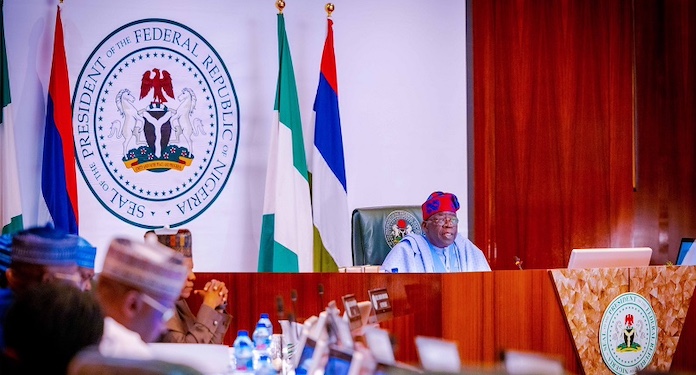
The approvals were made at the FEC meeting chaired by President Bola Tinubu at the Presidential Villa, Abuja.
Briefing State House correspondents after the meeting, the Minister of Finance and Coordinating Minister of the Economy, Mr Taiwo Oyedele, said the Council considered 14 memoranda from the Ministry of Finance, with the decisions grouped under five strategic areas aligned with the administration’s Renewed Hope Agenda.
According to him, the approvals target transportation, agriculture, power, infrastructure development and support for micro, small and medium-sized enterprises (MSMEs), with the aim of stimulating economic growth and improving productivity.
One of the largest approvals is N215 billion to complete projects under the Presidential Compressed Natural Gas (CNG) Initiative.
Oyedele said the investment would finance additional CNG-powered buses, electric vehicles, tricycles, and conversion centres nationwide as part of government efforts to reduce transportation costs for Nigerians.
“The first approval focuses on transportation and how to reduce its cost,” he said, adding that the funding would complete outstanding investments under the CNG programme.
The Council also approved $900 million in financing arrangements for agricultural development.
The facility will support rural technical training, Special Agro-Industrial Processing Zones, and programmes designed to strengthen agricultural value chains, increase processing capacity, and promote value addition across the country.
“Altogether, we have different financing arrangements amounting to 900 million U.S. dollars,” Oyedele stated, noting that the initiative is expected to improve agricultural productivity and provide greater support for farmers.
In the power sector, the FEC approved a $160 million financing package for rural solar energy projects.
The package comprises $150 million from the Islamic Development Bank and $10 million in counterpart funding from Niger State to expand renewable electricity to underserved communities.
The Council equally approved a $1.2 billion financing facility for Section Two of the Sokoto–Badagry Super Highway, one of the Federal Government’s flagship road infrastructure projects.
Oyedele said the highway, which traverses 11 states, would improve connectivity, facilitate trade and logistics, and unlock new economic opportunities across the country.
To support small businesses, the FEC also approved €200 million and $500 million financing through the Development Bank of Nigeria to expand affordable credit to micro, small, and medium-sized enterprises.
“We must continue to support small businesses because supporting them is supporting ourselves,” Oyedele said, expressing optimism that the intervention would improve access to low-cost financing for entrepreneurs and stimulate job creation.
He described the entire package as a strategic investment designed to drive sustainable economic growth and broaden opportunities for Nigerians.
Also briefing journalists, the Minister of Aviation and Aerospace Development, Mr Festus Keyamo, announced that the FEC had approved the construction of the Gboko Airstrip in Benue State at a cost of N34.4 billion, with the contract awarded to CCECC Nigeria Ltd.
Keyamo said Gboko’s strategic location made it critical to both national security and economic development.
According to him, the airstrip will provide a permanent operational base for security agencies tackling growing security challenges across the North-Central region.
“Gboko serves as an important hub for agricultural activity around the Middle Belt and for security agencies confronting challenges in that axis,” he said.
“The airstrip will provide an operational base for security agencies responding to emerging threats in the region.”
He added that the facility would also support humanitarian operations, disaster response, and emergency medical services, describing it as critical infrastructure that would improve the Federal Government’s ability to respond quickly to crises in the region.
Keyamo said the approval underscored the Tinubu administration’s commitment to addressing both security and development challenges through strategic infrastructure investments.