

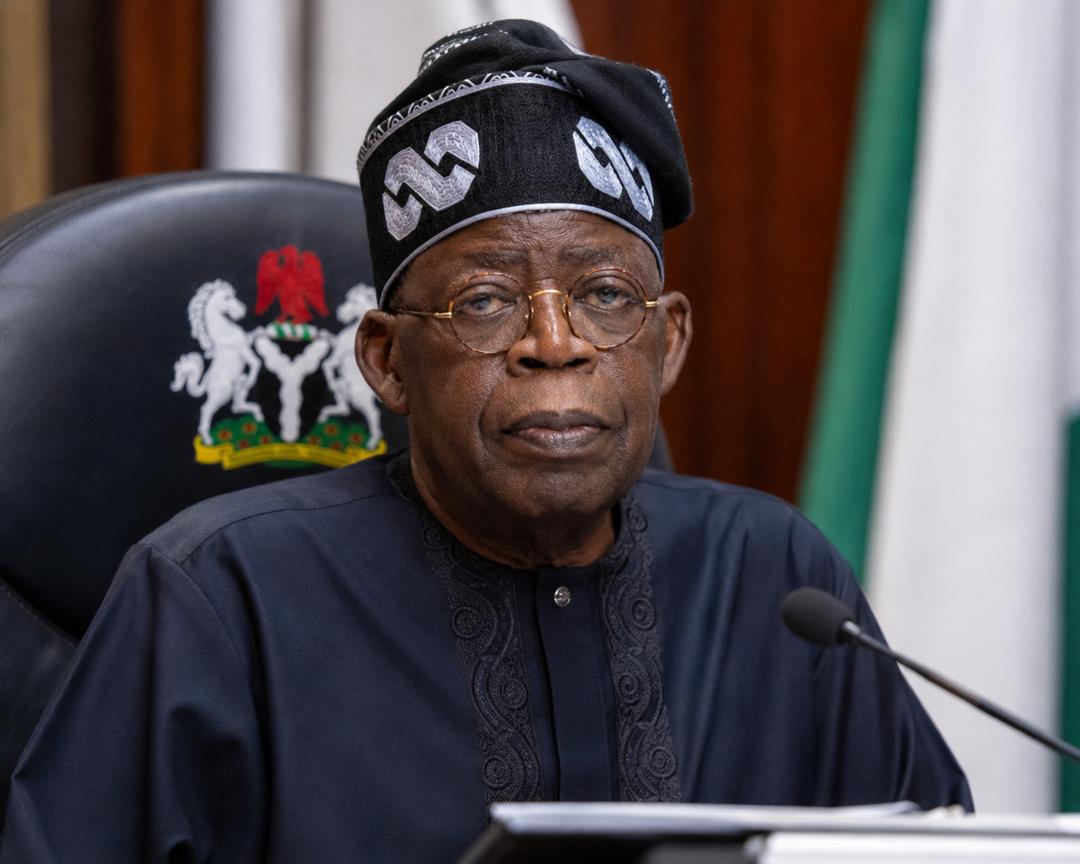
…Seeks Constitutional Backing for Dual Policing System to Tackle Insecurity Nationwide
By Yinka Giwa
President Bola Ahmed Tinubu has formally transmitted a Constitution Alteration Bill to the National Assembly seeking the establishment of state police, in what could become one of the most far-reaching security reforms since Nigeria’s return to democratic rule in 1999.
The proposed legislation, which was read on the floor of the Senate on Tuesday by Senate President Godswill Akpabio, seeks to amend relevant provisions of the 1999 Constitution to create a legal framework for a dual policing structure that would enable states to establish and operate their own police services alongside the Nigeria Police Force.
In a letter dated June 15, 2026, President Tinubu described the proposed constitutional amendment as a critical component of his administration’s efforts to overhaul Nigeria’s security architecture in response to evolving security threats, including terrorism, banditry, kidnapping, and other violent crimes.
According to the President, the proposed arrangement would deepen community participation in policing and allow local authorities to play more active roles in safeguarding lives and property within their jurisdictions.
“The proposed legislation is a critical component of our administration’s strategy to reorganise Nigeria’s security architecture to better protect our citizens,” Tinubu stated, expressing confidence that the Senate would expedite consideration of the bill.
The President noted that the proposal builds upon extensive legislative work already undertaken by both chambers of the National Assembly on the issue and incorporates additional safeguards aimed at ensuring the effective implementation of a state policing framework.
“This bill builds on the significant work already done in this regard by the House of Representatives and the Senate and incorporates additional safeguards to ensure that the creation of a dual policing structure to address our nation’s evolving security challenges will be achieved quickly and effectively to the benefit of all Nigerians,” he said.
The move comes barely weeks after the Senate passed an executive bill on state police for second reading, signalling growing consensus among policymakers on the need to decentralise policing powers as part of efforts to combat insecurity.
Announcing the presidential communication, Senate President Akpabio described the initiative as “epoch-making,” arguing that the establishment of state police would significantly strengthen grassroots intelligence gathering and community-based security operations.
According to him, residents of local communities are often better positioned to identify suspicious activities, strange movements, and criminal elements within their environments before such threats escalate into major security incidents.
He said the proposed framework would empower communities to work more closely with security agencies and provide timely intelligence capable of preventing attacks before they occur.
“You will know when foreigners infiltrate Nigeria and alert security agencies so they can react proactively rather than reactively,” Akpabio stated.
The latest development is the culmination of months of advocacy by the Tinubu administration for constitutional reforms aimed at granting states greater responsibility for internal security.
In February, the President had formally urged the National Assembly to amend the Constitution to pave the way for state police, arguing that the centralised policing structure inherited from decades of military rule had become inadequate for addressing contemporary security challenges.
The issue also featured prominently in Tinubu’s Democracy Day address earlier this month, during which he reiterated his administration’s determination to confront terrorists, bandits, and criminal networks across the country.
The President disclosed that security forces had neutralised more than 13,000 terrorists over the previous year while recording significant reductions in terrorism-related fatalities.
For decades, the debate over state police has remained one of the most contentious issues in Nigeria’s constitutional reform discourse.
Supporters of the initiative argue that a decentralised policing system would improve intelligence gathering, strengthen community policing, accelerate response times during emergencies, and enable states to address peculiar security challenges more effectively.
They contend that governors, local authorities, and community leaders possess deeper knowledge of their environments than centrally deployed federal officers and are therefore better positioned to combat crime and insecurity at the grassroots level.
Opponents, however, have repeatedly warned against the possible abuse of state police by political officeholders. Critics fear that governors could deploy state-controlled police formations against political opponents, suppress dissent, or influence electoral processes.
Others have raised concerns about funding, command structures, recruitment standards, and the potential emergence of rival security institutions capable of deepening political and ethnic tensions.
As a constitutional amendment, the proposal faces a rigorous legislative process before it can become law. It must secure the support of at least two-thirds of members of both the Senate and the House of Representatives before being transmitted to the 36 State Houses of Assembly.
The amendment would then require approval by no fewer than 24 state legislatures before being returned to the President for assent.
If eventually enacted, the legislation would fundamentally reshape Nigeria’s security landscape by introducing a multi-layered policing structure in which federal and state police agencies operate within constitutionally defined jurisdictions.
The Senate is expected to commence detailed deliberations on the bill in the coming weeks, including stakeholder consultations and public hearings, as lawmakers weigh what many observers consider one of the most consequential security reform proposals in the country’s democratic history.
Discover more from Keeping Them Honest
Subscribe to get the latest posts sent to your email.