

…Again, Atiku Tackles FG Over Security Crisis as CISLAC Demands Probe of Trillions Spent
By Abu Adamu
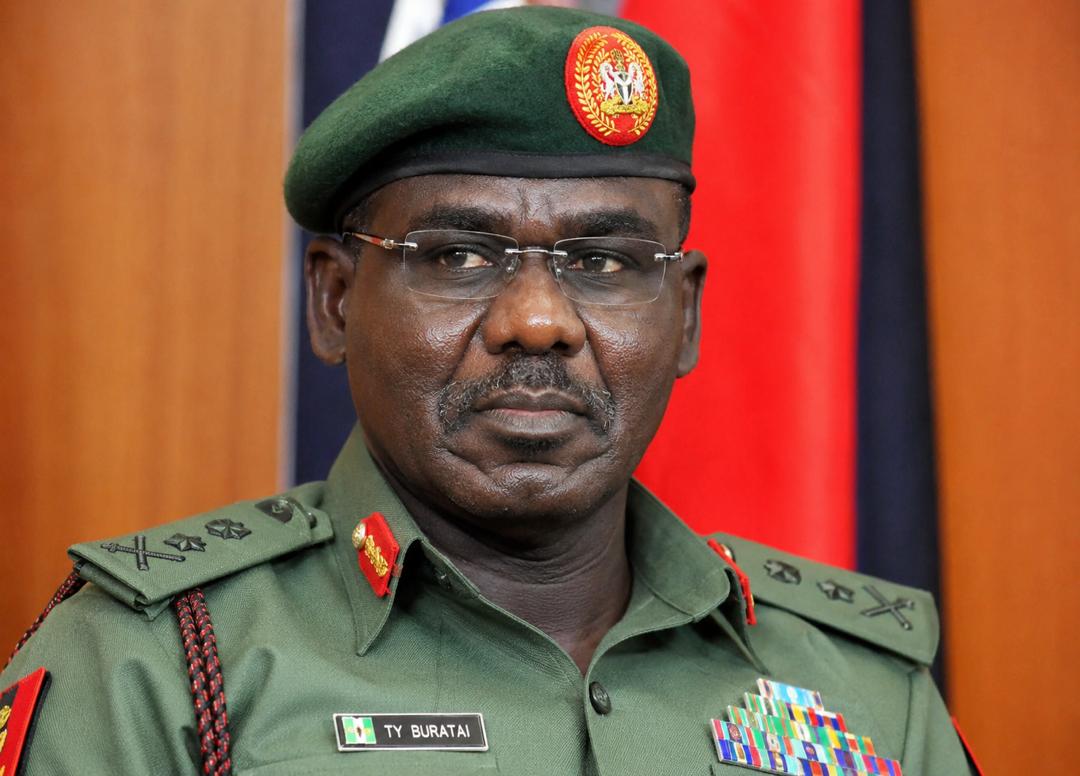
The worsening insecurity across Nigeria has triggered fresh concerns over the nation’s safety architecture, with former Chief of Army Staff, Lt.-Gen. Tukur Buratai (retd.), warning that governors, ministers and other top political office holders could become the next targets of bandits and terrorists if urgent action is not taken.
Buratai’s warning came as former Vice President Atiku Abubakar launched a scathing attack on the Federal Government following the death of retired Major General Abubakar Rabe in bandits’ captivity, while the Civil Society Legislative Advocacy Centre (CISLAC) called for an independent investigation into the trillions of naira spent on defence amid escalating insecurity.
General Rabe, a former Army spokesman and Director of Defence Information, was abducted alongside his wife in Katsina State on May 30, 2026. Reports indicated that he died in captivity after suffering complications arising from diabetes and hypertension. His wife remains in the custody of the kidnappers.
Reacting to the development, Atiku described the retired general’s death as a devastating indictment of the Tinubu administration’s handling of security, saying it underscored the failure of the state to protect even those who had dedicated their lives to defending the country.
“It is with profound sadness and deep anger that we mourn the death of retired Major General Abubakar Rabe, who tragically passed away while in the captivity of bandits,” Atiku said in a statement on Sunday.
According to him, Rabe’s death demonstrated how emboldened criminal groups had become and highlighted the vulnerability of all Nigerians, irrespective of status or background.
“General Rabe devoted the better part of his life to defending Nigeria. That such a man could die in the hands of criminals is both heartbreaking and unacceptable,” he stated.
The former vice president said the incident was not isolated, noting that several military officers and prominent Nigerians had recently fallen victim to kidnappers, bandits, and terrorists.
“The message being sent is dangerous: those who once defended the nation can no longer rely on the nation for protection,” Atiku warned.
He also linked Rabe’s death to renewed terrorist attacks in Borno State, where gunmen reportedly razed primary and secondary schools in the Kautikari community in Chibok Local Government Area.
Describing Chibok as a “national scar,” Atiku said the attack reopened painful memories of the 2014 abduction of more than 270 schoolgirls by Boko Haram.
“The death of General Rabe and the burning of schools in Chibok on the same day are not isolated incidents. Together, they tell the story of a nation under siege and a government that is steadily allowing hard-won security gains to slip away,” he said.
Atiku further lamented that about 90 schoolchildren and teachers abducted in Oyo and Borno states since mid-May remained in captivity, insisting that every school destroyed and every citizen abducted represented a failure of governance.
He renewed his call for the declaration of a state of emergency on security, arguing that routine condemnations and official assurances had failed to stem the tide of violence.
“Empty promises, propaganda, and routine condemnations are no longer enough. Nigerians deserve decisive and result-oriented action that will dismantle criminal networks and restore confidence in the capacity of the state to protect lives and property,” he said.
Adding his voice, Buratai said the abduction and death of a retired major general marked a dangerous turning point in Nigeria’s security crisis and should serve as a wake-up call for authorities.
“When a general falls into the hands of non-state actors, it signals a serious erosion of tactical deterrence. If this trend continues unchecked, the next targets may not be soldiers or civilians alone. They could include ministers, senators, and even state governors,” he warned.
The former army chief recalled that he had predicted in 2021 that insurgency and banditry could persist for up to two decades if decisive measures were not implemented, adding that recent developments appeared to validate those fears.
Buratai argued that insurgents and bandits now operate with increasingly sophisticated intelligence networks, superior mobility, and access to heavy weapons, making them a growing threat to state authority.
He called on the Federal Government to abandon what he described as ineffective approaches, including negotiations with criminal groups, and instead launch a comprehensive military and intelligence offensive against terrorist and bandit networks.
The former Nigerian ambassador to the Benin Republic also proposed the creation of a National Emergency Command with direct operational control over all security agencies operating in high-risk areas.
“Insecurity is no longer a regional problem; it is a national emergency,” he said, adding that the proposed command should report directly to the President and be empowered to dismantle criminal strongholds.
Buratai further advocated a crackdown on financiers and collaborators of criminal groups, including illegal miners, ransom negotiators, and local informants, stressing that banditry survives on extensive support networks that must be dismantled.
He urged state governors to play a more active role in security management by strengthening community intelligence systems, supporting vetted vigilante groups, and advancing state policing initiatives.
Warning against complacency, Buratai said the country risked facing even graver security challenges if authorities failed to act decisively.
“If we do not radically change our approach today, the headlines of tomorrow may make today’s tragedy seem like only a warning,” he cautioned.
Meanwhile, CISLAC described General Rabe’s death as a tragic reflection of Nigeria’s deepening security crisis and demanded greater accountability in the management of defence resources.
In a statement signed by its Executive Director, Auwal Musa Rafsanjani, the organisation called for the declaration of a national emergency on insecurity and questioned the effectiveness of the huge sums allocated to defence over the years.
“The death of a retired major general in captivity is not only a personal tragedy but a national one. If a decorated military officer who dedicated his life to defending Nigeria can fall victim to bandits, then ordinary Nigerians face even greater risk,” Rafsanjani said.
CISLAC noted that despite President Bola Tinubu’s disclosure that N5.41 trillion had been allocated to defence and security in the 2026 budget—the largest security allocation in Nigeria’s history—kidnappings, banditry, and terrorist attacks continued unabated.
The organisation therefore demanded a comprehensive and independent audit of defence spending and security votes at both federal and state levels, insisting that Nigerians deserved answers on why insecurity remained pervasive despite unprecedented financial commitments.
Rafsanjani also criticised what he described as weak intelligence coordination, systemic failures, and poor accountability within the security sector, while calling on the National Assembly to intensify oversight of security expenditures and outcomes.
According to CISLAC, the death of General Rabe should serve as a catalyst for urgent reforms aimed at restoring public confidence, improving intelligence gathering, strengthening security institutions, and ending the cycle of violence threatening communities across the country.
Discover more from Keeping Them Honest
Subscribe to get the latest posts sent to your email.