

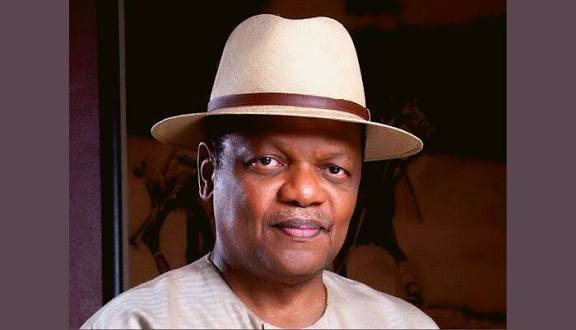
…Peterside warns against unlawful detention, while Fani-Kayode Insists Ex-Gov.Has Questions to Answer
By Jeremy Fregene
A sharp public clash has erupted between billionaire banker Atedo Peterside and former Aviation Minister Femi Fani-Kayode over the detention and political controversies surrounding former Kaduna State governor Nasir El-Rufai, highlighting deep divisions over the rule of law, accountability, and national security.
Peterside, founder of Stanbic IBTC Bank Plc and the Anap Foundation, ignited the latest round of debate after condemning what he described as the unlawful detention of El-Rufai by Nigerian security agencies.
In a strongly worded statement posted on X on Sunday, the banker accused agencies including the Independent Corrupt Practices and Other Related Offences Commission (ICPC), the Department of State Services (DSS), and the Economic and Financial Crimes Commission (EFCC) of acting in concert to hold the former governor without formally charging him to court.
“Some of us have watched in disbelief as government agencies that we respected, such as the ICPC, DSS, and EFCC, appear to have conspired to incarcerate El-Rufai without charging him to court, thereby violating the spirit and letter of the Nigerian Constitution,” Peterside wrote.
The prominent financier acknowledged that he had previously disagreed sharply with El-Rufai during his tenure as governor, particularly over the 2019 detention of Islamic Movement of Nigeria leader Sheikh Ibrahim El-Zakzaky. Nevertheless, he said those past disagreements did not justify remaining silent in the face of what he considers a breach of constitutional safeguards.
“Even though I disagreed with El-Rufai as Kaduna State Governor over El-Zakzaky’s 2019 detention, I will still speak out against those ill-treating him today. Two wrongs do not make a right,” Peterside added.
Framing his intervention as one rooted in principle rather than politics, Peterside said he had historically spoken out whenever prominent Nigerians were detained without due process. He cited cases involving figures such as MKO Abiola, former President Olusegun Obasanjo, lawyer Dele Farotimi, and activist Omoyele Sowore.
“If I am ever incarcerated, I will be at peace with my Lord, even if nobody calls out the authorities on my behalf,” he said, ending his remarks with a prayer for Nigeria’s deliverance from what he described as wicked leadership.
El-Rufai himself has rejected the investigations targeting him, insisting that the probe is politically motivated.
But while Peterside’s comments framed the issue as a question of constitutional rights and due process, Fani-Kayode has taken a sharply different view, arguing that the former governor’s controversial record demands closer scrutiny rather than sympathy.
In a lengthy response titled “More Questions for Nasir El-Rufai,” the former minister said he was still awaiting answers to issues he previously raised about El-Rufai’s actions in public office.
Although he expressed sympathy for reports that the detained former governor suffered a nosebleed while in custody, Fani-Kayode insisted that El-Rufai still had many questions to answer once released.
The former minister revisited a series of allegations concerning El-Rufai’s tenure as Minister of the Federal Capital Territory and later as governor of Kaduna State, accusing him of authorising large-scale demolitions that left thousands displaced.
According to Fani-Kayode, the demolitions included homes, shanties, and buildings allegedly belonging to poor residents and religious communities. He claimed that some of the structures destroyed included orphanages and facilities linked to the Islamic Movement of Nigeria, actions critics at the time described as vindictive.
Among the incidents he highlighted were the demolition of houses in the Gbagyi Villa community in Kaduna just days before El-Rufai left office in May 2023, as well as the destruction of structures associated with the Shi’ite movement in several areas, including Kawo, Rigasa, and Tudun Wada.
Fani-Kayode also accused the former governor of policies he described as discriminatory, including restrictions affecting Christian religious activities and pilgrimages during his time in office.
Beyond domestic policy controversies, the former minister raised broader national security concerns stemming from statements allegedly made by El-Rufai about surveillance of government officials and alleged intelligence operations.
He suggested that such claims, if true, could raise serious questions about possible espionage activities and the role of individuals linked to the former governor.
Fani-Kayode further argued that petitions from various groups in Kaduna had influenced the Senate’s earlier decision to reject El-Rufai’s ministerial nomination under President Bola Tinubu’s administration, dismissing claims that the outcome resulted from political conspiracies.
While stopping short of making direct accusations, the former minister said the situation had moved beyond routine political disputes and now involved issues that could potentially affect national security.
The controversy comes amid a series of dramatic developments surrounding El-Rufai in recent weeks. The former governor was reportedly intercepted by security operatives upon his return to Nigeria from Egypt, where he had travelled for private engagements, in what sources described as an attempt by anti-graft investigators to question him over allegations linked to his time in public office.
He was subsequently taken in by the Economic and Financial Crimes Commission for questioning and later transferred between different security agencies, including the Department of State Services and the Independent Corrupt Practices and Other Related Offences Commission, as investigations reportedly expanded into allegations ranging from corruption to matters touching on national security.