

…Tinubu Hails Victory, Atiku Cries Foul
…Ex-Buhari Aide: Pattern Predicts ADC Victory in 2027
By Franklin Adole
The All Progressives Congress (APC) emerged dominant in Saturday’s 2026 Federal Capital Territory (FCT) Area Council elections, sweeping key chairmanship and councillorship seats across the six councils, but the outcome has been clouded by not unexpected allegations of manipulation circulating on social media and sharp criticism from opposition leaders.
The elections, conducted by the Independent National Electoral Commission (INEC), covered chairmanship positions in AMAC, Bwari, Kuje, Gwagwalada, Kwali and Abaji, alongside 62 councillorship seats. The polls were closely watched as a gauge of grassroots strength ahead of the next general election cycle.
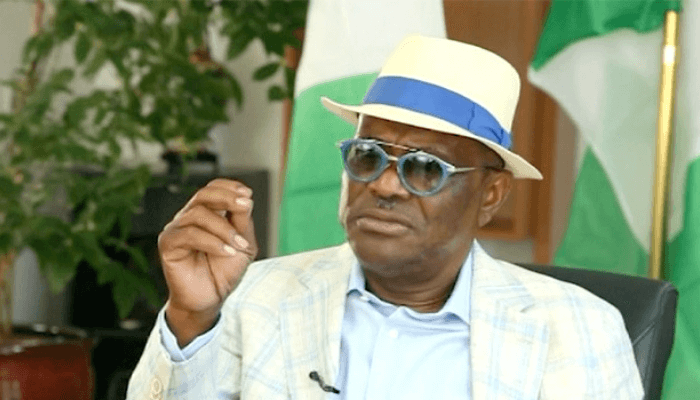
FCT Minister Nyesom Wike described the exercise as peaceful, free and credible, stating that the results showed residents of the capital could not be swayed by what he termed “emergency democrats.” He credited the performance of the APC to the leadership of President Bola Ahmed Tinubu and the administration’s infrastructure drive under the Renewed Hope Agenda.
President Tinubu, in a State House statement, congratulated winners in the FCT as well as in Kano and Rivers by-elections, praising INEC, security agencies and voters for what he called a peaceful and successful process. He urged victorious candidates to serve with humility and described the outcome as further strengthening Nigeria’s democratic institutions.
However, the results immediately drew strong objections from former Vice President Atiku Abubakar, a chieftain of the African Democratic Congress (ADC). Atiku cited what he described as abysmally low voter turnout, particularly in AMAC, as evidence of declining public confidence in the electoral process. He warned that shrinking civic participation signalled deeper democratic distress and called for opposition forces to unite in defence of pluralism.
Beyond formal political statements, some of the most detailed allegations of electoral malpractice emerged from social media. An X user, posting under the handle @felixherbt, outlined what he described as a “systematic analysis” of how the FCT elections were allegedly rigged — claims that remain unverified as of press time.
According to the user’s account, the alleged manipulation did not occur at polling units but at collation centres. He claimed that even where opposition candidates won at individual polling units and results were signed by National Youth Service Corps (NYSC) ad hoc officials, those outcomes were allegedly altered during collation.
The user alleged a sequence in which signed result sheets were transmitted to returning officers and taken to collation centres “dominated by APC loyalists and INEC riggers,” where figures were purportedly rewritten in favour of the ruling party. He further claimed that such alterations were typically carried out at night, after voters had left polling units under the assumption that earlier announced results would stand.
In his account, revised figures were allegedly endorsed with new signatures before final declaration, with no opportunity for objections to be entertained at collation centres. The user also asserted, without presenting documentary evidence, that once declared, such results could only be challenged in court, where he alleged the legal framework effectively shields the officially announced figures.
These claims have not been substantiated by independent observers, and no formal evidence has been publicly produced to confirm systematic rewriting of results. INEC has not issued a specific response to the social media thread but had earlier described the elections as properly conducted.
Civil society organisation Yiaga Africa reported that while the elections were generally peaceful, there were logistical lapses, delayed commencement of voting in some areas and confusion arising from polling unit reallocations. However, its preliminary statement focused on process observations and did not allege systemic rigging.
In a contrasting political reaction, former presidential aide Lauretta Onochie invoked electoral history to argue that council-level outcomes do not necessarily predict national results. Referencing the APC’s loss in Abuja in 2014 before its 2015 presidential victory, she suggested that the pattern could reverse, projecting that the ADC might still capture the presidency in 2027 despite its FCT setbacks.
Political analysts and election observers say the sharply divergent narratives underscore the growing contest over public trust in Nigeria’s electoral system. While the APC and the Presidency view the results as validation of governance and grassroots strength in the capital, opposition figures and segments of the electorate argue that unanswered questions about collation procedures and voter participation could continue to cast a shadow over the credibility of the polls and shape political alignments ahead of 2027.
Discover more from Keeping Them Honest
Subscribe to get the latest posts sent to your email.