

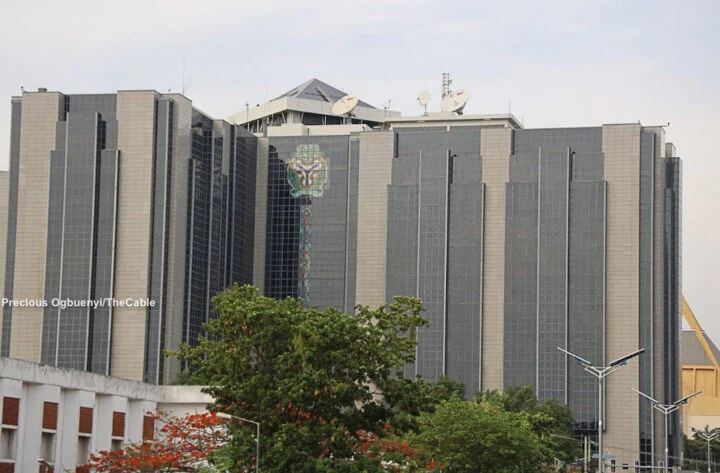
The Central Bank of Nigeria has authorised licensed Bureau De Change operators to purchase up to $150,000 per week from the Nigerian Foreign Exchange Market, a move aimed at boosting liquidity in the retail segment and easing pressure from a widening gap between official and parallel market rates.
The approval was conveyed in a circular dated Feb. 10 and signed by the Director of the Trade and Exchange Department, Musa Nakorji. It was addressed to authorised dealer banks and market participants.
Under the directive, all duly licensed BDCs may source foreign exchange through any authorised dealer bank at the prevailing market rate. The central bank said the measure is designed to ensure adequate liquidity for legitimate end-user demand in the retail market.
“To ensure the availability of adequate foreign exchange liquidity in the retail segment of the foreign exchange market to meet the legitimate needs of end users, this is to inform market participants that all BDCs that are duly licensed by the CBN are allowed to access foreign exchange from the NFEM through any Authorised Dealer of their choice, at the prevailing exchange rate,” the circular said.
The policy shift comes as the spread between official and parallel market exchange rates recently widened beyond N90, the largest gap in three years, underscoring persistent supply constraints and speculative pressures in Africa’s largest economy.
The central bank’s latest intervention signals a recalibration of its approach to the BDC segment, which has oscillated between restriction and re-engagement in recent years. By permitting controlled access to the official market, the CBN appears to be seeking to channel retail demand away from the informal market while tightening oversight to deter round-tripping and hoarding.
Access to the weekly allocation is subject to strict compliance conditions. Authorised dealer banks must conduct full Know Your Customer checks and due diligence in line with existing regulations and internal risk management frameworks before executing transactions with BDCs. Sales must not exceed the $150,000 weekly cap per operator.
In tandem with expanded access, the central bank introduced reinforced reporting and settlement requirements. All licensed BDCs must render electronic returns to the CBN accurately and within prescribed timelines. The apex bank warned that operators are not permitted to warehouse foreign exchange purchased from the market.
Any unutilised balances must be resold within 24 hours. “Any unutilised balances are expected to be sold back to the market within 24 hours. BDCs are not permitted to keep funds purchased from NFEM in their positions,” the circular said.
The CBN further directed that all BDC foreign exchange transactions be conducted through settlement accounts held with licensed financial institutions. Third-party transactions are prohibited. Cash settlements are capped at 25 percent of the value of each transaction, a measure intended to limit opacity and enhance traceability.
The bank clarified that all existing BDC guidelines remain in force, reinforcing a regulatory stance that combines broader participation with tighter supervision.
The decision follows months of strain within the retail forex sub-sector. In October 2025, several licensed BDC operators warned that prolonged suspension of dollar sales from official sources had pushed many to the brink of closure. Operators cited declining revenues and mounting overheads, including staff salaries, licensing fees and compliance costs.
The sector has also faced uncertainty linked to recapitalisation requirements and ongoing regulatory reforms intended to consolidate and formalise operations. Industry participants have argued that without consistent access to official supply, BDCs are unable to compete effectively with informal market dealers, contributing to volatility in the parallel segment.
By reopening a controlled window for dollar purchases, the central bank is attempting to restore a measure of stability while retaining guardrails against speculative excess. Analysts say the effectiveness of the measure will depend on sustained supply, disciplined enforcement and broader macroeconomic conditions, including oil receipts and capital inflows.
Nigeria has grappled with chronic foreign exchange shortages in recent years, driven by weak oil output, declining reserves at various points and structural demand pressures. Authorities have introduced a series of reforms aimed at liberalising the market, improving price discovery and attracting foreign investment. Yet volatility has persisted, with the parallel market often serving as a barometer of underlying liquidity stress.
Market participants will be watching closely to assess whether the $150,000 weekly cap per operator provides sufficient depth to influence retail pricing and compress the spread with the official rate. If effectively implemented, the measure could temper speculative demand and reduce incentives for arbitrage between segments.
For now, the CBN’s directive marks a renewed attempt to balance market access with regulatory discipline, as policymakers seek to steady the naira and reinforce confidence in the formal foreign exchange framework.
Discover more from Keeping Them Honest
Subscribe to get the latest posts sent to your email.