

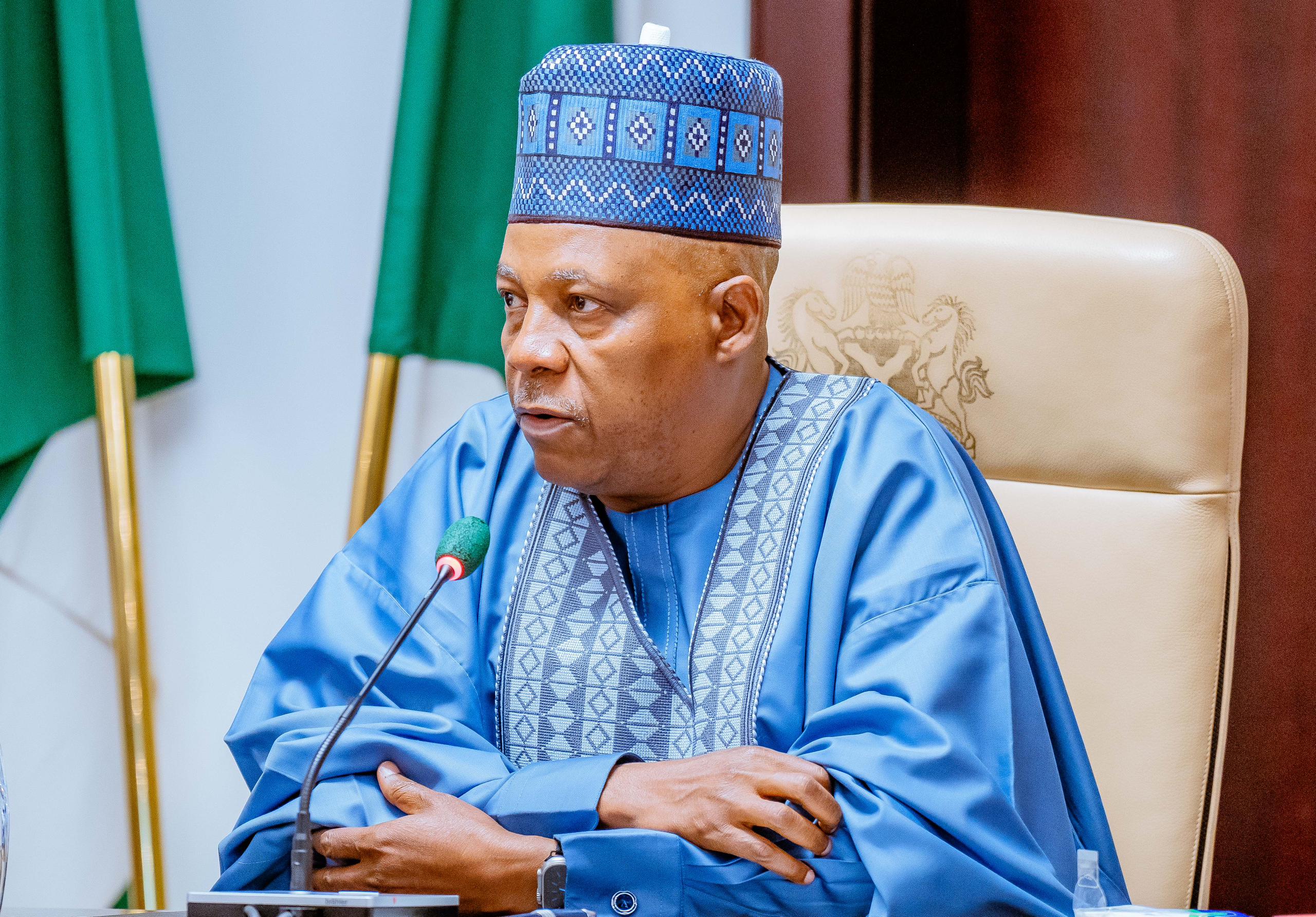
…VP Shettima-led MoU with Six Top bodies Targets Jobs, MSME Growth and Economy
By Jeremy Fregene
In one of the most ambitious human-capital interventions of the Tinubu administration, the Federal Government has launched a free nationwide programme to train 10 million Nigerians in financial inclusion, literacy and digital enterprise skills, an effort officials say could directly impact job creation, MSME growth, access to credit and long-term economic expansion.
The initiative, flagged off on Monday at the Presidential Villa, Abuja, is being implemented through the Office of the Vice President and the Presidential Committee on Economic and Financial Inclusion (PreCEFI), chaired by Vice President Kashim Shettima. It is anchored on a newly signed Memorandum of Understanding (MoU) between the Federal Government and six major professional bodies in Nigeria’s financial and enterprise ecosystem.
The bodies are the Institute of Chartered Accountants of Nigeria (ICAN), Chartered Institute of Bankers of Nigeria (CIBN), Chartered Institute of Stockbrokers (CIS), National Institute of Credit Administration (NICA), Chartered Risk Management Institute (CRMI), and the Nigeria Institute of Innovation and Entrepreneurship (NIIE).
In real economic terms, the programme is designed to move millions of Nigerians, particularly women and young people, from informal, low-productivity activity into financially literate, digitally enabled and credit-ready participants in the economy. Government officials say this would improve MSME formalisation, expand access to finance, reduce credit risk, strengthen consumer protection and ultimately widen the country’s tax and investment base.
Speaking on behalf of President Bola Ahmed Tinubu, Vice President Shettima said the initiative goes beyond social policy and should be seen as an economic infrastructure investment.
“This is more than a formal agreement. It is a strategic national investment in capacity as infrastructure—the human, institutional and ethical foundations upon which inclusive growth must rest,” he said.
According to Shettima, Nigeria cannot realistically aspire to a one-trillion-dollar economy while its workforce lacks the skills required to operate modern financial systems, manage risk, access capital or build sustainable enterprises. He noted that financial inclusion is not achieved by opening accounts alone, but by equipping citizens and institutions with the competence and trust needed to use financial systems productively.
Under the MoU, the professional bodies will jointly design training programmes, certification pathways, digital skills initiatives and mentorship platforms aimed at strengthening Nigeria’s financial and enterprise workforce. The framework also provides for policy dialogue and standard-setting that align professional practice with national inclusion goals.
Officials say this approach is expected to improve how small businesses are assessed for credit, reduce over-reliance on collateral, deepen participation in capital markets and help young innovators translate ideas into viable enterprises.
Shettima stressed that prioritising women and youths is central to the programme, warning that Nigeria’s much-touted demographic dividend will remain unrealised without deliberate skills development for its largest population groups.
“Without accountants who understand MSME formalisation, credit administrators who can assess risk beyond collateral, bankers who embed consumer protection, risk professionals who anticipate digital threats, and innovators who can translate ideas into enterprises, inclusion remains a slogan rather than a system,” he said.
Earlier, ICAN President, Mallam Haruna Nma Yahaya, described the programme as a timely complement to the Federal Government’s ongoing economic reforms, saying improved skills and financial literacy were critical to sustaining recent gains. He pledged the full professional support of ICAN and the other bodies involved.
Technical partners, WAWU Africa, said they were ready to provide the digital platforms and infrastructure required to scale the training nationwide.
Also speaking, the Technical Adviser to the President on Economic and Financial Inclusion, Dr. Nurudeen Abubakar Zauro, said the initiative responds to a deeper form of exclusion in Nigeria, limited skills and weak institutional capacity, which often persists even where financial infrastructure exists.
The formal signing of the MoU marked the high point of the event, with the Vice President officially declaring the commencement of the free training programme nationwide, with priority for women and youths.
For Nigeria’s economy, the success of the programme could mean a larger pool of bankable entrepreneurs, safer lending practices, deeper capital markets and a workforce better prepared for a digital financial future: outcomes the government believes are essential for sustainable growth.
Discover more from Keeping Them Honest
Subscribe to get the latest posts sent to your email.