

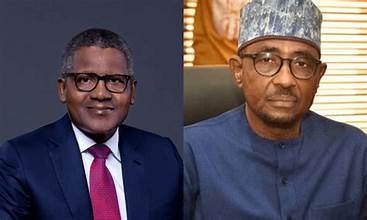
…Fires NMDPRA’s Farouk Ahmed, NUPRC’s Gbenga Komolafe; Names Replacements
…Ahmed Denies Viral Statement Calling For Open Probe of His Finances
By Franklin Adole
President Bola Tinubu has carried out a major shake-up of Nigeria’s oil and gas regulatory leadership, removing the heads of the Nigerian Midstream and Downstream Petroleum Regulatory Authority (NMDPRA) and the Nigerian Upstream Petroleum Regulatory Commission (NUPRC), in a move that follows high-profile corruption allegations raised by billionaire industrialist Aliko Dangote.
Farouk Ahmed, Chief Executive Officer of the NMDPRA, and Gbenga Komolafe, Chief Executive of the NUPRC, have both exited office, barely 24 hours after Dangote publicly accused Ahmed of corruption, triggering nationwide controversy and regulatory scrutiny.
Presidential spokesman, Bayo Onanuga, announced the changes on Wednesday, stating that President Tinubu has forwarded the names of new chief executives to the Senate for confirmation.
According to the presidency, Tinubu has requested expedited Senate approval for Oritsemeyiwa Amanorisewo Eyesan as the new Chief Executive Officer of the NUPRC and Engineer Saidu Aliyu Mohammed as Chief Executive Officer of the NMDPRA.
“The two nominees are seasoned professionals in the oil and gas industry,” Onanuga said, adding that the appointments are part of the administration’s commitment to strengthening governance and credibility in the energy sector.
Ahmed’s removal comes amid a storm of allegations that he spent about $5 million on his children’s foreign education, claims that prompted invitations from the Economic and Financial Crimes Commission (EFCC), the Code of Conduct Bureau (CCB), and the National Assembly to probe his finances and conduct in office.
The Independent Corrupt Practices and Other Related Offences Commission (ICPC) confirmed that it received a formal petition from Aliko Dangote, owner of the Dangote Refinery, against Ahmed. According to ICPC spokesperson, Mr. John Okor Odey, the petition was submitted on December 16, 2025, through Dangote’s legal representatives and is being processed in line with the Commission’s statutory mandate.
Amid the unfolding drama, Ahmed issued a detailed public statement denying all allegations of corruption and insisting that claims circulating against him were false, misleading, and motivated by vested commercial interests threatened by regulatory reforms.
He disclosed that his annual remuneration stood at about ₦48 million, inclusive of allowances, and dismissed claims that he personally funded $5 million in school fees for his children. Ahmed said three of his four children benefited from merit-based scholarships covering between 40 and 65 per cent of tuition, while additional support came from an education trust established by his late father.
“When scholarships, family contributions, and my personal savings accumulated over more than three decades of public service are properly accounted for, my financial obligations were entirely within legitimate means,” he said.
Ahmed also stressed that he has consistently filed asset declarations with the Code of Conduct Bureau since 1991 and that his income sources and expenditures are fully documented and open to scrutiny.
In an unexpected turn of events, Ahmed yesterday disowned the statement, describing it as fabricated and reiterating that no such press release emanated from him or the NMDPRA.
He clarified that while he has always maintained his willingness to cooperate with lawful investigations, he did not issue any statement on the allegations against him.
In the now-disowned statement, Ahmed had allegedly linked the timing of the accusations to recent regulatory actions by the NMDPRA, which he said disrupted entrenched interests and exposed substandard petroleum products in the market. He accused unnamed monopolistic forces of orchestrating a smear campaign in retaliation for policies enforcing transparent pricing, stricter licensing, and supply diversification.
“No responsible regulator will allow Nigeria’s fuel supply to be held hostage by a single operator, no matter how powerful,” the statement said, insisting that granting import licences when domestic supply falls short is a statutory obligation under the Petroleum Industry Act.
Observers say President Tinubu’s swift intervention following Dangote’s alarm signals a determination to reassure investors, calm public outrage, and reassert control over a sector long plagued by opacity and power struggles.
Analysts also note that the episode has become a defining test of accountability, regulatory independence, and the balance of power between state institutions and dominant private-sector players.
Discover more from Keeping Them Honest
Subscribe to get the latest posts sent to your email.