

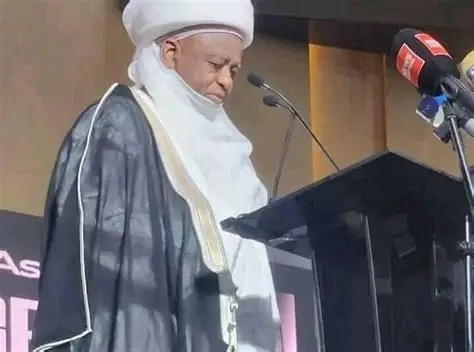
The Sultan of Sokoto, and Co-Chair of the Nigeria Inter-Religious Council (NIREC), HRH Abubakar Sa’ad III, yesterday warned that the Council risks slipping into irrelevance unless faith leaders embrace sincerity, accountability and honest engagement.
On the other hand, the Christian Association of Nigeria (CAN), yesterday called for stronger action on insecurity, while the Federal Government dismissed global allegations of religious persecution.
The exchanges came to tje fore at the Second Tri-Annual Meeting of NIREC in Abuja, where the Sultan, CAN President Archbishop Daniel Okoh, and Secretary to the Government of the Federation (SGF), Senator George Akume, delivered assessed the Nigerian security situation and interfaith tensions.
The Sultan, noted that NIREC had drifted from its founding purpose and must urgently confront internal contradictions weakening its credibility.
“Many years ago, when I walked in here, the atmosphere was very, very friendly and loving. Anyone seeing the discussions and chats going on then would immediately know we were in a happy mood. Now, unless something is wrong somewhere, we need to ask ourselves some questions,” the royal father said.
He accused some religious leaders of expressing unity inside NIREC meetings only to make divisive comments outside, a pattern he said undermines interfaith stability.
“We sit down and say so many good things to one another, knowing God owns everything. Yet, when we go out, away from our comfort zone, we begin to say negative things about one another. Are we really honest with ourselves?” he queried.
The Sultan said NIREC must determine whether to continue ‘in name only,’ overhaul its operations, or return to its founding ethos.
“Let’s discuss so that we agree on one thing: should this NIREC continue as the founding fathers brought it into the world? Do we continue these discussions if we only laugh here and then go behind each other’s backs to destroy what we have built?” he asked.
He praised Cardinal John Onaiyekan for exemplifying sincerity and moral consistency, recalling their partnership since the early days of NIREC.
The Sultan noted that many members fail to relay NIREC resolutions to their communities, leaving the public unaware of efforts that could ease tensions. He added that dialogue, not force, remains the most reliable pathway to peace.
“As a military man, I know that no matter how much force you apply, you still return to dialogue at the end if you want harmony and peace. If you know you can achieve peace without fighting a war, why fight?” he further asked.
Sa’ad III stressed that cooperation across faith lines does not require compromising religious identity.
“You won’t tell me to abandon my faith because of NIREC. I won’t change it, no matter what. And I would never try to change your faith as a Christian, never,” he declared.
The Sultan called for a comprehensive self-audit within NIREC, saying the era of superficial camaraderie was over. He urged members to stay in session until they agreed on measures capable of restoring the Council’s relevance.
“No one is perfect. We must have done things wrong. But once you recognise your mistakes, you make amendments, and then you become a better person,” he declared.
Turning to national security, CAN President Archbishop Daniel Okoh warned that Nigeria had entered a perilous phase of violence marked by mass abductions, banditry and extremist attacks that threaten national cohesion.
“The daily loss of innocent lives is alarming and heartbreaking. Families are mourning, communities are being deserted, and citizens are increasingly anxious about their safety,” he said.
Okoh acknowledged government efforts but urged President Bola Ahmed Tinubu to intensify responses proportional to the crisis.
He said faith institutions remain indispensable to peacebuilding because of their grassroots reach and moral influence.
“Faith-based organisations hold immense potential for strengthening security and sustaining peace. Because of their deep community roots, moral authority, and trusted presence, they are natural bridges to the hearts and minds of citizens,” Archbishop Okoh stated.
The CAN President added that justice must anchor peace.
“Perpetrators of violence, and those who finance them or encourage them, must be held accountable; victims must be supported and rehabilitated,” he declared.
In the same meeting, SGF Senator George Akume rejected what he described as misleading global claims that Nigeria is experiencing religious genocide, arguing that such narratives distort the crisis and complicate diplomacy.
He noted that both Christians and Muslims have suffered devastating attacks across several states, and said President Tinubu had directed security agencies to intensify operations and secure victims.
“It is true that Christian communities have suffered horrific attacks, but so have Muslim communities,”he insisted.
Akume criticised the international framing of Nigeria’s violence as faith-driven.
“Both Christians and Muslims have been victims of mass killings,” the SGF noted.
He reaffirmed the administration’s support for NIREC and announced a new US–Nigeria Joint Working Group on Security, where religious leaders are expected to provide input.
He urged delegates to embrace candour and unity during the closed-door session, saying: “Let us collectively silence the merchants of hatred and disunity.”
The meeting ended with broad agreement that Nigeria’s fragile peace architecture demands renewed honesty, stronger collaboration and a united moral front from religious leaders and the government.
Meanwhile, President Bola Ahmed Tinubu yesterday authorised the arming of forest guards nationwide as part of a renewed strategy to confront rising insecurity, particularly in rural communities affected by banditry, kidnapping and illegal mining.
The decision was announced during yesyerday’s Federal Executive Council (FEC) meeting at the State House, Abuja, where the President said the escalating threats across the country demand a more decentralised, well-equipped security structure.
“We need all the forces that we can utilise,” Tinubu told cabinet members, stressing that the guards — traditionally unarmed — must now be empowered to operate effectively.
“The civil defence are equally armed, and our NSA should arm our forest guards too. Take it very seriously,” he added.
The move signals a major shift in the role of forest guards, positioning them as frontline responders in securing forests and remote corridors that have become hideouts for armed groups.
Tinubu also addressed concerns over the ongoing withdrawal of police personnel from VIP protection duties, warning that such adjustments must not undermine community safety.
“If you have any difficulty as regards security because of the nature of your assignment, contact the IGP and get my clearance,” he said.
He directed the Minister of Interior to work with the Inspector-General of Police to ensure gaps created by the reassignments do not leave citizens exposed.
“Replace those police officers who are on special security duties, so they don’t leave people exposed,” the President ordered.
Security analysts say the directive could strengthen surveillance and response capabilities in high-risk rural zones, but emphasise the need for proper training, clear operational guidelines and coordination with agencies such as the police, military and the Nigeria Security and Civil Defence Corps (NSCDC).
The President urged ministries and agencies to promptly implement the directive, describing it as essential to restoring confidence in public safety.
The policy comes amid growing public pressure on the government to curb banditry and other violent crimes, particularly in states where forests have become operational bases for criminal networks.
Discover more from Keeping Them Honest
Subscribe to get the latest posts sent to your email.