

…Nigeria Establishes Regional Military Superiority In Benin Theatre
…Tinubu: We Acted in Accordance to ECOWAS Protocols
By Franklin Adole
In a swift cross-border operation that underscored Nigeria’s regional security dominance, Nigerian troops on Sunday foiled a military coup in the Republic of Benin after President Bola Ahmed Tinubu authorised an emergency intervention at the request of the Beninese government.
Panic spread across Cotonou early Sunday when soldiers led by Colonel Pascal Tigri seized the National Television station and announced the overthrow of President Patrice Talon, claiming they had suspended all democratic institutions.
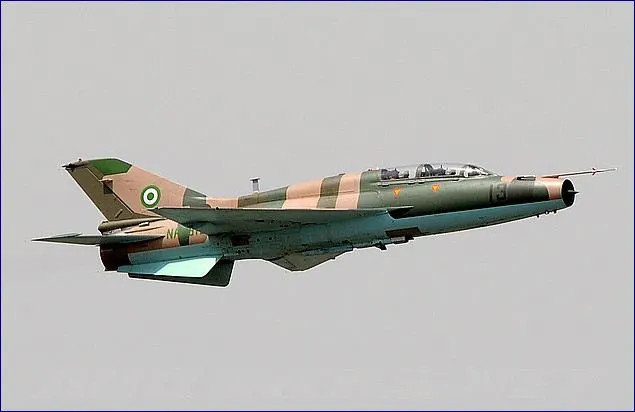
Faced with the threat to its 35-year-old democracy, the Government of Benin issued two urgent requests to Abuja. In a diplomatic Note Verbal, it asked for “immediate Nigerian air support” to safeguard constitutional order and protect national institutions. President Tinubu responded by ordering Nigerian Air Force fighter jets into Beninoise airspace to help dislodge the coup plotters from the national broadcaster and a military camp where they had regrouped.
A second request sought the deployment of Nigerian air assets for surveillance and rapid-intervention missions under Beninoise coordination, as well as Nigerian ground troops “strictly for missions approved by the Beninoise Command Authority.”
Nigeria’s Chief of Defence Staff, General Olufemi Oluyede, confirmed that all requests had been executed. “Ours is to comply with the order of the Commander-in-Chief of our armed forces, President Tinubu,” he said, noting that Nigerian ground forces were already on the ground in Benin.
For several tense hours, Colonel Tigri’s faction held onto the National TV station, but loyal Beninoise forces, backed by Nigerian air and ground support, mounted a coordinated counter-offensive that forced the putschists out and restored order.
Following the successful operation, President Tinubu praised the Nigerian Armed Forces, saying they had acted within the ECOWAS Protocol on Democracy and Good Governance. “They have helped stabilise a neighbouring country and made us proud of their commitment to sustaining our democratic values and ideals since 1999. Nigeria stands firmly with the government and people of the Republic of Benin,” he said.
Benin has become the latest African nation to face a military takeover, joining a growing list of countries where soldiers have seized power since 2020.
Across the continent, disputed elections, constitutional manipulation, security failures, and youth frustration have fuelled successive putschs. Mali experienced two coups between 2020 and 2021, the latter bringing Col. Assimi Goita to power after he removed a transitional president and postponed elections from 2022 to 2024, and now indefinitely. Mali, Burkina Faso, and Niger — all under military rule — have since abandoned ECOWAS to form the Alliance of Sahel States. In Burkina Faso, Lt. Col. Paul-Henri Damiba ousted President Roch Kaboré in early 2022, only to be removed months later by Capt. Ibrahim Traoré, who has since dissolved the electoral commission.
Niger’s rare democratic transition ended when Gen. Abdourahamane Tchiani toppled President Mohamed Bazoum, triggering a crisis that fractured ECOWAS and deepened the Sahel alliance. In neighboring Guinea, Alpha Condé’s bid for a third term after amending the constitution sparked his removal by Mamady Doumbouya, who now plans to contest elections after securing a constitutional amendment enabling junta members to run. Chad followed a different path when Mahamat Idris Déby seized power upon his father’s death in 2021, later winning an election the opposition dismissed as rigged, while critics like Succes Masra faced harsh repression.
Sudan descended into chaos after Gen. Abdel-Fattah Burhan seized power in 2021 and later clashed with his former ally, paramilitary leader Mohamed “Hemedti” Dagalo, plunging the country into one of the world’s worst conflicts. Madagascar faced unrest when youths protesting power outages and water shortages demanded President Andry Rajoelina’s resignation; he dissolved his government instead, prompting a military intervention. Guinea-Bissau fell into turmoil when soldiers seized power days after a disputed November 2025 election, with both President Umaro Sissoco Embaló and opposition candidate Fernando Dias claiming victory. Embaló later fled to Senegal as the junta installed allies of the ousted leader.
Less than two weeks after Guinea-Bissau’s upheaval, gunfire erupted near Benin’s presidential palace and soldiers again appeared on state TV proclaiming the end of Talon’s government. By day’s end, officials declared the coup defeated — a brief but stark reminder of the instability gripping Africa’s political landscape.
Discover more from Keeping Them Honest
Subscribe to get the latest posts sent to your email.