

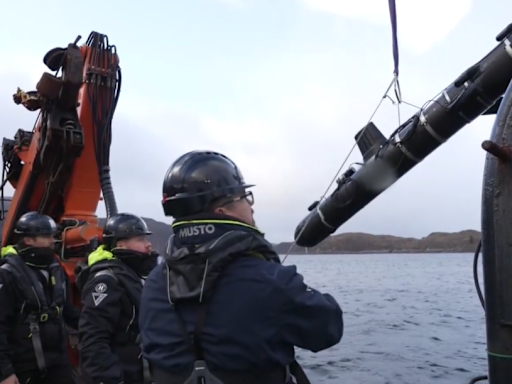
The SG-1 Fathom monitors the water, using its sensors to gather information
In the dark waters off the west coast of Scotland, a slender submarine glider, like a torpedo with wings, slips under the surface and quickly disappears off into the murk.
The SG-1 Fathom is on the prowl for intruders.
“The glider patrols through the depths of the ocean monitoring and listening for adversaries that might be in the area,” says Fathom’s programme manager Katie Raine.
Adversaries like Russian submarines operating covertly in or near British waters, suspected of working with spy ships to map the UK’s vital undersea cables and pipelines.
Fathom, made by the German defence company Helsing and now being trialled by the Royal Navy, moves silently, its sensors constantly gathering information.
It’s designed to patrol for months on end, working autonomously with dozens of other gliders, using software trained on decades of acoustic data.
“The glider processes and identifies threats more quickly than we’ve been able to do previously,” Raine says.
If it proves effective, Fathom will likely form part of Atlantic Bastion, a network of drones, warships and surveillance aircraft aimed at protecting vital undersea infrastructure.
The defence secretary, John Healey looks at the computer screen of a young man in the navy. He is one of three men sitting a desk monitoring several screens.
The Atlantic Bastion programme is a network of drones, warships and surveillance aircraft designed to protect undersea infrastructure.
The Ministry of Defence, which is unveiling elements of Atlantic Bastion yesterday said in a statement that the programme was “in direct response to the resurgence in Russian submarine and underwater activity”.
The government said there has been a 30% increase in the number of Russian vessels threatening UK waters in the last two years. Russia says its the UK government that’s being provocative.
In September, the parliamentary National Security Strategy Committee said it was “not confident” the UK was equipped to protect its undersea cables, warning that an attack could cause “catastrophic disruption” to vital financial and communications systems.
Last month, the Yantar, a Russian oceanic research vessel suspected of mapping British undersea cables and pipelines, shone lasers at RAF pilots tracking its progress near UK waters.
Defence Secretary John Healey called the action “deeply dangerous”, saying the Yantar had repeatedly crossed in and out of the UK’s exclusive economic zone.
Discover more from Keeping Them Honest
Subscribe to get the latest posts sent to your email.