

…Tinubu May Have Tapped Gen. Musa To End Civilian Grip On Ministry of Defence As Insecurity Shakes Nigeria
By Yinka Giwa
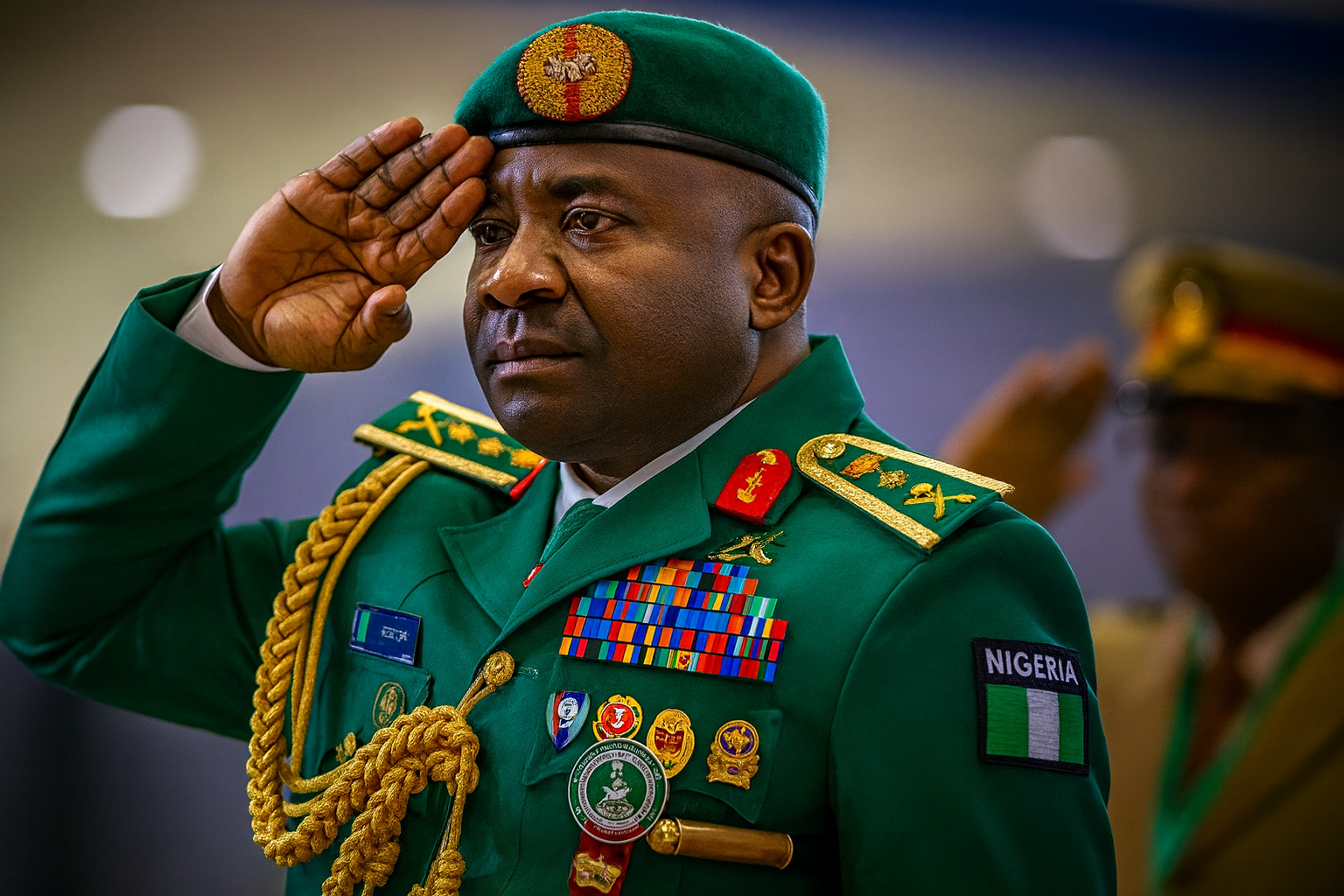
In a move that underscores his determination to overhaul Nigeria’s defence architecture, President Bola Ahmed Tinubu may be preparing to appoint immediate past Chief of Defence Staff, General Christopher Musa (rtd), as the next Minister of Defence. This follows Monday’s sudden resignation of Defence Minister Mohammed Badaru, who cited health reasons for stepping down, a claim many within the security establishment quietly dismiss as a polite cover for a forced exit.
Multiple authoritative sources within the nation’s defence architecture told KTH Daily that Badaru’s removal was not only anticipated but strategically engineered. According to one senior official, the president is “finally moving to clear out the rot,” bringing the ministry under the firm grip of military command after years of dysfunctional civil–military relations.
For decades, service chiefs have routinely bypassed civilian defence ministers, opting instead to go directly to the Commander-in-Chief. What was once informal evolved into an entrenched culture, one that intensified under the tenures of former Army Chiefs Tukur Buratai and Taoreed Lagbaja, and continues today. The result has been a ministry often sidelined in key decisions, with ministers holding titles but little operational leverage.
The most striking symbol of this imbalance is budgetary power. The ministry’s capital budget is largely under the control of the service chiefs instead of the ministers. Even the Chief of Defence Staff, who theoretically sits atop the military hierarchy, controls only a fraction of the defence budget. The real financial muscle remains in the hands of the Army, Navy, and Air Force chiefs—officers who are technically subordinated to the ministers and the CDS. “It’s an upside-down command structure,” the defence ministry source said, describing a system long criticized for inefficiency and internal rivalry.
According to insiders, a proposal has been before the presidency for months advocating the end of appointing civilians or politicians to head the defence ministry. Tinubu, the source added, is inclined toward a U.S.-style model in which defence secretaries are usually former military officers. “The defence ministry is too small for two ministers anyway. It’s been a political marriage of convenience that did the system no good,” he said, in reference to the current two-minister arrangement between Badaru and Minister of State Bello Matawalle.
Matawalle himself now faces uncertainty. Should Musa be appointed, the former service chief would technically be reporting to someone who once reported to him: a dynamic that may be politically awkward but constitutionally harmless. Still, insiders believe Musa’s arrival would signal to Matawalle that it is time to “smell the coffee” and quietly step aside.
Badaru’s exit could not have come at a more turbulent moment. His tenure had recently come under intense public criticism, following a controversial BBC Hausa interview in which he suggested that some terrorists could not be attacked because their forest hideouts were too dense for bombs to reach.
The remarks triggered outrage, culminating in a scathing editorial from a leading national newspaper titled “Badaru is unfit, sack him.” The editorial argued that his comments were “confusing, contradictory, and demoralising,” and insisted that the nation needed a defence minister with military grounding.
But insiders insist that Badaru spoke only the truth in that interview, because while the Nigerian Air Force can carry out effective aerial bombing campaigns, it lacks bunker-busting bombs that can penetrate the network of caves and crevices that hide the terrorists in Sambisa and environs.
While Nigeria remains embroiled in a complex security crisis, banditry, insurgency, mass abductions and extremist violence continue to haunt the Northern region. Vice-President Kashim Shettima has estimated that terrorists have killed over 100,000 Nigerians and displaced more than two million. With Tinubu’s recent declaration of a national security emergency, the search for a more effective command structure may have taken on renewed urgency.
The presidency is expected to formally notify the Senate of Badaru’s replacement later this week. If General Christopher Musa emerges as the nominee, it would mark a decisive shift: the return of the defence ministry to full military authority, and perhaps the beginning of a new era in Nigeria’s national security management.
Discover more from Keeping Them Honest
Subscribe to get the latest posts sent to your email.