

By Jeremy Fregene
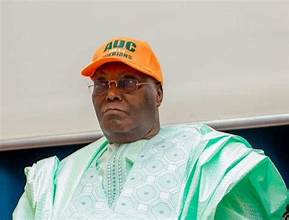
Fresh controversy has engulfed Nigeria’s oil and security sectors following revelations that the Bola Tinubu administration has declined a proposal from the Nigerian National Petroleum Company Limited (NNPCL) to overhaul the country’s pipeline surveillance contracts—an issue now amplified by former Vice President Atiku Abubakar, who is demanding urgent explanations over what he describes as an “unprecedented and alarming” ₦17.5 trillion expenditure on pipeline protection and oil price stabilisation in a single year.
Multiple authoritative inside sources familiar with high-level deliberations informed KTH Daily that NNPCL had recently approached the Presidency with a plan to restructure the current pipeline surveillance arrangements. Under the proposal, the contracts, currently concentrated in the hands of a few powerful operators, would be broken up and redistributed so that each state would have one contractor handling surveillance within its borders, thereby decentralising responsibility and reducing costs.
But the sources say the plan “hit a brick wall.” According to them, senior presidential advisers advised President Tinubu to delay any contract review until after the 2027 elections, arguing that a shake-up could disrupt the fragile balance of interests on which oil production and pipeline integrity currently depend. “The Presidency was categorical,” one source said. “They said the review could impact crude flow in the short term, and that the matter should be re-presented after the elections to avoid political and security complications.”
It is against this backdrop that Atiku Abubakar, presidential candidate of the Peoples Democratic Party (PDP) in the last election, issued a blistering statement on Sunday, accusing the Tinubu administration of financial recklessness and deliberate opacity. Atiku’s outcry follows disclosures that NNPCL spent ₦17.5 trillion in the 2024 financial year on pipeline security, energy-cost payments, and petrol price stabilisation: amounts that dwarf historic subsidy bills.
Atiku described the figures as “one of the most brazen financial scandals in our nation’s history.”
He argued that Nigeria spent ₦18 trillion on petrol subsidy over twelve years, a programme he noted “directly cushioned millions of Nigerians, stabilised transport fares, and helped keep food prices manageable,” yet the Tinubu administration has allegedly channelled nearly the same amount in just one year into contracts and expenditures shrouded in secrecy.
“Under President Bola Ahmed Tinubu, the country has now expended nearly the same amount in a single year on the same subsidy and opaque pipeline security contracts awarded to private firms tied to associates and cronies of the President,” Atiku said. “This is not governance. This is grand larceny dressed as public expenditure.”
He criticised what he described as the administration’s hypocrisy, recalling that Nigerians were told to “tighten their belts” and embrace sacrifice following Tinubu’s declaration on May 29, 2023, that “fuel subsidy is gone.”
“However,” Atiku continued, “the same administration has now channelled ₦17.5 trillion, an amount that could transform Nigeria’s power sector, rebuild our refineries, or fund universal healthcare, into opaque security contracts whose beneficiaries are conveniently linked to those in power.”
According to NNPCL’s internal categorisation, ₦7.13 trillion was booked as “energy-security cost to keep petrol prices stable,” while ₦8.67 trillion was labelled “under-recovery,” a term Atiku derided as “balablu nomenclature” invented to disguise ongoing subsidy payments.
He raised fourteen pointed questions demanding transparency, including:
•Who are the companies paid under these contracts?
•What justifies the 38.7 percent rise in energy-cost allocations from ₦6.25 trillion in 2024 to ₦8.67 trillion in 2025?
•Why is pipeline security now more expensive than a decade-long subsidy that supported over 200 million people?
•Where are the audit reports, parliamentary reviews, and cost-validation documents?
Atiku insisted that no administration presiding over this scale of “fiscal recklessness” retains the moral authority to demand sacrifice from citizens already suffocating under inflation and hardship.
He demanded an immediate forensic audit of all pipeline surveillance and energy-cost expenditures, full disclosure of all beneficiary companies, contract scopes and durations, and a halt to further disbursement until accountability is established.
The broader picture, analysts note, is a troubling mismatch between public pledges and fiscal realities. Tinubu’s declaration that subsidy was gone was expected to mark a decisive end to decades of wasteful petrol price support. Instead, emerging figures show a complex web of reimbursements and “stabilisation costs” that mirror the old subsidy regime in all but name.
Persons familiar with the matter are raising questions about the Presidency’s refusal to approve NNPCL’s decentralisation of pipeline surveillance contracts, and are questioning what exact interests are being protected. They also question whether entrenched political networks are overriding technical and financial prudence.
For Atiku, the matter is both a financial and moral crisis. “This ₦17.5 trillion pipeline-security expenditure is not merely a financial anomaly,” he said. “It is a moral indictment on the Tinubu administration and a clarion call for full accountability.”
Discover more from Keeping Them Honest
Subscribe to get the latest posts sent to your email.