

Nigeria is the world’s largest producer of cassava, accounting for over 50% of global production. The cassava industry has immense potential to drive economic growth, create jobs, and improve food security. Here’s an in-depth look at the cassava value chain and its entrepreneurial opportunities.
Overview of the Cassava Value Chain
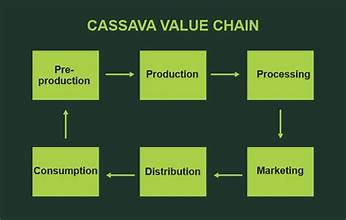
The cassava value chain involves several stages, from production to marketing. These include:
1. Production: Cassava is grown by small-scale farmers, mostly in rural areas.
2. Harvesting: Cassava is harvested manually, with yields varying from 10-40 tons per hectare.
3. Processing: Cassava is processed into various products, such as:
– Garri (roasted cassava flour)
– Fufu (fermented cassava flour)
– Starch
– Ethanol
– Animal feed
4. Marketing: Processed cassava products are sold in local markets, supermarkets, and exported to other countries.
5. Consumption: Cassava products are consumed locally and exported to countries with significant Nigerian diaspora populations.
Entrepreneurial Opportunities in the Cassava Value Chain
1. Farm Inputs and Services: Providing high-quality seeds, fertilizers, and equipment to cassava farmers.
2. Mechanized Farming: Offering mechanized farming services, such as land preparation, planting, and harvesting.
3. Processing and Value-Addition: Investing in processing technologies to produce high-quality cassava products.
4. Packaging and Branding: Creating branded, packaged cassava products for local and export markets.
5. Marketing and Distribution: Establishing distribution networks to connect farmers and processors with markets.
6. Export Promotion: Identifying and capitalizing on export opportunities for Nigerian cassava products.
7. Research and Development: Developing new cassava varieties, improving yields, and reducing post-harvest losses.
8. Training and Capacity Building: Providing training and capacity-building programs for farmers, processors, and marketers.
9. Access to Finance: Offering financial services, such as loans and grants, to support cassava value chain actors.
10. Waste Management: Developing sustainable waste management solutions for cassava processing waste.
Challenges and Opportunities
The cassava value chain faces several challenges, including:
– Low productivity and yields
– Post-harvest losses
– Limited access to finance and markets
– Inadequate infrastructure and logistics
– Climate change and environmental degradation
However, these challenges also present opportunities for entrepreneurs to innovate and invest in the cassava value chain.
Conclusion
The cassava value chain offers immense potential for economic growth, job creation, and food security in Nigeria. Entrepreneurs can capitalize on opportunities in production, processing, marketing, and exportation to unlock the industry’s full potential.
Recommendations
1. Support Small-Scale Farmers: Provide access to finance, inputs, and markets to improve productivity and yields.
2. Invest in Processing Technologies: Develop and deploy cost-effective processing technologies to improve product quality and reduce post-harvest losses.
3. Promote Market Linkages: Establish distribution networks and promote export opportunities for Nigerian cassava products.
4. Fostering Innovation: Encourage research and development to improve cassava varieties, yields, and product diversification.
By addressing the challenges and capitalizing on opportunities, Nigeria can unlock the full potential of the cassava value chain and drive economic growth, job creation, and food security.
About the Author
Olubunmi Oluwadare is a renowned expert in entrepreneurship development, a National Business Development Service Provider (NBDSP), and business growth strategies. As the founder of www.uni-preneur.com and www.getajob.ng, he has empowered thousands of entrepreneurs and job seekers across Nigeria and Africa. As Chairman of BEEXO GROUP www.beexogroup.com, he continues to drive business growth and innovation in the region. His book, “I SEE MONEY IN AFRICA”, highlights the vast opportunities for entrepreneurs in Africa.
Get in Touch
Email: [email protected]
WhatsApp: 0816 474 2609
www.olubunmioluwadare.com
Discover more from Keeping Them Honest
Subscribe to get the latest posts sent to your email.