

…His Demands: Protection for White Minorities in South Africa, Christians in Nigeria
…Tinubu: We Will Defeat Terror in Nigeria
By Franklin Adole
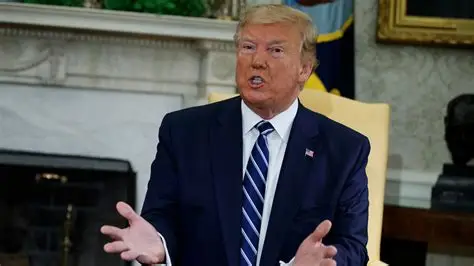
U.S. President Donald Trump has again turned the world’s attention toward Africa, demanding that South Africa be expelled from the G20 for alleged discrimination against its white minority. This comes after threatening possible military intervention in Nigeria over what he described as the “mass killing of Christians.”
The twin pronouncements, made within days of each other, have sent diplomatic ripples through both Abuja and Pretoria, drawing global focus to Trump’s assertive foreign policy posture on religion and minority rights in Africa.
In a televised address on October 31, President Trump announced that the United States had redesignated Nigeria as a “country of particular concern,” citing what he called a “Christian genocide” allegedly being carried out by radical Islamist groups. Standing behind a lectern bearing the seal of his office, Trump said Christianity in Nigeria faced an “existential threat” and warned that Washington would halt all aid assistance to Nigeria and consider direct military action if the Nigerian government failed to stop the violence.
“If the Nigerian government continues to allow the killing of Christians, the USA will immediately stop all aid assistance to Nigeria,” Trump declared. “We are going to do things to Nigerians that Nigeria is not going to be happy about, and may very well go into that now disgraced country, guns-a-blazing, to completely wipe out the Islamic terrorists who are committing these horrible atrocities.”
Trump said he had directed the Department of War to prepare for possible military action, saying any U.S. intervention would be “vicious and sweet.” He also called on Congressman Riley Moore and House Appropriations Committee Chairman Tom Cole to investigate what he described as “the persecution of Christians in Nigeria,” claiming that over 3,000 Christians had been killed within a year.
“The United States cannot stand by while such atrocities are happening in Nigeria,” he said. “Christianity is facing an existential threat. We are ready, willing, and able to protect Christian populations around the world.”
Nigeria’s government has since responded with measured diplomacy. President Bola Ahmed Tinubu, making his first public appearance after Trump’s remarks, reaffirmed his administration’s determination to defeat terrorism and ensure peace and unity. Speaking at the Presidential Villa in Abuja on Thursday, November 6, before the start of the Federal Executive Council meeting, Tinubu said Nigeria remained committed to global cooperation in the fight against insecurity.
“We are engaging the world diplomatically, and we assure all of you that we will defeat terrorism,” Tinubu said. “The task ahead is to move forward with clarity of purpose guided by the Renewed Hope Agenda to build a prosperous Nigeria. Despite political headwinds and fears, we will continue to engage with our partners.”
He cited Nigeria’s recent $2.3 billion Eurobond issuance, which was oversubscribed, as proof of international confidence in the nation’s economy, adding that his government’s reforms were already attracting renewed global trust. Tinubu also commended his cabinet for their commitment to his Renewed Hope Agenda, pledging to deliver peace and prosperity for all Nigerians.
While Trump’s remarks on Nigeria were still reverberating across the continent, the U.S. President turned his sights on South Africa, calling for its expulsion from the G20: the forum of the world’s largest economies, on grounds of “anti-white discrimination.” Speaking at a conference in Miami, he declared that South Africa “shouldn’t even be in the Gs anymore,” adding that he would not personally attend the G20 summit in Johannesburg later this month. Vice President JD Vance will represent the U.S. instead.
“South Africa shouldn’t be in the G20 because what’s happened there is bad,” Trump said. “It shouldn’t be there.”
But South Africa’s government has skirted Trump’s comments, with Presidential spokesperson Vincent Magwenya saying Pretoria was confident of hosting “a successful and inclusive G20 summit.” Foreign ministry spokesperson Chrispin Phiri emphasized that South Africa’s presidency of the G20 was grounded in the principles of solidarity, equality, and sustainability. “Drawing on our journey from racial and ethnic division to democracy, South Africa is uniquely positioned to champion a future of genuine global cooperation,” he said.
Analysts note that Trump’s hard line on both Nigeria and South Africa underscores his administration’s broader strategy of asserting U.S. leadership through moral and security-driven engagement. His supporters view his stance as a defence of faith and minority rights, while his critics caution that his rhetoric risks inflaming religious and racial sensitivities across Africa.
Despite the intensity of his language, experts stress that any U.S. military intervention in Nigeria would require congressional approval, and that there is no formal mechanism to expel a member from the G20, which operates by group consensus. Still, Trump’s statements have achieved their immediate effect: drawing international attention, provoking responses from African leaders, and signalling that his administration will not shy away from bold positions on issues of faith and governance.
Discover more from Keeping Them Honest
Subscribe to get the latest posts sent to your email.