

The Independent Media and Policy Initiative (IMPI), says it has reviewed Nigeria’s poverty-reduction efforts over the decades.
In a policy statement signed by its Chairman, Dr Omoniyu Akinsiju, the body called for institutionalised and multi-pronged policy solutions to address the complex causes of poverty.
The group said Nigeria’s poverty challenges persisted because previous interventions were short-term, poorly coordinated, and not tailored to citizens diverse needs.
The group recalled that successive governments since the 1980s had implemented various programmes, including the Directorate for Food, Roads and Rural Infrastructures (DFRRI), the National Directorate of Employment (NDE), and the Better Life Programme (BLP).
“Others include the People’s Bank of Nigeria (PBN), Community Banks (CB), Family Support Programme (FSP), and Family Economic Advancement Programme (FEAP)
“These programmes targeted rural infrastructure, youth employment, and women empowerment and were all designed to extend credit, health care, and skill support to low-income groups.
“The programmes laid some groundwork for poverty alleviation but were often undermined by weak institutions and lack of continuity,” it said.
The body cited the National Poverty Eradication Programme (NAPEP) of the Obasanjo administration as an example of well-intentioned policies that failed to yield sustainable results.
“Like other programmes before it, NAPEP reflected very little on pro-poor schemes, leading to poorly designed money-guzzling initiatives like ‘Keke NAPEP’, which hardly contributed to reducing poverty in the long term,” it stated.
It also acknowledged that the Muhammadu Buhari administration introduced a more structured framework through the National Social Investment Programme (NSIP) in 2016, which sought to institutionalise social welfare.
According to IMPI, the NSIP, which was backed by law in May 2023, featured components such as N-Power, the Government Enterprise and Empowerment Programme (GEEP), Conditional Cash Transfers, and the National Home-Grown School Feeding Programme.
“These interventions provided a more detailed approach to reducing poverty and inequality by offering training, micro-loans, cash stipends, and school meals to millions of Nigerians,” it said.
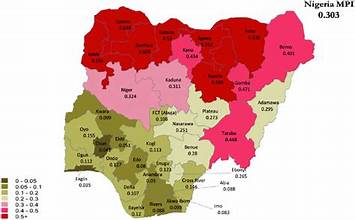
The group, however, stressed that Nigeria’s poverty problem was multidimensional, requiring a mix of economic, social, and institutional reforms that went beyond temporary relief efforts.
“Our analysts have identified that poverty in Nigeria stems from various factors.
” Lack of access to credit, education, healthcare, and skill and can only be reduced through a multi-pronged and institutionalised policy approach,” it said.
It then called for stronger coordination among federal and sub-national agencies, sustained funding, and measurable accountability in the design and execution of poverty-reduction initiatives.
Discover more from Keeping Them Honest
Subscribe to get the latest posts sent to your email.