

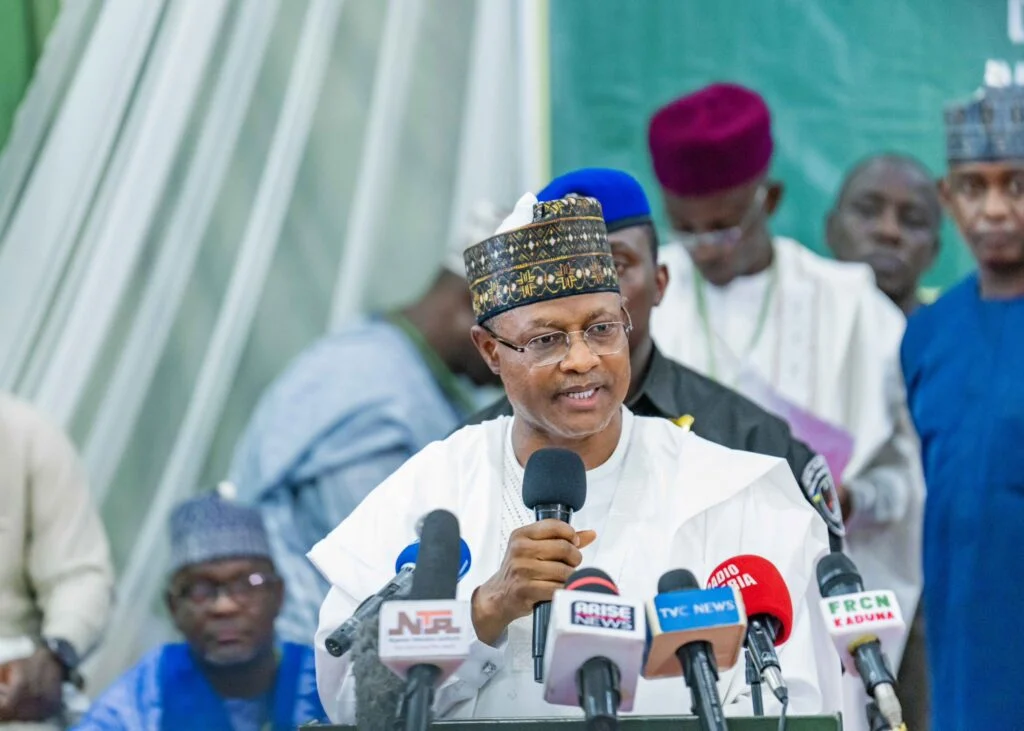
Kaduna State Governor, Uba Sani of Kaduna State said his administration has invested 10 million Euros in the establishment of Arla Farm in Damau, Kubau Local Government Area, to boost dairy production and strengthen the livestock value chain.
The Governor stated this yesterday at the Arla-Dano Open Day in Kaduna, as represented by the Secretary to the State Government, Dr AbdulKadir Mayere.
He said the investment, made in 2023, was part of the state government’s efforts to improve livestock productivity, bridge infrastructure gaps, facilitate market access, and attract sustainable investments in the agricultural sector.
“At full capacity, Arla Farm targets an annual milk output of 4–5 million kilograms.
“Since inception, we have recorded a boost in local milk production and the creation of both direct and indirect jobs,” Sani said.
The governor said his administration had established a strong institutional framework to ensure sustainability and expansion in the agricultural sector.
“In the livestock subsector, we have the Kaduna State Livestock Regulatory Authority (KADLRA), the Kaduna State Livestock Transformation Company, and the Kaduna Ranch Development Company, all designed to work in synergy,” he said.
Sani expressed delight over the unveiling of the Nigeria Dairy Centre of Excellence, the Sedentarisation and Climate Change Resilience in Nigeria (SCREEN) Project, and the inauguration of a Yoghurt factory during the event.
He said the initiatives would complement the government’s drive to empower smallholder farmers through modern techniques and technologies that would enhance milk yield and quality.
“This translates to more income for farmers, more jobs for our youth, and more nutritious dairy products for our people.
“The Damau Milk Farm Project will also serve as a model for sustainable economic growth in the dairy value chain, with Kaduna State taking the lead,” Sani added.
In his remarks, the Minister of Livestock Development, Alhaji Idi Maiha, who represented President Bola Tinubu, described the Arla Farm as a product of the Federal Government’s backward integration policy aimed at promoting local content in the dairy industry.
He said that in spite of Nigeria’s huge livestock population, the country produces only about 0.7 million litres of milk annually, far below its consumption needs.
“Our average per capita milk consumption is 8.7 million litres per year, significantly lower than the global average and well below the World Health Organisation’s recommended 210 litres per person annually,” the minister said.
Maiha lamented that the productivity gap at the farm level remained wide, with indigenous cows producing between 0.5 and 1.5 litres of milk daily, compared to the global average of 6.6 litres.
“Nigeria spends over $1.5 billion annually importing milk and dairy products despite having millions of cattle. This is a paradox that we must correct,” he said.
Maiha explained that the newly established Ministry of Livestock Development was created to unlock the potentials of the livestock value chain, reduce import dependence, mitigate farmer-herder conflicts, and improve nutrition and prosperity for citizens.
“That vision is taking shape through investments such as the Arla Farm and ongoing collaborations and reforms that are already yielding results,” he added.
The minister further noted that Damau had become the emerging dairy hub of Nigeria, hosting key interventions including Arla Farm, the Damau Household Milk Farm, and other dairy development projects.
He said the Damau Household Milk Farm project, initiated by the Kaduna State Government, involved collaboration with investors and development partners to settle 1,000 households and provide them with improved cattle, pasture, veterinary services, and social amenities.
Maiha added that Arla serves was the off-taker of milk from the project while the Danish Government sponsors two dairy initiatives.
They are the Partnership for Green and Productive Dairy in Nigeria and the Sedentarization and Climate Change Resilience in Nigeria projects, all aimed at building local capacity and promoting climate-resilient dairy production.
“These projects are equipping local producers with the skills and resources to improve livelihoods and ensure the sustainability of dairy production in Kaduna and beyond,” he said.
Discover more from Keeping Them Honest
Subscribe to get the latest posts sent to your email.