

By Margaret Aladeselu
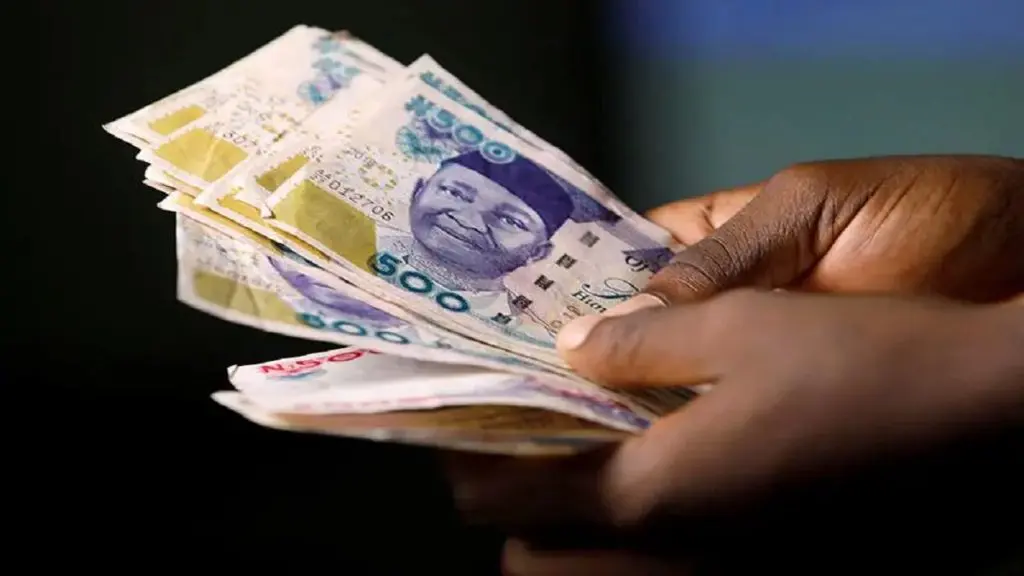
Nigeria has always been a country of paradoxes. Blessed with abundant natural and human resources, yet constantly reaching out to the world for financial rescue. In recent years, this pattern has only deepened. With the nation’s debt servicing bill rising from ₦8 trillion in 2024 to ₦16 trillion in 2025 under the Tinubu administration, Nigeria now stands before the world as a chronic borrower, asking for what, in everyday Nigerian slang, might be called an “urgent 2k.”
The numbers tell a troubling story. Economic analysts have warned that Nigeria may be drifting toward a debt crisis, with projections suggesting that the total public debt could hit ₦187.79 trillion by the end of 2025. While loans are not inherently bad, the question that continues to trouble many Nigerians is simple: what exactly are these loans doing for us?
In the course of 2025, Nigeria has taken on several major loans from different international lenders. Each one came with ambitious promises of reform, development, and renewal. Yet, for the average citizen, life has become increasingly difficult, as inflation, unemployment, and food insecurity continue to rise.
In March 2025, the federal government secured a $500 million loan from the World Bank under the Community Action for Resilience and Economic Stimulus Programme. The loan was meant to strengthen communities hit hardest by inflation and food shortages by providing targeted grants and support for low-income families and small businesses. It was presented as a safety net for the poor and a lifeline for struggling local economies. However, since the loan was announced, little information has emerged about its implementation or impact. Like many others before it, the programme appears to be lost in bureaucracy.
A month later, Nigeria received another loan of $1.08 billion from the World Bank. Originally designed as a COVID-19 response fund, the loan was repurposed to support education, nutrition, and resilience among vulnerable households. Of the total sum, $500 million was allocated to economic stimulus, another $500 million to improving education, and the balance to enhance nutritional outcomes. Yet, despite these plans, more than three million Nigerian children continue to suffer from malnutrition. The gulf between the promise of loans and the lived reality of citizens continues to widen.
By midyear, in July 2025, the government sought funding elsewhere. A $747 million syndicated loan was arranged through Deutsche Bank, First Abu Dhabi Bank, the African Export-Import Bank, and Zenith Bank. The money was meant to finance the first phase of the 700-kilometre Lagos-Calabar Coastal Highway, described by the Ministry of Finance as the largest infrastructure-specific loan in Nigeria’s history. On paper, it sounded like a visionary project—one that would link several states and boost trade and tourism. Yet the loan only covers 47 kilometres, about 6.7 percent of the total route, and the project has already been plagued by controversy. The Oyo State Governor, Seyi Makinde, publicly questioned its transparency, accusing the Minister of Works, David Umahi, of withholding details of the actual cost.
In September, the borrowing continued. The World Bank announced yet another $750 million loan to Nigeria, this time to support digital infrastructure and healthcare access. According to official statements, $500 million would fund the Building Resilient Digital Infrastructure for Growth in Nigeria (BRIDGE) project under the Ministry of Communications, while the remaining $250 million would go into the Health Security Programme for Western and Central Africa. The project aims to expand broadband access and strengthen Nigeria’s capacity to respond to health emergencies. While these are noble objectives, Nigerians have learned to wait and see before celebrating such promises.
The same month, another loan emerged, this time from Japan. During a visit to Tokyo, President Tinubu secured a $238 million facility from the Japan International Cooperation Agency for the expansion of Nigeria’s national power grid. The project involves new transmission lines and substations aimed at improving electricity reliability. However, power supply remains inconsistent nationwide, and citizens are yet to feel any tangible difference.
In August, the federal government also secured a $300 million loan from the World Bank to support Internally Displaced Persons and their host communities in Northern Nigeria. The project, named the Solutions for the Internally Displaced and Host Communities Project (SOLID), was expected to benefit over seven million people, including more than one million displaced persons. The initiative promised better access to basic services and economic opportunities. Yet, in many of the affected areas, displaced people still live in dire conditions, relying largely on humanitarian assistance rather than state-backed programmes.
The largest of the 2025 loans came in September, when the Bank of Agriculture obtained $1 billion from the African Export-Import Bank to establish a National Fund for Smallholder Farmers. The goal was to boost agricultural productivity by financing seeds, fertilisers, and mechanised services, while also supporting infrastructure for storage and logistics. As with several of the other loans, there is little public information about how much of this fund has been released or what progress has been made.
Nigeria’s debt appetite has become a defining feature of its economic policy. While borrowing is not unusual for developing nations, what makes Nigeria’s case worrying is the lack of transparency and the limited impact of these loans on ordinary lives. The country now spends more on debt servicing than on education, health, defence, and infrastructure combined.
Citizens cannot solve the debt problem, but they can insist on accountability. It begins with asking questions. Which ministry or agency is responsible for implementing each loan-funded project? Has any progress been made? Civil society groups such as BudgIT and Tracka have made it easier to find this information, and Nigerians can use social media or community forums to demand updates. They can also call their senators or state assembly representatives to inquire about the projects tied to their constituencies.
The media too has a role to play. Supporting investigative platforms that track government spending helps to maintain pressure on those in power. When the public pays attention, government behaviour often changes.
Nigeria’s borrowing story is not just about the money. It is a reflection of governance, transparency, and priorities. Loans, when properly managed, can transform economies and improve lives. But when they become tools of mismanagement or political survival, they only deepen poverty and dependency. For now, Nigeria continues to borrow, and citizens continue to hope that one day, the country will learn to spend wisely what it so eagerly borrows.
This article was culled from Zikoko and edited by Emmanuel Olugua for KTH Daily
Discover more from Keeping Them Honest
Subscribe to get the latest posts sent to your email.