

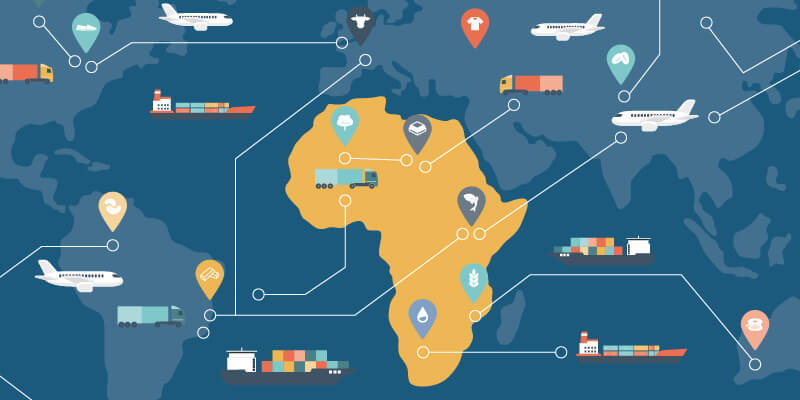
One of Africa’s greatest trade challenges is its limited engagement within the continent. Intra-African trade and investment remain far below global averages, with Europe, Asia and Oceania, and the Americas recording 67, 64, and 44 per cent respectively, while Africa lags between 12 and 18 per cent. The continent contributes barely three per cent of global trade, constrained by weak data systems, smuggling, and inadequate transport and manufacturing capacity.
The African Continental Free Trade Agreement (AfCFTA) was conceived to address these gaps by creating a single market for goods and services, promoting the free movement of people and capital, and improving competitiveness across industries. Experts describe it as a transformative opportunity to boost Africa’s economic growth and integration.
In this context, Woodhall Capital, in collaboration with the Nigeria Governors’ Forum (NGF) and Afreximbank, hosted a Pre-Investor Forum on Intra-African Trade and Investment in Abuja. Co-organisers included the Presidential Enabling Business Environment Council (PEBEC) and the Office of the Senior Special Assistant to the President on International Cooperation (OSSAP-IC). Themed “Facilitating Intra-African Trade: Unlocking the Potential of African Direct Investments (ADI) and Foreign Direct Investments (FDI) to Drive Trade and Sustainable Growth,” the forum underscored the urgent need for African-led trade reforms.
Vice President Kashim Shettima, in his keynote address, lamented Africa’s low trade integration. “Trade within the European Union exceeds 75 per cent; Asia records over 60 per cent. Africa’s is below 17 per cent,” he said, urging stronger regional collaboration led by subnational governments. He emphasised that the revolution cannot be led by Abuja alone but driven by governors across states.
Woodhall Capital’s President, Mrs. Mojisola Hunponu-Wusu, reaffirmed the firm’s commitment to connecting investors with subnational initiatives. She commended Nigeria’s ongoing macroeconomic reforms, including liberalising foreign exchange, unifying exchange rates, and strengthening domestic capital markets, describing them as catalysts for sustainable growth and investor confidence.
Afreximbank’s Regional Chief Operating Officer for Anglophone West Africa, Mr. Alain-Thierry Mbongue, highlighted the African Sub-Sovereign Governments Network (AfSNET), which supports governors, mayors, and other local leaders in advancing AfCFTA objectives. The initiative, launched in 2021, has drawn over 150 governors and generated more than two billion dollars in trade and investment deals.
Governor AbdulRahman AbdulRazaq of Kwara, represented at the forum, said states were more committed than ever to creating enabling environments for investment. He cited the new Investopedia platform, launched with Woodhall Capital, to link subnational projects with investors in the UK and the UAE.
A major highlight was the signing of Memoranda of Understanding between Woodhall Capital and Afreximbank, including the Africa Trade Gateway Contract and the Creative Hub MoU under the Creative Africa Nexus (CANEX) initiative to finance the continent’s creative economy.
Participants agreed that sustainable growth will depend on deepening intra-African investment, fostering African-to-African capital flows, and aligning policies with business realities. PEBEC Director-General Princess Zahrah Mustapha noted that Africa’s economic transformation requires harmonised regulations, consistent policies, and robust public–private partnerships.
The forum reaffirmed a shared resolve among governments, investors, and development partners to position Nigeria, and by extension Africa, as a dynamic hub for continental and global trade.
Discover more from Keeping Them Honest
Subscribe to get the latest posts sent to your email.