

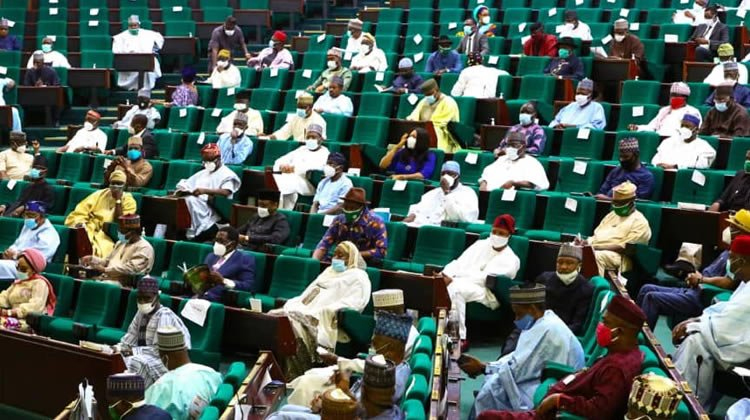
The House of Representatives has reaffirmed its commitment towards enacting people-oriented legislations for transparent and inclusive economic and institutional reforms.
The Chairman, House Committee on Commerce, Rep. Ahmed Munir (APC-Kaduna) stated this yesterday in Abuja at a public hearing organised by his committee on 10 bills pending before the house.
The 10 bills are: a Bill for an Act to Establish the Chartered Institute of Nigerian Universities Professional Administrators (HB. 784) and a Bill for an Act to Establish Climate Resilient Commerce in Nigeria (HB. 2206).
Others are a Bill for an Act to Establish the Institute of Chartered Biochemists and Molecular Biologists (HB. 1164), a Bill for an Act to Amend the Nigerian Export Promotion Council Act (HB. 1955) and a Bill for an Act to Establish the Chartered Institute of Mortgage Bankers and Brokers of Nigeria (HB. 899);
Equally listed among the bills are A Bill for an Act to Establish the Chartered Institute of Entrepreneurship Consultants (HB. 1626) and a Bill for an Act to Establish the Chartered Institute of Enterprise Risk Management of Nigeria (HB. 2286).
The remaining bills are a Bill for an Act to Establish the Chartered Institute of Financial and Investment Analysts of Nigeria (HB. 336), a Bill for an Act to Establish a Standardized and Mandatory Framework for Risk Management Reporting by Registered Firms (HB. 1951).
He said that the tenth bill is a Bill for an Act to Amend the National Institute of Marketing of Nigeria Act 2003 (HB. 1547).
Munir said that the house remained focused on ensuring that every proposed law reflects the genuine needs of Nigerians.
He explained that the bills under consideration span multiple sectors of the economy, with provisions to establish new professional regulatory bodies, amend outdated laws and strengthen the operational capabilities of existing institutions for greater service delivery.
Munir noted that the proposed legislation aligned with the global efforts to mitigate climate change impacts and will position Nigeria to take advantage of international partnerships and incentives tied to environmental sustainability.
“A critical look at these bills shows that both the legislature and the executive have the interest of the citizens at heart.
“Some of these bills, if passed, will create regulatory institutions that ensure professionalism, accountability, and efficiency across various sector,” he said.
Munir said that the essence of the public hearing was to provide a platform for citizens and stakeholders to express their views and enrich the legislative process with diverse perspectives.
He urged participants to be constructive and concise in their submissions, assuring them that all contributions would be considered in shaping final recommendations.
In a memorandum, Chartered Risk Management Institute of Nigeria (CRMI) opposed the proposed establishment of the Chartered Institute of Enterprise Risk Management of Nigeria.
The memorandum, which was signed by the Registrar, Mr Victor Olannye, the CRMI, described the proposed institute as a duplication of existing institutions with identical mandates.
Olannye said that the bill seeking to establish the new institute overlapped with the functions of the already existing Chartered Risk Management Institute of Nigeria.
Olannye explained that the 9th National Assembly had already passed the Chartered Risk Management Institute of Nigeria Act No. 39 of 2022, which the president had duly assented to and gazetted, thereby conferring legal status on the Institute.
“Upon careful review of the bill, we wish to draw the committee’s attention to ascertain issues surrounding the proposed legislation, specifically its overlap with existing laws and its implications for the integrity of the legislative process.”
“The Act comprehensively governs and promotes the practice of risk management in Nigeria, including professional certification, regulation and the advancement of the profession,” he said.
Discover more from Keeping Them Honest
Subscribe to get the latest posts sent to your email.