

…Gesture Rekindles Bitter Memories of Saro-Wiwa’s Judicial Murder
By Jeremy Fregene
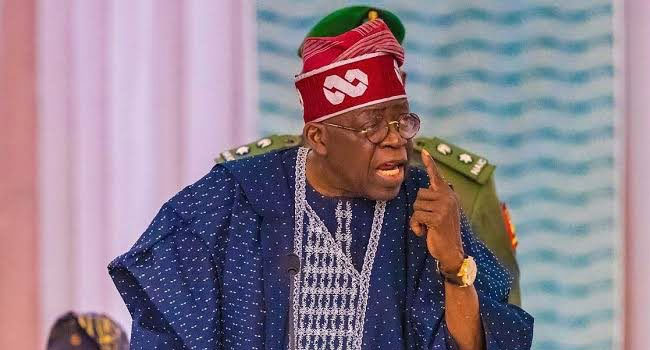
President Bola Ahmed Tinubu yesterday conferred posthumous national honours on four prominent Ogoni leaders, while directing immediate steps to finalise modalities for the resumption of oil production in Ogoniland, suspended for three decades following the killing of Ken Saro-Wiwa and eight other activists.
The honourees: Chief Edward Kobani, Chief Albert Bade, Chief Samuel Orage, and Chief Theophilus Orage, were allegedly murdered in 1994 at the height of Ogoni protests against environmental degradation caused by oil exploration. The four were accused of collaborating with the late military dictator, General Sani Abacha, and were widely believed to have been murdered during unrest over their perceived alignment with the regime.
Their deaths were quickly politicised: Saro-Wiwa and his Movement for the Survival of the Ogoni People (MOSOP) had accused them of betraying the Ogoni cause, while the Abacha government alleged that the Ogoni Nine, led by Saro-Wiwa, orchestrated their murder. After a military tribunal condemned them without compelling evidence, the nine were executed in 1995 in what has been globally acknowledged as judicial murder.
The international outrage that followed led to Nigeria’s suspension from the Commonwealth and forced Shell Petroleum to halt operations in Ogoniland, creating a de facto moratorium on oil production that has lasted 30 years.
Tinubu’s decision to honour the Ogoni Four comes just three months after he also conferred national recognition on Saro-Wiwa and the other eight activists. Analysts say the dual gestures are designed to heal old wounds and pave the way for renewed drilling in one of Nigeria’s richest oil belts.
At a ceremony in Abuja yesterday, Tinubu received the report of the Presidential Committee on Ogoni Consultations, chaired by Professor Don Baridam. Rivers State Governor Siminalayi Fubara led the Ogoni delegation to the State House.
“We are not, as a government, taking lightly the years of pain endured in Ogoniland. Otherwise, we would not be here today. The Federal Government truly acknowledges the long suffering of the Ogoni people, and today, we declare with conviction that hope is here, and hope is back with us,” Tinubu said.
The President directed the National Security Adviser (NSA), Mallam Nuhu Ribadu, to engage the Nigerian National Petroleum Company Limited (NNPCL), the Ogoni people, and other stakeholders to finalise modalities for renewed oil operations. “We must start by addressing non-valuable assets, which are of no benefit to the community, the country, or its people,” he said. He also instructed the Minister of Environment and the NSA to integrate their programmes into the wider dialogue and implementation process.
Tinubu insisted that any return of oil drilling would rest on equity, environmental protection, and direct community benefit. “The sacrifices of the Ogoni people will not be in vain,” he assured.
Governor Fubara welcomed the gesture, citing visible confidence-building steps such as improvements to the East-West Road and the establishment of the Federal University of Environment and Technology.
NSA Ribadu added that trust-building measures had already eased tensions. “All through the process, tensions and divisions were carefully mediated, and dialogue prevailed over confrontation. The report we present today is the outcome of intensive, methodical, and transparent consultations,” he said.
He disclosed that stakeholders had unanimously called for the repositioning of the Hydrocarbon Pollution Remediation Project (HYPREP) to align with environmental restoration, while ensuring structured community participation through equity funds, employment opportunities, and institutional representation.
Professor Baridam, who chaired the consultations, commended Tinubu for what he called “landmark gestures” to both sides of the Ogoni divide. He said recognising Saro-Wiwa and the Ogoni Nine in June, and now the Ogoni Four, had restored trust in government.
Critics argue that the honours primarily serve the Federal Government’s interest in restarting oil production in Ogoniland. For them, the memory of Ken Saro-Wiwa’s execution, long acknowledged worldwide as a miscarriage of justice, remains a painful reminder that reconciliation in Ogoni must mean more than a symbolic handshake before the oil wells roar back to life.
Discover more from Keeping Them Honest
Subscribe to get the latest posts sent to your email.