

By Peter Salami
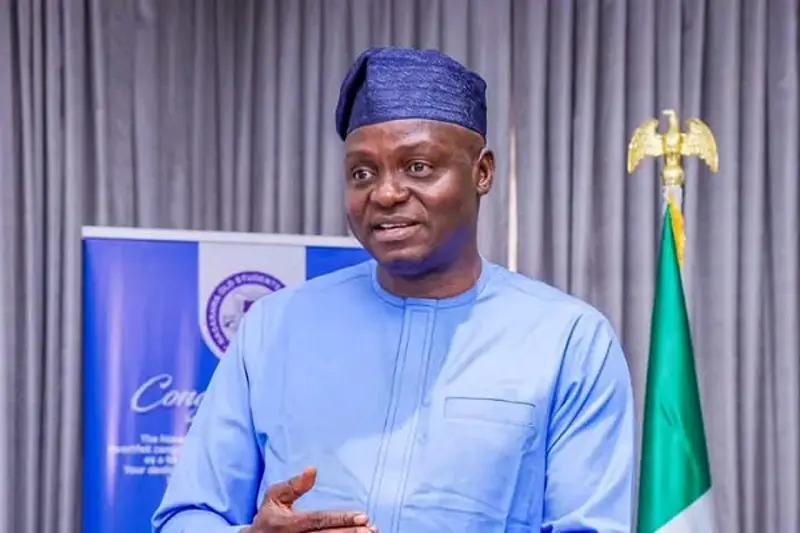
Professor Nentawe Goshwe Yilwatda, former Minister of Humanitarian Affairs and a renowned technocrat, was elected National Chairman of the All Progressives Congress (APC) on Wednesday in a move party leaders described as a “strategic reset” ahead of the 2027 elections. His emergence followed weeks of consultations culminating in a consensus endorsement by the APC’s National Executive Committee, restoring the chairmanship to the North-Central zone after a prolonged internal agitation for regional balance.
Born on August 8, 1968, in Dungung, Kanke Local Government Area of Plateau State, Yilwatda’s journey to political prominence has been marked by a blend of academic distinction and public service. A professor of Digital Systems Engineering, he holds a BEng from the Federal University of Agriculture, Makurdi, a Master’s from Abubakar Tafawa Balewa University, Bauchi, and a PhD from the University of Nigeria, Nsukka. His academic and professional career spanned nearly two decades, including a tenure as Director of ICT and member of the Senate at the Federal University of Agriculture, Makurdi.
Yilwatda first entered the public limelight as a Resident Electoral Commissioner (REC) appointed by President Muhammadu Buhari in 2017. He oversaw elections and coordinated voter accessibility initiatives in several states. His resignation from INEC in 2021 set the stage for his political debut. He clinched the APC governorship ticket for Plateau State in 2022 and ran a spirited campaign in the 2023 general election. Although initially declared defeated by the PDP’s Caleb Mutfwang, a Court of Appeal ruling briefly reversed the outcome before the Supreme Court reinstated Mutfwang’s victory in early 2024.
In October 2024, Yilwatda was appointed Minister of Humanitarian Affairs, Disaster Management, and Social Development by President Bola Ahmed Tinubu. His tenure was marked by ambitious reforms aimed at digitizing welfare delivery and transitioning Nigeria’s humanitarian response from reactive aid to durable, productivity-based interventions. He championed the digital transformation of social registers, eliminated cash-based handouts, and advocated for climate-smart agricultural programs for Internally Displaced Persons (IDPs). He also pushed for large-scale youth empowerment through digital talent exports and convened the first National Humanitarian Roundtable to create a coordinated national response to disasters.
However, critics argue that despite his technocratic brilliance, his reforms lacked grassroots impact. His home region of Plateau State, still grappling with recurring violence and humanitarian crises, witnessed little tangible relief under his ministerial oversight. The APC North-Central Forum openly criticized his ministry’s visibility in the zone, even as his profile rose within the national leadership.
Yilwatda’s elevation to APC National Chairman is widely seen as a balancing act for the party. His technocratic credentials, experience in governance, and electoral administration are expected to help the APC reset its internal structures and public image as it gears up for the 2027 elections. Yet, observers believe his leadership will be tested by the need to translate policy sophistication into real political relevance, particularly in re-energizing the party’s base and navigating Nigeria’s complex political dynamics.
For a party grappling with internal dissent and a credibility deficit, Yilwatda’s emergence represents a gamble on competence over raw political muscle. Whether this gamble pays off will be determined by his ability to consolidate party unity, drive inclusive engagement, and steer APC back to electoral competitiveness in the coming years.
Discover more from Keeping Them Honest
Subscribe to get the latest posts sent to your email.