

By Yinka Giwa
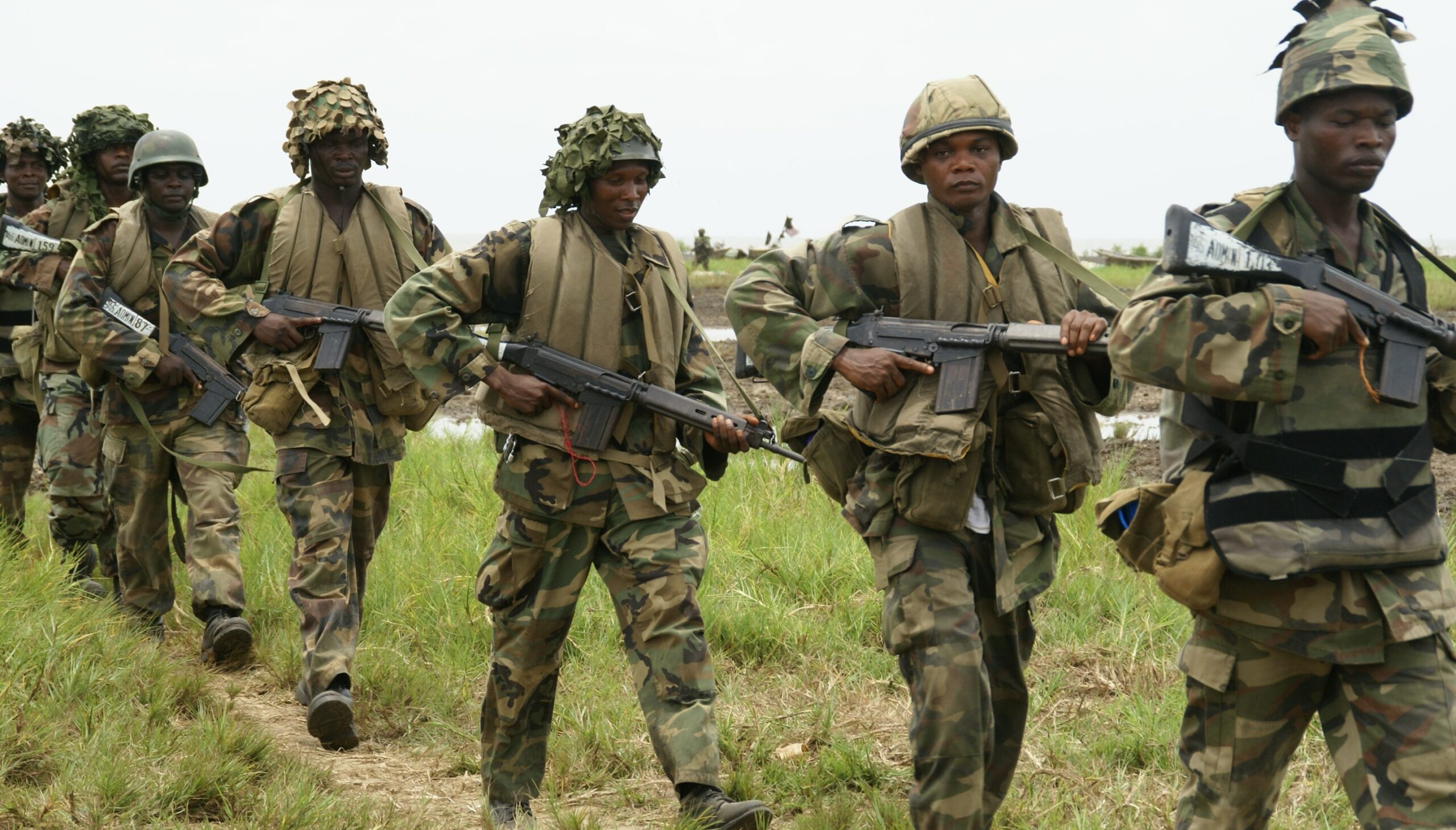
Retired Major-General IBM Haruna has urged the Federal Government to resist the growing calls to engage private military contractors in addressing Nigeria’s deepening insecurity, warning that such a move could undermine national sovereignty and weaken internal capacity.
But while the general’s views reflect traditional security orthodoxy, global conflict analysts argue that private military contractors (PMCs) have, in fact, played pivotal roles in tipping the balance in some of the world’s most intractable wars , including briefly in Nigeria’s own fight against Boko Haram.
In an interview with the News Agency of Nigeria (NAN), Haruna, a civil war veteran and former Federal Commissioner for Information , said Nigeria should focus instead on recruiting more security personnel and building internal resilience through non-military approaches.
“Nigeria is not short of military officers or people with intelligence and the ability to apply modern warfare techniques,” he said. “Rather than outsourcing our security challenges, we should expand and equip our forces.”
However, security observers point to multiple documented instances where private military outfits such as Executive Outcomes, STTEP International, and Academi (formerly Blackwater) have been instrumental in turning the tide in major conflicts.
In Sierra Leone during the 1990s, the South African PMC Executive Outcomes helped the government defeat the Revolutionary United Front (RUF), securing key territories and rescuing the capital, Freetown, from imminent collapse. Their swift, decisive operations were widely credited with halting a brutal civil war before the arrival of UN peacekeepers.
Similarly, in Nigeria, under the President Goodluck Jonathan administration, a PMC led by a retired South African Colonel ( name withheld) was covertly brought in during the critical months of 2014–2015 when Boko Haram had overrun large parts of the Northeast. Their tactical interventions helped Nigerian forces recapture over a dozen towns and disrupted key insurgent operations, ensuring that the 2015 elections were held in all constituencies nationwide.
Despite the success of that operation, the contract was discontinued under the President Muhammadu Buhari government, prompting debate among military experts about the long-term cost of halting an effective campaign midway.
According to one international defence analyst, “Private contractors bring speed, technical expertise, and a ruthlessness that state forces often lack due to bureaucracy or political hesitation. They are not a perfect solution, but in asymmetric warfare, they are decisive.”
In Iraq and Afghanistan, PMCs played supporting roles alongside US and coalition forces, offering logistical support, base protection, intelligence gathering, and training missions. While their presence was sometimes controversial, their contributions to battlefield efficiency were overwhelming.
General Haruna, however, remains unconvinced. He emphasised the need for a multi-dimensional security approach, arguing that a military-only solution , whether public or private, cannot sustainably resolve Nigeria’s complex security crises.
“The mechanism that the government should adopt is not just the kinetic destruction of the little we have. They must look at the social, economic, and political dimensions that create insecurity,” he said.
He also dismissed proposals to recall retired generals, including himself, to assist in the current fight. “Let those who are currently in service do the work. We have the personnel. What we lack is political commitment and strategic coordination,” he noted.
Despite his caution, defence commentators believe Nigeria may, at some point, need to formally revisit the PMC option, particularly in hard-to-reach regions where local capacity has been stretched thin.
“Let’s be clear,” said a top-level ex-military source. “Private military contractors are not a silver bullet. But when a government is overwhelmed, and conventional methods fail, refusing proven support out of sentiment can be costly.”
Haruna also touched on broader national issues, including the structure of the 1999 Constitution, the integrity of the electoral process, and the state of Nigeria’s key institutions. He acknowledged the flaws in the system but insisted that the solutions must come from within.
“The people make the process. If there is corruption, electoral malpractice, or abuse of power, it’s because we allow it. We need a moral reset,” he said.
Discover more from Keeping Them Honest
Subscribe to get the latest posts sent to your email.