

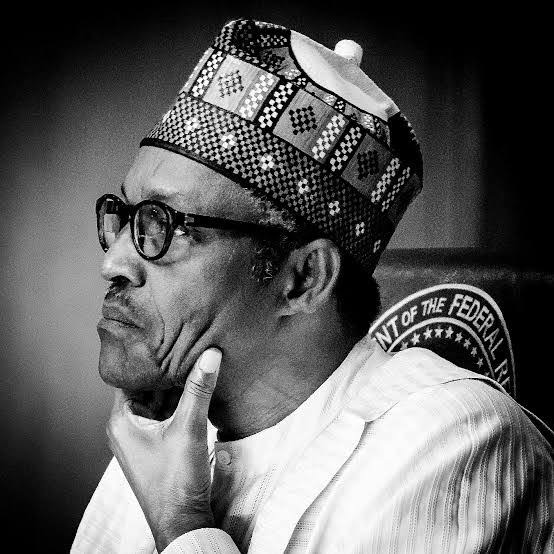
With the passing of former President Muhammadu Buhari in London and his burial in his hometown of Daura, Nigeria has reached the end of a significant chapter in its political history. As a publication dedicated to truth, transparency, and accountability, Keeping Them Honest takes this moment to reflect on a man who defied political conventions, redefined what persistence in public service looks like, and left behind a legacy both impactful and instructive.
President Buhari’s life was not without its contradictions. Nor was his leadership without controversy. But few would argue against the fact that he was one of the most consequential political figures in modern Nigerian history. From soldier to military head of state, from perennial opposition candidate to democratically elected president, Buhari’s journey was the stuff of political epics.
What set him apart was not charisma or oratory. It was character: quiet, stubborn. Often underestimated and sometimes, like many others before him, largely overestimated. Regardless, his personal austerity was remarkable. He lived simply, rarely indulged in public theatrics, even though he had the traditional wry soldier’s sense of humour. Yet he bore the burdens of leadership with stoic calm.
Buhari was often misunderstood, especially by critics who expected a more responsive, media-savvy leader. But he didn’t govern by spectacle as much as he did by resolve. That approach earned him fierce loyalty from millions of ordinary Nigerians, especially in the North, who saw in him a man who exemplified the values of discipline, faith, restraint, and truth.
But even his supporters must admit: his presidency had its shortcomings. The administration was at times slow to act, opaque in communication, and struggled with economic diversification and security, even in his Northern region. Yet, it would be dishonest to ignore the many things Buhari did get right.
His commitment to infrastructure was significant. He chose to wholesomely pursue and complete projects started by his predecessor, where others would have demurred and started new ones. While at that, he started new ones, so that major highways, rail projects, bridges, and airports were completed and commissioned under his watch. His Social Investment Programmes, including N-Power and the school feeding scheme, targeted the most vulnerable Nigerians and were unprecedented in scope and reach. The fight against corruption, though imperfect, was given a moral anchor by Buhari’s own personal example. No one credibly accused him of self-enrichment.
Buhari also accomplished what was once considered politically impossible when he won the 2015 Presidential Election against a sitting president. Even though that moment reset Nigeria’s democracy in a manner of sort, it must be said the triumph of that election lay not only in Buhari’s victory, but in the extraordinary concession made by then-incumbent President Goodluck Jonathan.
In a moment that would reverberate across the continent and the world, Jonathan chose not to contest the result. He picked up the phone, called Buhari, and offered his congratulations, even before the final tally was announced. In doing so, he protected the peace, upheld the republic, and reinforced the idea that democracy is not about power, but about process. Buhari’s presidency began with that gift of democratic maturity, and it is part of a shared legacy he now leaves behind.
To many who operated within the Nigerian political space, Buhari’s style could be frustrating. His silences were long. His circle, often impenetrable. Yet his sense of mission was never in doubt. Buhari did not seek public validation. He sought to serve, and he did so on his own terms!
In the end, that is what defined him: not popularity, even though he was among his teeming supporters, but purpose.
As Nigeria buries its former president, we at Keeping Them Honest Daily are compelled to ask: what do we take away from the Buhari years?
We take away a reminder that simplicity is not weakness. That perseverance matters. That integrity is still a valuable currency in public life. And that in a nation starved of moral leadership, Buhari offered a great example.
We also take away the need for balance. Integrity must be matched with competence. Discipline with responsiveness. Vision with inclusion. Buhari gave Nigeria life and time as part of the equation. It is up to future leaders to complete it.
In his twilight years, Buhari often said he wanted to retire to Daura and live in peace. That wish has now been fulfilled, even if not in the way the nation, and maybe even himself, expected. But whether we like it or not, he has returned home. He was a soldier, statesman, and leader who gave what he had to give, and who now belongs to the judgment of history.
Let that judgment be honest.
He was not flawless. No one is. But he was faithful. And in public life, that counts for a lot of things!
Rest in peace, Mai Gaskiya.
Discover more from Keeping Them Honest
Subscribe to get the latest posts sent to your email.