

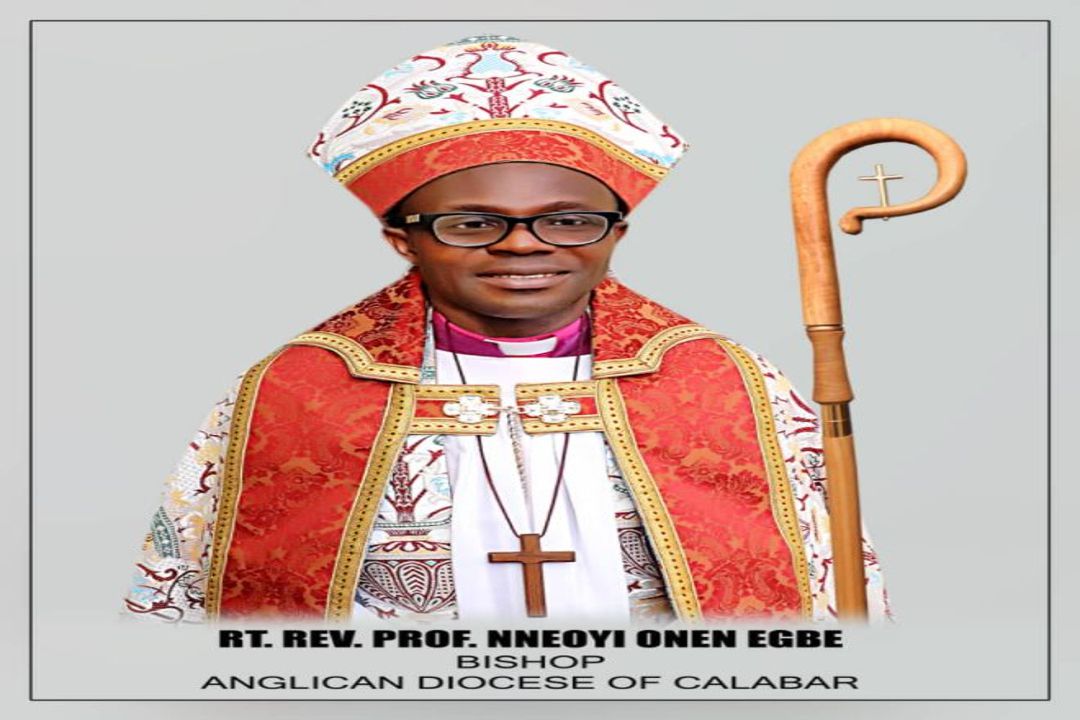
The Bishop of the Anglican Diocese of Calabar, Rt. Rev. Prof. Nneoyi Onen Egbe, yesterday delivered a scathing critique of Nigeria’s national trajectory, saying the Chairman of Independent National Electoral Commission (INEC) should be appointed by a body of clergy men and independent body, and not appointed by Federal Government.
He stated this during the 2nd Session of the 12th Synod media briefing at St. Jude’s Anglican, Eke Effiong Nta.
Bishop Egbe noted that the head of the electoral umpire is bound to dictate to the tune of his or her employee, hence the need to empower the clergymen and independent bodies to do the job.
Speaking further, Bishop Egbe expressed gratitude to the press for their four years of support and media partnership with the Diocese.
The clergyman praised Governor Bassey Otu for what he described as “people-focused leadership.”
“We can testify that the good days of Cross River are gradually returning,” he said.
He highlighted improved security, infrastructural developments like the Wanakande-Iyahe and Adiabo-Creek Town roads, as well as the upscaling of agricultural efforts with AfDB support.
The bishop also lauded the introduction of the JESUS (Easter) Carnival, calling it a unique initiative that honors God in governance.
“This carnival should not be politicized. It should remain church-driven to fulfil its divine purpose,” he cautioned.
In sharp contrast, Bishop Egbe issued a damning verdict on the state of the Nigerian nation:
“The Nigerian nation is, in simple words, dead. Laws are not working, institutions are hijacked, and leaders are numb to reality,” he declared.
Enumerating the Diocese’s accomplishments, Bishop Egbe noted several key areas of impact:
“We have made remarkable progress in education, theological training, community support, and infrastructural empowerment,” he said.
The Diocese appointed an Education Secretary, launched scholarship schemes for indigent members, supported pastoral education, and commenced the establishment of a Diocesan Printing Press. Agricultural investment initiatives are also underway.
He further revealed that the church has expanded outreach to rural communities, empowered widows and the elderly, and provided boreholes and homes for those in need.
“Although we don’t often publicize these, our synods offer us a moment to reflect on our impact,” the Bishop stated.
Discover more from Keeping Them Honest
Subscribe to get the latest posts sent to your email.