

By Patrick Abang, Calabar
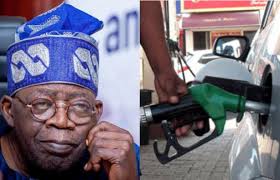
The Vice Chancellor of the University of Calabar(Unical), Prof. Florence Obi, has stated that the removal of fuel subsidy by President Bola Ahmed Tinibu’s administration is a step towards national development.
Prof. Obi stated this during the 1st International Hybrid Conference themed; ” Oil Subsidy Removal And National Development: The Missing Links And Unmasking the Truth”, organized by the Faculty of Social Sciences held at the ASUU Secretariat, Unical.
She noted that the policy marks a significant milestone in Nigeria’s journey towards economic reform and sustainability.
Represented by the Deputy Vice Chancellor, Research, Linkages & Collaborations, Prof. Peter C. Okafor, she opined that the subsidy regime had become unsustainable, triggering inflationary pressures and diverting resources away from critical sectors such as education, healthcare, and infrastructure.
She commended the Faculty of Social Sciences for choosing the theme, describing it as timely and thought-provoking.
The University of Calabar, she said, is proud to host the conference, providing a platform for scholars, policymakers, and stakeholders to share insights and shape the discourse on national development.
Prof. Obi expressed optimism that the conference deliberations would contribute meaningfully to the ongoing national conversation on economic reform and development.
Urging participants to approach the conference with a broader perspective, she emphasized that the gathering should not be seen merely as an academic exercise, but rather as a national call to truth, transparency, and transformation.
The Conference Chairman, Ntufam Dr. Peter Abang Ojie, also described the topic as apt, noting that the last two years have reignited debates on subsidy removal due to its perceived impact on the national economy and citizens’ welfare.
He stated that the conference would provide academics with a platform to critically examine the controversies surrounding fuel subsidy removal and offer solutions.
The Dean of the Faculty of Social Sciences, Prof. Enang Udah, noted that the debate over fuel subsidy removal has been ongoing for decades, with successive regimes struggling to deregulate the petroleum industry.
He commended President Bola Ahmed Tinubu for taking a bold step to remove fuel subsidy, adding that, he demonstrated strong political will to liberalize the refined petroleum market.
According to Prof. Udah, the conference aims to respond to the question of the merits or demerits of subsidized petroleum products and its effects on national development.
He expressed hope that the intellectual discussions would generate a useful communiqué to assist policymakers.
The Chairman of the Organizing Committee, Prof. Agba Ogaboh, described the theme as both timely and critical, given the far-reaching implications of subsidy reforms on Nigeria’s socio-economic and political landscape.
He noted that the removal of oil subsidy is a contentious policy decision that affects every facet of Nigerian life, from transportation and food prices to public trust in governance and wealth distribution.
Prof. Ogaboh said the conference aims to create a platform for diverse perspectives from academia, government, and civil society to converge, assess empirical outcomes, and chart a more inclusive and transparent pathway to national development.
The keynote speaker, Prof. Uwem Essia from the Pan African Institute for Development, Yaounde, Cameroon, stressed that while the removal of fuel subsidy was ill-timed, it was a step in the right direction.
He emphasized that the issue lies not with the removal itself, but with the management of the gains and resources.
Prof. Essia recommended that the government consider subsidizing other sectors, such as education and electricity, or invest in development projects.
Guest speaker Dr. Charles Bassey supported the removal of fuel subsidy, stating that it was necessary to stabilize fuel prices and boost the economy.
He described fuel subsidy as an unsustainable burden that Nigeria had to let go of to pave the way for meaningful progress.
The lead discussants, comprising Sen. Stephen Odey, Commissioner of Education in Cross River State, and Prof. Bassey Ebi of the Department of Economics, University of Calabar, also shared their perspectives on the issues surrounding fuel subsidy removal.
They provided valuable insights and recommendations on how to address the challenges and maximize the benefits of the policy.
In a gesture of appreciation, the conference organizers presented mementos to the Conference Chairman, Keynote speaker, Guest Speaker, the two lead discussants, and the Dean of the Faculty of Social Sciences, marking a highlight of the event.
Discover more from Keeping Them Honest
Subscribe to get the latest posts sent to your email.