

…Commission blames typographical error for alarm in educational sector
…Says investigation ongoing
By Peter Salami
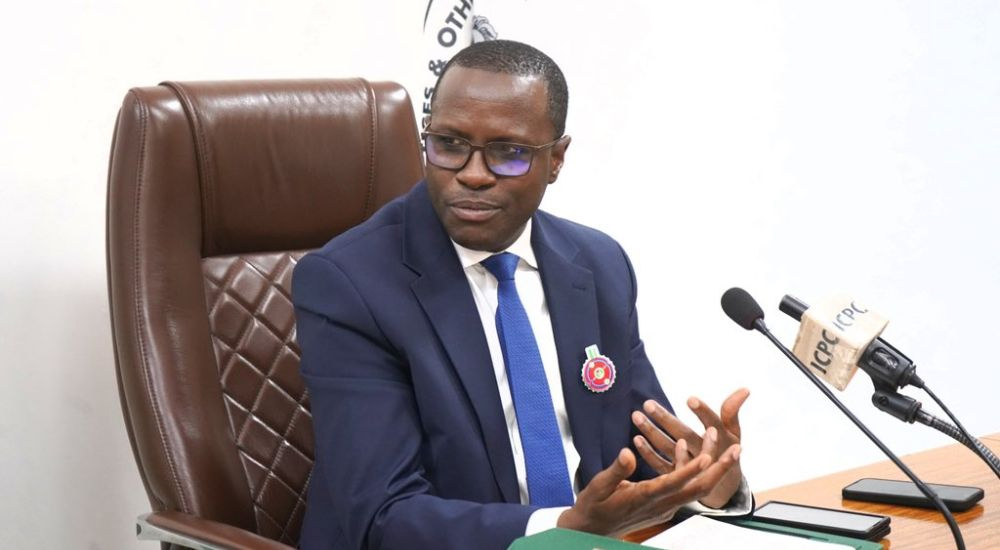
The Independent Corrupt Practices and other Offences Commission (ICPC), has reversed itself on the earlier statement that there were discrepancies in the disbursement of funds by the Nigerian Education Loan Fund (NELFUND), blaming it on a typographical error.
According to ICPC, the word “NOT” was missing in the second to the last paragraph of its earlier press release in respect of an ongoing investigation regarding Student Loan Scheme. The missing word created an erroneous impression that the alleged discrepancies or diversion has been established.
“We admit that this is not the case, indeed we accept that the same part of the sentence also contradicted the whole paragraph.
“The paragraph ought to read: The ICPC confirmed that a clear case of discrepancies has NOT been established in the administration of the student loan scheme and announced that its investigation will now extend to beneficiary institutions and individual student recipients
“For avoidance of doubts, the Commission has only established the total amount of funds received and disbursed so far by NELFUND.
“The impression of diversion and the issue of discrepancies do not exist at this stage; the investigation would have to move into the receiving institutions and persons before any reasonable deductions could be made.
“It is hereby reiterated that the commission does not engage in media trials nor does it usurp the power of the judiciary to indict persons or organisations.
“The general public is urged to exercise patience as thorough investigations require time and ample resources. However, persons with information of value are encouraged to reach out to the Commission through [email protected]
“The earlier error, though already corrected on our Website, is regretted. Our investigations are still ongoing, and there are no indictments yet,” the statement read.
Earlier on, the ICPC had raised an alarm over what will appear to be missing billions of naira at NELFUND., as part of what it described as a “comprehensive investigation” into N100 billion released by the Federal Government for disbursement as student loans under the Nigeria Education Loan Fund (NELFUND).
Similarly, the federal ministry of education, has also commenced investigation in the disbursement of the funds, meant to alleviate the suffering faced by Nigerian students in the pursuit of tertiary education.
In a statement yesterday, the anti-corruption agency said that the investigation is prompted by recent media report, alleging that no fewer than 51 tertiary institutions were implicated in illegal deductions and exploitation related to the NELFUND scheme.
It said that the institutions were alleged to have made unauthorized deductions ranging from N3,500 to N30,000 from each student’s institutional fees received through the loan fund.
The statement by the ICPC spokesman, Demola Bakare, said that preliminary findings revealed a significant gap in the financial records of the disbursement process.
“While the Federal Government reportedly released N100 billion for the scheme, only N28.8 billion was disbursed to students, leaving an unaccounted sum of N71.2 billion.
“The Commission confirmed that its Chairman’s Special Task Force immediately swung into action upon receiving the report.
“Letters of investigation and invitations were dispatched to key stakeholders, including the Director General of the Budget Office, the Accountant General of the Federation, and senior officials from the Central Bank of Nigeria.”
The statement said that the Chief Executive Officer and Executive Director of NELFUND were invited to provide documentation and explanations relevant to the case.
According to the Commission, the responses received were critically analyzed, and interviews were conducted with the concerned individuals.
According to the ICPC, its strength of investigation revealed that the total money received by NELFUND as of March 19, 2024, was N203.8 billion.
“The breakdown showed that N10 Billion was an allocation from the Federation Allocation Account Committee, N50 billion was from the Economic and Financial Crimes Commission, N71.9B was from the Tertiary Education Trust Fund, while another N71.9 billion was also from the same Tertiary Education Trust Fund.”
ICPC, however, found that the total amount disbursed to institutions from inception to date is about N44,200,933,649.00, while a total of 299 institutions have benefited from the funds released.
To date, the total amount disbursed to 299 beneficiary institutions stands at approximately N44.2 billion, with 293,178 students having benefited from the fund.
The ICPC confirmed that a clear case of discrepancies has been established in the administration of the student loan scheme and announced that its investigation will now extend to beneficiary institutions and individual student recipients.
On its part, the Ministry of Education said it is investigating allegations of unauthorised deductions from students’ loans and NELFund accounts by universities.
The ministry’s Director of Press and Public Relations, in a statement, said that an urgent meeting has been scheduled for 6 May 2025 with the vice chancellors of the affected universities and the Managing Director of NELFund.
The statement from the Ministry read:
“The Federal Ministry of Education has received with deep concern a report published by The Guardian Newspaper on Tuesday, April 29, 2025, alleging some Nigerian universities to have made unauthorized deductions from funds disbursed under the Nigerian Education Loan Fund (NELFund) scheme.
“The Honourable Minister of Education, Dr. Marut Olatunji Alausa, described the allegations as ‘very disturbing and extremely concerning,’ emphasizing that any unauthorized deductions from student loans not only breach financial ethics but also undermine the very foundation upon which NELFund was established. He stated that if proven true, such actions would constitute a gross violation of public trust and a betrayal of the government’s commitment to equitable access to education.
“As part of our National Education Sector Reform Initiative (NESRI), governance remains the top pillar of our agenda,” Dr. Alausa said. “We are committed to strengthening transparency, promoting responsible financial conduct, and ensuring that every kobo allocated for student welfare is used appropriately. Let me assure Nigerians that this matter will not be swept under the carpet. Anyone found culpable will face appropriate sanctions.”
“Dr. Alausa further emphasized that President Bola Ahmed Tinubu, who established NELFund as a flagship initiative, made adequate budgetary provisions to support both students and institutions in a fair and transparent manner.”
NELFund was created to expand students’ access to high-quality education and to support universities financially in a legal and sustainable way. Any attempt to exploit this fund is unacceptable and contradicts the President’s vision for inclusive human capital development.
“The Honourable Minister reaffirmed the administration’s commitment to protecting public funds and ensuring that students receive the full benefits of all government education support schemes.
“In response, the Ministry is convening an urgent meeting on May 6, 2025, with the Vice Chancellors of the affected universities and the Managing Director of NELFund. The meeting will aim to thoroughly investigate the matter, ensure full accountability, and reaffirm the Ministry’s zero-tolerance policy toward financial malpractice in the education sector.
“To reinforce this effort, the Ministry, in collaboration with the Athena Centre, will launch a compliance-tracking initiative and a countdown webpage to monitor institutional transparency. They will also offer technical assistance and introduce an Annual University Transparency Index to promote accountability and enhance the global relevance of Nigerian universities.
“Additionally, a training programme will be organised for bursars and ICT heads of universities and polytechnics on the development and maintenance of an open-portal initiative.”
Discover more from Keeping Them Honest
Subscribe to get the latest posts sent to your email.