

…Anyaoku, Attah Demand Inclusive, Democratic Framework at Constitutional Summit
By Jeremy Fregene
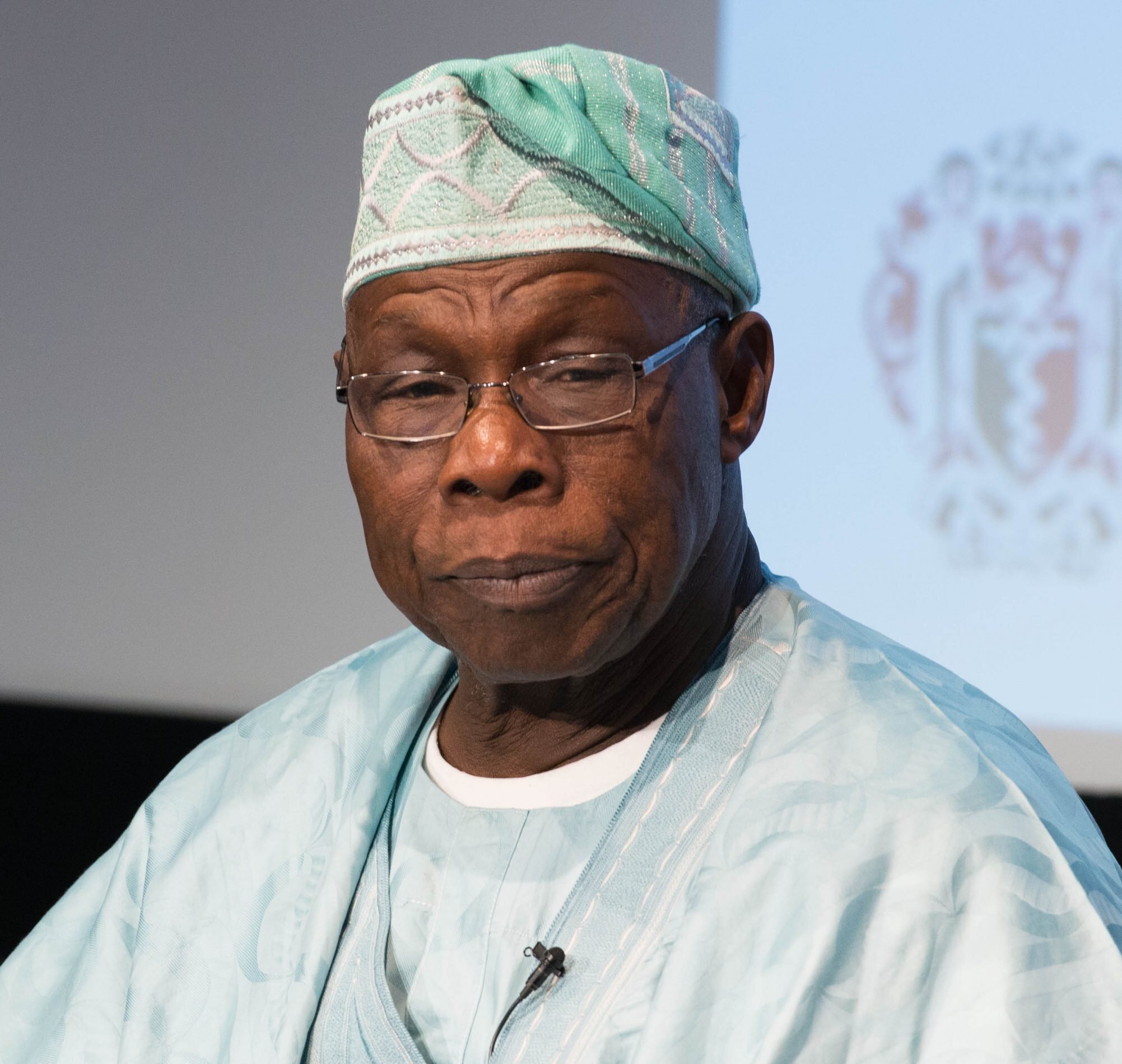
Former President Olusegun Obasanjo has said that the solution to Nigeria’s governance crisis does not lie in creating a perfect constitution, but in having the right people operating the existing one. Obasanjo stated this at the opening of a three-day National Summit on the Future of Nigeria’s Constitutional Democracy in Abuja on Tuesday.
The summit, organised by The Patriots in collaboration with the Nigeria Political Summit Group, brought together statesmen, former leaders, civil society groups, and public intellectuals to deliberate on a new constitutional order for Nigeria.
Represented by Mr. Olawale Okunniyi, Secretary-General of The Patriots, Obasanjo said, “No constitution is perfect. But whatever the strength or weakness of a constitution, the most important issue is the operators of the constitution.”
According to the former president, the Nigerian constitution, regardless of its flaws, could deliver good governance if implemented by selfless and honest leaders. “The best constitution can be perverted and distorted by the operators, and we have experienced that all over Africa—Nigeria not exempted,” he noted.
He warned that unless Nigeria replaces its current political operators with individuals of integrity and a commitment to the public good, the nation’s development and well-being would remain stunted.
“No matter what you do to the Nigerian Constitution, if the operators remain unchanged and continue in the same manner, the welfare and well-being of Nigerians will continue to be sacrificed on the altar of selfishness, corruption, impunity, and disregard for the Constitution,” he said.
Also speaking at the summit, former Governor of Akwa Ibom State, Obong Victor Attah, said Nigeria was being governed by a Constitution that lacked popular legitimacy and robbed citizens of their sovereignty.
Attah, whose remarks were also read by Okunniyi, said the 1999 Constitution was a military decree masquerading as a democratic document. “The military suspended the 1963 Constitution, which remains the last legal expression of our people’s collective will and agreed terms of staying together,” he argued.
He described the current Constitution as the foundation of a broken system. “We, from the South-South, join other zones who now agree this union is not working. It can only be sustained if restructured on the basis of equity, justice, and mutual consent.”
Attah called for a return to true federalism, where sovereignty belongs to the people and maximum autonomy is granted to federating units. “We must get rid of this unitary system and reinstate the federal system of governance that our founding fathers agreed to,” he said.
He proposed a unicameral legislature and the appointment of ministers only from elected representatives, in order to reduce the cost of politics and promote inclusive governance. “Nigeria’s unity will only be preserved through fairness and justice—not force or fear,” he warned.
Senator Gbenga Daniel, Co-Chairman of the Organising Committee and Chairman of the Senate Committee on Navy, described the summit as a “citizen-driven constitutional intervention” born from years of consultation and growing national urgency.
“The 1999 Constitution has consistently proven inadequate in addressing issues related to governance, equity, inclusion, and national cohesion,” Daniel said.
He revealed that the summit would examine Nigeria’s federal structure, the role of local governments and traditional institutions, resource control and fiscal federalism, judicial and electoral reforms, and national security.
“We will ensure that no voice is too small and no group is left behind. This summit is multi-generational, spanning regions and sectors. It truly embodies the Nigeria we aspire to build,” he added.
Daniel emphasized that the summit’s recommendations would be documented and presented to the Presidency and the National Assembly. “Our intention is not confrontation but constructive collaboration. We must persuade our leaders that Nigeria is in dire need of a new constitutional framework,” he said.
In his keynote address, former Secretary-General of the Commonwealth, Chief Emeka Anyaoku, said the current constitution was not democratically formulated and could not accommodate Nigeria’s pluralism.
Anyaoku stated that Nigeria’s pluralistic nature demands a new constitution made by elected representatives of the people. “The present 1999 Constitution was imposed by military decree. It induces over-expenditure on administration rather than capital development,” he said.
He noted that the current federal structure has failed to address Nigeria’s growing insecurity, poverty, youth restiveness, and declining infrastructure. “The present 36 federating units are incapable of generating and sustaining the pace of national development witnessed in the early years of independence,” he stated.
Anyaoku argued that only a democratically-formulated, truly federal constitution can reverse the trend. “To those who say leadership is all that matters, I say the system of governance derived from a constitution largely determines the character of leaders who emerge.”
He said the summit would develop key recommendations on the type of system Nigeria should adopt—whether presidential or parliamentary—along with tenure arrangements, power devolution, legislative structure, and security agency reform.
Other subjects under discussion include resource management, rights of citizenship, the structure of political parties, and the number of federating units.
Anyaoku stressed the importance of legitimacy, urging that any new constitution must be ratified by the people through a national referendum. “To be credible, the constitution must be endorsed by the Nigerian people. Anything short of this is just another elite arrangement,” he said.
The summit is expected to conclude with a communiqué outlining clear, actionable steps toward constitutional reform, to be submitted to relevant authorities for consideration and implementation.
Participants at the event include traditional rulers, civil society leaders, academics, former governors and ministers, retired judges, and youth representatives.
As Obong Victor Attah aptly concluded, “We must not be afraid to change; rather, we must be afraid not to change. If we miss this opportunity, the next chapter may be one of irreversible fragmentation.”
Discover more from Keeping Them Honest
Subscribe to get the latest posts sent to your email.