

…World Bank says states biggest beneficiaries of 69% real revenue surge—Capital spending jumps 151%
…President hails Nigerians taking CNG, EV options, unveils more buses, ₦3.3trn fuel-tax relief
By Abu Adamu
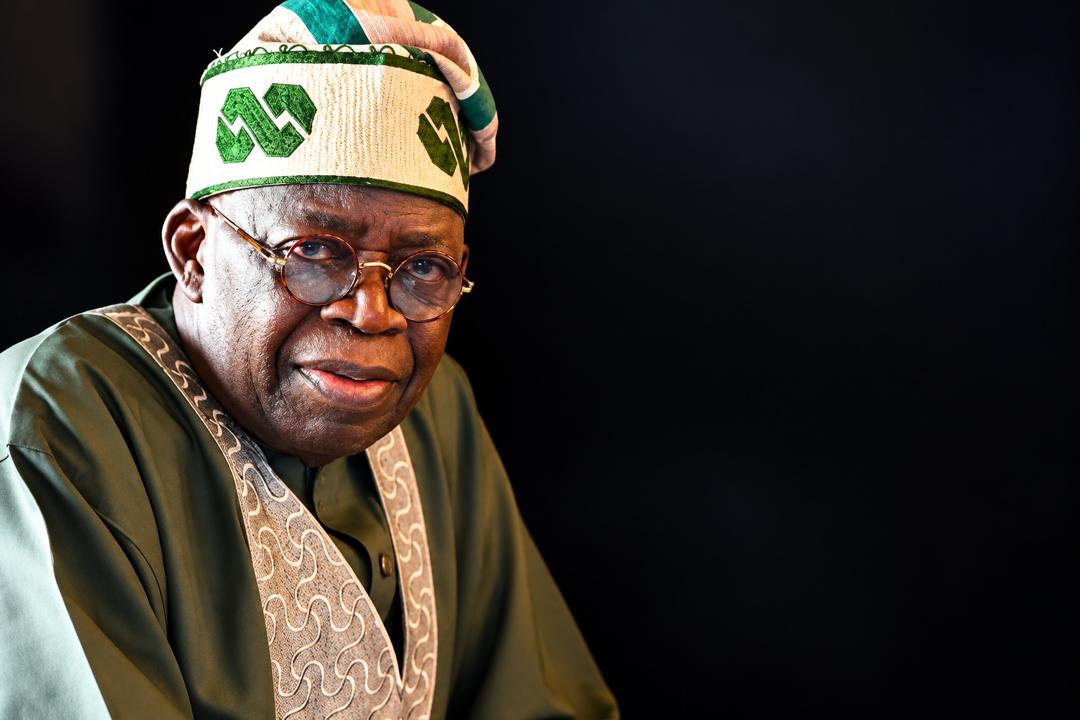
President Bola Ahmed Tinubu has challenged state governors to translate the massive increase in revenues flowing to them into tangible improvements in the lives of their citizens, declaring that Nigerians must increasingly feel the benefits of reforms through cheaper transportation, lower food costs, more jobs, and better public services.
The President’s charge came as the World Bank reported that states have emerged as the biggest beneficiaries of a 69 per cent real increase in federation revenues between 2023 and 2025, providing substantially greater fiscal room for governors to improve infrastructure and social services.
Tinubu said the Federal Government was already pushing measures designed to take the gains of reform directly to households, pointing to dramatic reductions in transport fares on some routes following the deployment of Compressed Natural Gas, CNG, and electric vehicles.
“I urge state governments to use their higher revenues more prudently and prioritise projects that improve the living standards of Nigerians, and the health and education of our people,” the President said.
The World Bank’s October 2026 Nigeria Development Update, titled Beyond the Federal Purse: How Higher Revenues Reshaped State Priorities, found that federation revenues increased by 69 per cent in real terms between 2023 and 2025, with states recording the biggest gains.
According to the report, the improved revenue position enabled states to increase capital expenditure by 151 per cent in real terms over the period, with much of the additional spending going into roads and transportation, agriculture, energy, and housing.
Twenty-nine of the 33 states covered in the relevant analysis shifted spending towards economic infrastructure, while real social spending per person increased in all but one state.
Internally generated revenue also grew in real terms in 31 of 35 states studied, while 21 states reduced their debt-to-GDP ratios between 2021 and 2025.
Welcoming the findings, Tinubu said they provided further evidence that the economic reforms undertaken by his administration had strengthened public finances and created greater room for all tiers of government to invest in Nigerians.
“These findings confirm that the difficult but necessary decisions to remove the petrol subsidy, unify the foreign exchange market, and strengthen fiscal discipline have raised revenues, stabilised the economy, and created fiscal space for every tier of government to invest in its people,” he said.
But Tinubu acknowledged that improved macroeconomic indicators and government revenues must ultimately translate into better living conditions for ordinary Nigerians.
“The dividends of reform are becoming visible. But more work remains to ensure they fully translate into better living standards for every household, starting with lower food prices and decent jobs for our young people,” he said.
The President separately pointed to falling fares on CNG and electric transport routes as an example of how government intervention could translate into direct savings for families.
Tinubu cited the experience of a commuter, Blessing, whose journey from Masaka to Berger in the Federal Capital Territory now costs ₦500 instead of ₦1,500 — a saving of ₦1,000 on each trip.
He also highlighted the experiences of Ada and Abigail, whose fares from Enugu to Nsukka had fallen from ₦4,000 to ₦1,600, representing savings of ₦2,400 per journey.
In Borno, according to the President, some commuters using CNG and electric vehicles are paying as little as ₦50 per trip.
Tinubu also cited the case of Kabir, a taxi driver who said ₦10,000 worth of CNG enabled him to make three more return trips than colleagues operating petrol-powered vehicles.
“Your various experiences show what our investment in CNG transportation is intended to achieve. Lower operating costs for drivers should translate into more affordable fares for passengers, leaving families with more money for their everyday needs,” Tinubu said.
The President acknowledged that removing the petrol subsidy imposed difficulties on households but said the decision also placed a responsibility on the government to develop cheaper and sustainable transportation alternatives.
He said the Federal Government was consequently working with state governments through the Nigeria Governors’ Forum and private investors to expand affordable transportation under the National Affordable CNG Transportation Programme.
Tinubu disclosed that Ekiti had received 15 buses and Lagos 20, while Akwa Ibom had 50 buses ready for service.
Katsina, he said, had introduced 30 CNG hybrid buses and 200 electric tricycles, while Kano had received 30 CNG buses and five electric buses. Another rollout is planned for Edo.
The President said Kaduna’s fleet of 100 CNG buses had already transported more than three million passengers.
Beyond mass-transit buses, Tinubu said more than 400 certified centres had converted over 120,000 vehicles to CNG, with the government also expanding refuelling infrastructure to make the cheaper fuel more readily available.
The President also outlined immediate interventions to cushion the impact of rising petrol prices on households and businesses.
According to him, the government has waived more than ₦3.3 trillion in fuel taxes and duties, while NNPC Retail is foregoing its profit margin for 30 days, with public transport operators receiving priority.
The administration has also announced a ₦1,350-per-litre ceiling on wholesale petrol supply costs as part of efforts to reduce price volatility.
“These measures are intended to ease the immediate burden while we continue expanding affordable transportation alternatives,” Tinubu said.
The World Bank report, meanwhile, showed that Nigeria’s economy expanded by 4.2 per cent in the first half of 2026, compared with 3.9 per cent during the corresponding period of 2025, despite disruptions arising from the conflict in the Middle East.
The Bank projects average economic growth of at least 4.4 per cent between 2026 and 2028.
It also found that Nigeria’s poverty rate had stabilised for the first time since 2019 and projected that it would gradually decline as economic growth begins to outpace population growth.
Inflation, which stood at 27.6 per cent in January 2025, had fallen to 15.2 per cent by December, although higher global fuel prices arising from the Middle East conflict subsequently slowed the decline. The World Bank expects inflation to ease towards 12 per cent by 2028.
Nigeria’s external position also strengthened, with the current account surplus rising to $12 billion in the first half of 2026 from $8.6 billion a year earlier, while gross external reserves increased from $45.5 billion at the end of 2025 to $53.8 billion by the end of August 2026.
Tinubu said his administration would continue expanding targeted cash transfers, which he said had reached more than 10 million households, while accelerating CNG deployment, boosting agricultural productivity and improving access to affordable healthcare and quality education.
He stressed, however, that government interventions must be financially sustainable rather than passing unsustainable costs to future generations.
“As President, I have a duty to provide relief today without compromising our children’s future,” Tinubu said.
“Every commitment must be sustainable and backed by a credible plan. That responsibility guides our decisions, including the difficult ones.”
The President said those seeking to lead Nigeria should similarly explain the costs of their promises, how they intended to finance them, and whether such commitments could be sustained.
“Promises are easy to make when the costs can be postponed, leaving Nigerians and future generations to pay the bill,” he said.
Tinubu said the stories of Nigerians already benefiting from cheaper CNG and electric transportation showed what the investments could mean at the household level, but acknowledged that millions of citizens were still waiting for similar services.
“Our responsibility is to keep expanding access until affordable transportation becomes a reality for more communities across our country.
“That is the work we will continue,” he said.
The President commended the Economic Management Team, state governors, and other stakeholders for their roles in implementing the reforms, but insisted that the increased resources now available to governments must increasingly show up in Nigerians’ daily lives.
He said the Renewed Hope Agenda 2.0 would concentrate on accelerating that transition from stronger government finances and macroeconomic stability to improved household welfare and shared prosperity.
“I assure Nigerians that the best is yet to come under the Renewed Hope Agenda 2.0, which will accelerate the delivery of shared prosperity for all Nigerians,” Tinubu said.
Discover more from Keeping Them Honest
Subscribe to get the latest posts sent to your email.