

By Franklin Adole
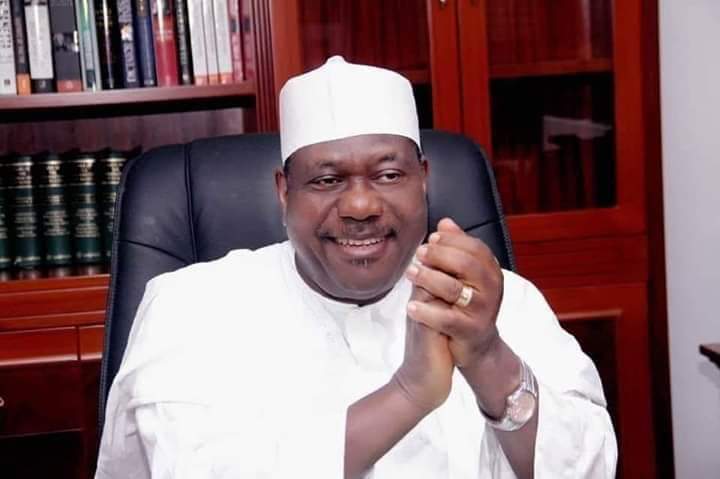
Secretary to the Government of the Federation, Senator George Akume, on Wednesday gave a broad account of President Bola Tinubu’s initiatives to ease living costs, create jobs and strengthen the Nigerian economy, saying the administration’s reforms were beginning to yield results after difficult decisions taken to avert an economic crisis.
Speaking at the 66th Independence Anniversary Lecture in Abuja, Akume highlighted interventions spanning cheaper transportation, education, agriculture, infrastructure, power, healthcare, housing, social protection and security.
He said the administration inherited severe economic challenges in 2023 and was compelled to take difficult measures, including removing the petrol subsidy, unifying the foreign exchange market and introducing fiscal and tax reforms.
“This administration took office in 2023 and immediately took bold decisions needed to save the nation from imminent collapse,” Akume said.
“These were difficult decisions, but necessary to rebuild stability and we have started enjoying the results.”
The SGF, however, ruled out reversing the petrol subsidy removal, declaring: “We will not return to the ruinous petroleum subsidy regime of the past.”
Akume said the government was instead pursuing alternatives designed to reduce transportation costs, particularly through the Presidential Compressed Natural Gas Initiative.
According to him, more than 120,000 vehicles have been converted to CNG, while over 400 conversion centres and 90 fuelling stations have been established nationwide.
“This shift is cutting fuel costs for motorists and commuters. CNG buses now carry millions of passengers at fares far below those of petrol buses,” he said.
Akume also pointed to economic growth, citing World Bank figures which he said showed real GDP expanding by 4.2 per cent in the first half of 2026, compared with 3.9 per cent in the corresponding period of the previous year.
He acknowledged, however, that the next challenge was ensuring that improving macroeconomic indicators translated into tangible benefits for ordinary Nigerians.
“The task before us now is to ensure that growth translates into jobs and higher incomes for all Nigerians,” he said.
On infrastructure, the SGF listed the Lagos-Calabar Coastal Highway, Abuja-Kano highway, East-West Road, rail modernisation and port reforms among projects intended to improve connectivity, commerce and economic activity.
He said the administration was also expanding mortgage finance to stimulate housing construction and employment, while tackling longstanding electricity-sector problems through investment, improved transmission and billing reforms as well as the clearance of legacy debts.
In agriculture, Akume highlighted a $500 million World Bank credit for the Nigeria Sustainable Agricultural Value-Chains for Growth project, saying it would improve smallholder productivity, strengthen agricultural value chains and enhance food and nutrition security.
The SGF said young Nigerians were also central to the administration’s development agenda, pointing to the expansion of the Education Loan Fund and investments in technical and vocational education.
“We have expanded the Education Loan Fund so that millions of students can afford university and vocational studies,” he said.
“Our young people are not just leaders of tomorrow – they are partners in building Nigeria today.”
On healthcare and social protection, Akume said thousands of primary healthcare centres were being equipped while cash transfers and essential services were being expanded for vulnerable households.
He also said the government was strengthening national security through improved equipment, intelligence and coordination, alongside a new National Threat Assessment and five-year Strategic Defence Plan.
“Nothing matters more than the safety of our people,” he said. “When communities have opportunities and trust in justice, crime and violence decline. In that sense, development and security go hand in hand.”
Minister of Information and National Orientation, Mohammed Idris, who also spoke at the lecture, said the economy grew by 4.43 per cent in the second quarter of 2026, while domestic refining capacity was expanding and investment was returning to critical sectors.
Idris acknowledged that the reforms had demanded sacrifice and patience from Nigerians but stressed the importance of fact-based public discourse as the country approaches another electoral cycle.
“Political differences are legitimate in a democracy; they must never diminish our common identity as Nigerians,” the minister said.
Discover more from Keeping Them Honest
Subscribe to get the latest posts sent to your email.