

…Kwankwaso, Again, Calls for Restraint
By Abu Adamu
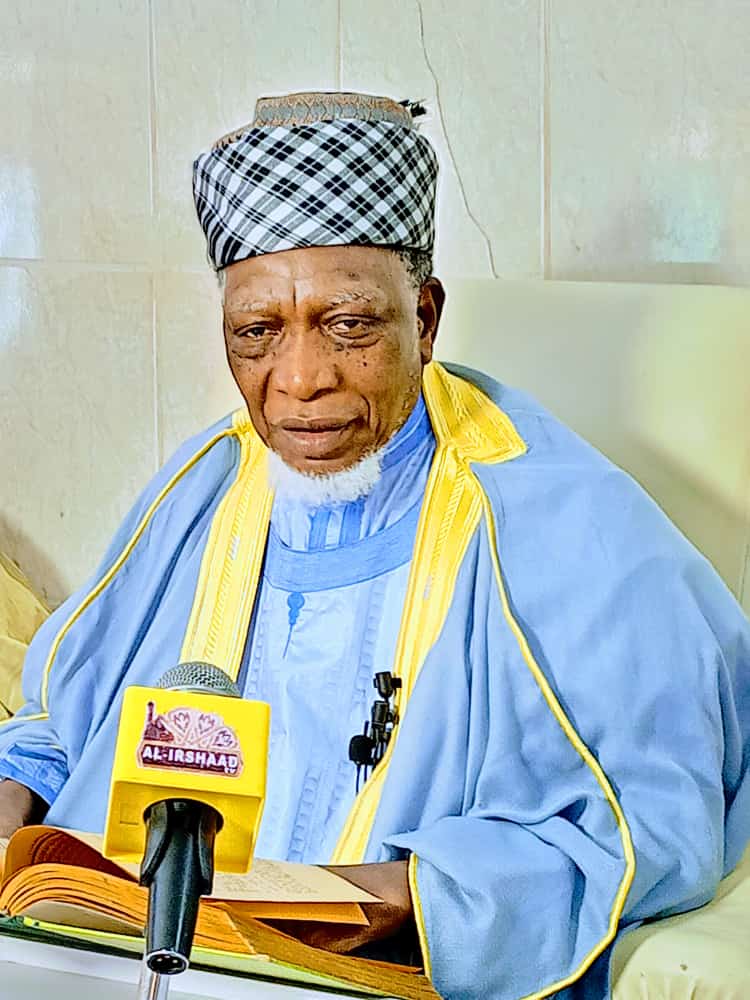
Islamic cleric Sheikh Sani Yahaya-Jingir has defiantly stood by his controversial remarks describing Christians as “infidels” and urging Muslims to support a Muslim-Muslim presidential ticket, declaring that he has no regrets despite widespread criticism.
The cleric’s latest comments came as the vice-presidential candidate of the Nigeria Democratic Congress (NDC), Senator Rabiu Musa Kwankwaso, called on the Federal Government to caution the influential preacher, warning that his remarks could deepen Nigeria’s religious and political divisions.
Speaking in an interview with BBC Hausa on Wednesday, Jingir dismissed demands for an apology, insisting that his support for a Muslim-Muslim presidency was rooted in his religious convictions rather than partisan politics.
“I will continue to support and encourage the Muslim-Muslim ticket. What they say would not stop me. They started it; at a point, we suffered in their hands,” the cleric said.
Jingir maintained that he would continue urging Muslims across the country to back Muslim-Muslim presidential tickets whenever the opportunity arose, arguing that he was merely discharging his responsibility as an Islamic preacher.
He said his position was not intended as a campaign for President Bola Tinubu but was based on what he considers an obligation to promote political choices consistent with Islamic beliefs.
The cleric, who recently stirred controversy during a Kano gathering where he described Christians as “infidels” while canvassing support for a Muslim-Muslim presidential ticket ahead of the 2027 elections, also challenged claims that Christians and other religious groups outnumber Muslims in Nigeria.
Jingir recalled that he embraced the Muslim-Muslim ticket after President Tinubu adopted the arrangement in the 2023 election, insisting that Muslims should continue to demonstrate their numerical strength through the ballot box.
His comments have generated sharp reactions across the country, with critics describing them as divisive and capable of inflaming religious tensions, while supporters argue that he is entitled to express his religious and political opinions.
Reacting to the controversy, Kwankwaso urged the Federal Government to intervene, saying the cleric’s remarks did not reflect the views of the majority of northern Muslims.
The former Kano State governor described the comments as inappropriate and warned that they were capable of undermining national unity at a time when Nigeria required greater religious tolerance.
“I believe it is not correct. What Malam Yahaya-Jingir is saying is not correct, and it will only succeed in further dividing the country,” Kwankwaso said.
He appealed to the Federal Government and the First Lady, Senator Oluremi Tinubu, who is also a Christian pastor, to prevail on the cleric to moderate his public statements.
Kwankwaso stressed that Christians and adherents of other faiths were equal citizens with constitutional rights, including the right to vote, contest elections, and participate fully in Nigeria’s democratic process.
According to him, using religion as a political campaign strategy was both divisive and ineffective in a country whose electorate comprises Muslims, Christians, and followers of other faiths.
The NDC vice-presidential candidate noted that Jingir’s comments were particularly significant because of the cleric’s influence among millions of followers.
“I have a lot of respect for him, but I do not know what happened, especially from 2023 to this period, for a leader at that level to come out and make such statements,” he said.
Kwankwaso, who described himself as a moderate Muslim, said northern Muslims should not be judged by the cleric’s remarks, insisting that most Muslims in the region believe in peaceful coexistence and religious tolerance.
He urged Christian leaders not to panic over the controversy.
“I want to appeal to the Christian leaders that that opinion is not the opinion of the majority of northern Muslims. I don’t think they should worry about themselves. We are in a position to handle the situation,” he stated.
Reflecting on Kano’s political history, Kwankwaso warned against reviving religious rhetoric for electoral purposes, recalling that campaigns centred on Sharia implementation in 2003 generated significant religious tension without solving the state’s socio-economic problems.
He argued that today’s electorate is more concerned with insecurity, poverty, unemployment, education, and the rising cost of living than with religious slogans.
“Kano is the wrong place for such a campaign. The people of Kano are very clear. What they want is how to send their children to school and get a good life,” he said.
Kwankwaso urged both political and religious leaders to avoid statements capable of inflaming religious passions, insisting that Nigeria’s progress depends on unity, mutual respect, and responsible leadership rather than appeals to religious identity.
Discover more from Keeping Them Honest
Subscribe to get the latest posts sent to your email.