

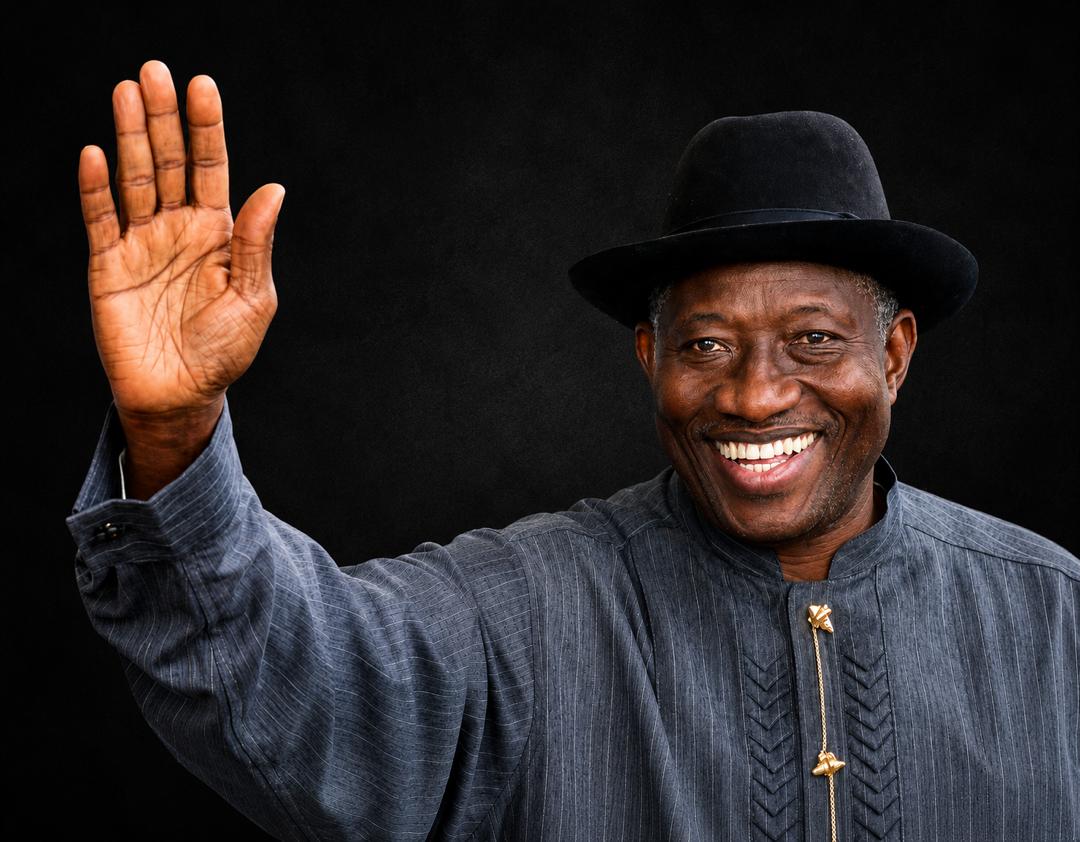
…Former President Says Blind Adherence to Western Liberal Democracy Fuelling Political Crises, Electoral Violence Across Continent
By Franklin Adole
Former President Goodluck Jonathan has called on African nations to rethink their democratic systems, arguing that the continent must develop democratic concepts rooted in its own history, political realities, and socio-cultural environment rather than rigidly adhering to Western liberal democratic models.
Jonathan warned that Africa’s continued dependence on imported democratic templates, without adapting them to local realities, has contributed to recurring political instability, electoral disputes, and democratic decline across the continent.
The former President spoke on Tuesday in Bauchi at the closing session of the 2026 Goodluck Jonathan Foundation (GJF) Democracy Dialogue, themed “Beyond Elections: Can Political Parties and the Judiciary Save Africa’s Democracy?”
He stressed that although democracy is the preferred system of government across most African countries, widespread public dissatisfaction persists because many nations have failed to build democratic institutions that reflect their unique political experiences.
According to Jonathan, while democracy is anchored on universally accepted principles, there is no single model that every country must adopt.
“There is no universally accepted model of democracy because every nation has its own history and political realities,” he said.
Jonathan argued that Africa should move beyond the wholesale adoption of Western democratic practices and instead evolve governance systems that preserve the continent’s democratic aspirations while responding to its peculiar circumstances.
He cautioned that strict adherence to Western liberal democratic precepts, without sufficient adaptation to African realities, has fuelled political instability, constitutional crises, and democratic recession in several countries.
The former President nevertheless maintained that any democratic model embraced by African nations must remain faithful to the core principles of democracy.
According to him, these include the sovereignty of the people, the rule of law, separation of powers, protection of fundamental rights and freedoms, accountability and transparency, free and credible elections, political pluralism, and an active civil society.
He warned that once these pillars are weakened, democracy merely survives in form while losing its substance.
“When several of these foundations of democracy are weakened, what emerges is not genuine democracy but a pseudo-democracy; one that retains democratic forms while steadily losing democratic substance,” he said.
Jonathan urged African governments to strengthen democratic institutions rather than focusing solely on conducting periodic elections.
He said history would judge democracies not by the number of elections they organise but by the strength of the institutions they build and their commitment to democratic values.
The former President also called on political parties across the continent to become genuine democratic institutions by embracing internal democracy, producing credible leaders, respecting their constitutions, and placing national interest above partisan considerations.
“Strong democracies cannot emerge from weak political parties,” he declared.
Jonathan advocated stronger legal and institutional frameworks to regulate political parties, citing Kenya’s model of a dedicated institution that oversees political parties alongside the country’s electoral commission as an example worthy of consideration by other African nations.
He also challenged the judiciary to play a more robust role in safeguarding democracy, insisting that judges handling political disputes must remain impartial and uphold the rule of law.
Expressing concern over the growing judicialisation of politics across Africa, Jonathan warned against a situation where elections are routinely decided in courtrooms instead of at the ballot box.
“The courtroom should not become the arena where political mandates are routinely determined,” he cautioned.
He urged African leaders to deliberately strengthen their legislatures, executives, political parties, and judicial institutions if democracy is to deliver peace, development, and shared prosperity.
Also speaking at the dialogue, former President of the ECOWAS Commission, Kadré Ouédraogo, stressed that the legitimacy of representative democracy depends on transparent, credible, and inclusive elections.
He urged political parties and election management bodies across Africa to work together to guarantee electoral integrity, adding that sustainable democracy cannot exist without credible elections.
Ouédraogo advised politicians challenging election outcomes to present compelling evidence before the courts rather than relying on unsubstantiated allegations, noting that it is the responsibility of the judiciary to objectively determine electoral disputes.
Gambian parliamentarian Fatoumatta Njai, another panellist at the dialogue, attributed many of Africa’s democratic challenges to weak internal party democracy.
She observed that many political parties become active only a few months before elections, making it difficult for them to build enduring democratic values and institutional structures.
Njai cited Senegal’s 2024 elections as an example of how well-organised political parties can withstand political pressure and still achieve democratic success.
Recalling her own experience of contesting as an independent candidate after disagreeing with her party’s political direction, she argued that democracy must first flourish within political parties before it can be sustained at the national and continental levels.
“Political parties need to protect democracy. They must exercise internal democracy before they can aim to protect national, continental, regional and global democracy,” she said.
Discover more from Keeping Them Honest
Subscribe to get the latest posts sent to your email.