

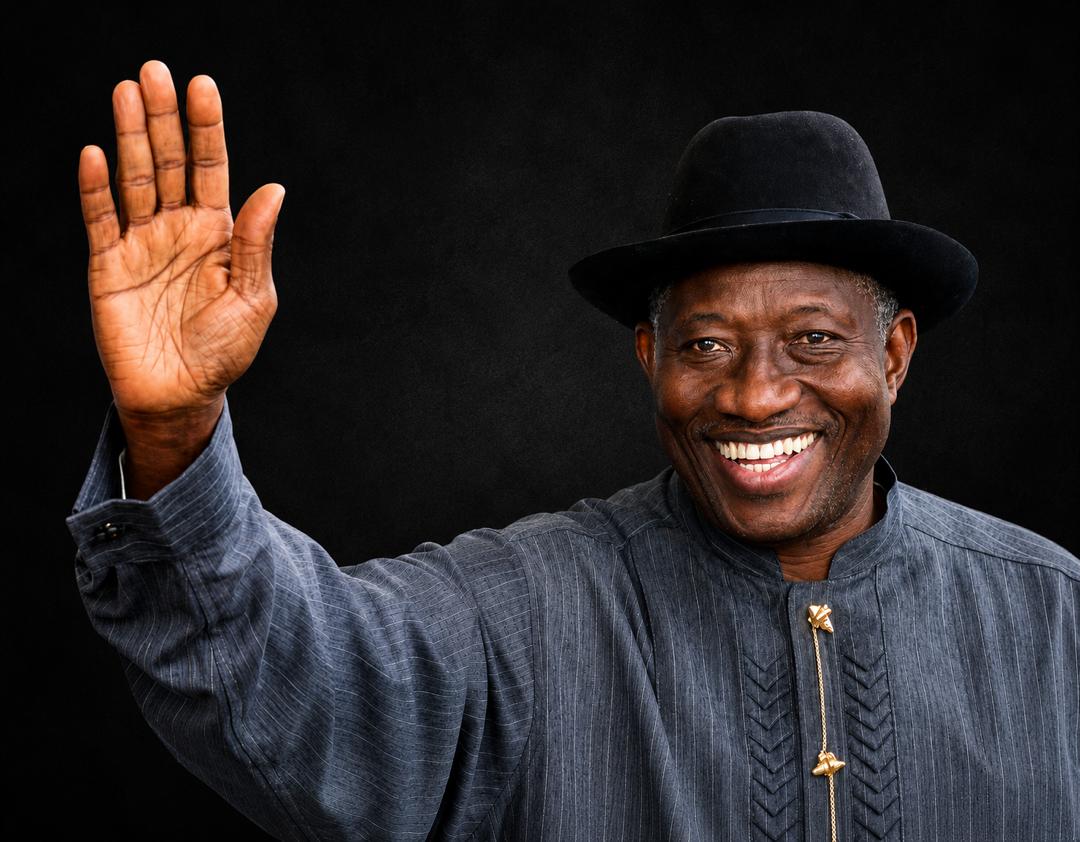
…Why Nigeria’s Former President Is Emerging as a Credible Contender for the World’s Diplomatic Top Job
By KTH Features Desk
As the countdown begins to the end of United Nations Secretary-General António Guterres’ tenure, attention is gradually shifting to who should lead the world’s foremost multilateral institution at a time of mounting global uncertainty. Across diplomatic and policy circles, the qualities required of the next UN chief remain clear: a proven statesman with executive experience, unquestioned democratic credentials, international respect, and a track record of resolving conflicts through dialogue rather than force.
Against that backdrop, former Nigerian President Goodluck Jonathan is increasingly being projected by policy advocates and political observers as one of Africa’s strongest prospective contenders for the position.
The latest push came from the African Policy and Research Consortium (APRC), which has urged President Bola Tinubu to formally present Jonathan as Nigeria’s candidate for the office and mobilise diplomatic support across Africa and beyond.
The consortium argued that Jonathan’s record combines qualities rarely found in a single political leader: executive experience, democratic stewardship, continental diplomacy, conflict mediation, and a demonstrated commitment to peaceful political transitions.
At the heart of Jonathan’s credentials is the defining moment of his presidency—his decision to concede defeat in the 2015 presidential election before the final declaration of results, paving the way for Nigeria’s first peaceful transfer of power from an incumbent president to an opposition candidate.
That singular act is widely regarded as one of the most significant democratic milestones in Nigeria’s history. At a time when election disputes have plunged several countries into violence and constitutional crises, Jonathan chose national stability over personal ambition, earning widespread commendation both within and outside Africa.
For many supporters of his prospective UN bid, that decision remains the clearest demonstration of the restraint, maturity, and respect for democratic institutions expected of a global statesman.
But advocates argue that Jonathan’s strongest qualification lies not only in how he left office, but in what he has done since.
Rather than retreat from public life after his presidency, Jonathan has become largely Africa’s most visible mediator, leading election observation missions and peace initiatives across the continent under the auspices of the African Union, the Economic Community of West African States (ECOWAS), the West African Elders Forum, the Common Market for Eastern and Southern Africa (COMESA), and the Intergovernmental Authority on Development (IGAD).
Over the past decade, he has participated in sensitive diplomatic engagements in countries grappling with disputed elections, fragile democratic transitions, and constitutional crises, often serving as a trusted intermediary among political actors with sharply divergent interests.
His mediation efforts in Guinea-Bissau and election observation assignments in several African countries have reinforced his reputation as a consensus builder whose preferred tools are dialogue, patience, and quiet diplomacy.
Supporters argue that these are precisely the qualities demanded of a United Nations Secretary-General, whose influence depends less on coercive power than on the ability to build trust, bridge divisions, and facilitate peaceful solutions to some of the world’s most difficult conflicts.
Jonathan’s supporters also point to his experience governing Nigeria, a country of more than 200 million people with immense ethnic, religious and regional diversity, as another major asset.
Managing Africa’s largest democracy exposed him to complex challenges involving security, development, environmental concerns, economic management and national cohesion, experiences that closely mirror many of the issues dominating the global agenda today.
Equally significant, they argue, is Jonathan’s personal story.
His rise from a modest background in Bayelsa State to Nigeria’s highest political office has often been cited as an example of inclusivity and of merit prevailing over historical disadvantage.
The APRC believes that this background gives Jonathan a broader appreciation of the aspirations and concerns of developing countries, many of which have consistently argued for a stronger voice within the United Nations system.
The group also argues that Jonathan’s measured leadership style distinguishes him in an era increasingly characterised by geopolitical rivalry, military conflicts and diplomatic polarisation.
Rather than projecting power through confrontation, it said, Jonathan has consistently demonstrated a preference for consultation, reconciliation and institution-building, qualities that align closely with the UN’s central mission of preserving international peace and security.
According to the consortium, the question before the international community should not simply be who succeeds Guterres, but what type of leadership the world requires at a time of growing instability.
It maintained that humanity is confronting unprecedented challenges, including armed conflicts, climate pressures, widening economic inequality, forced migration, democratic strain and declining confidence in international institutions.
In such circumstances, the group argued, the world needs leaders whose judgment has been tested under pressure and whose public service reflects the capacity to reconcile competing interests without sacrificing principle.
It therefore called on President Bola Ahmed Tinubu to formally nominate Jonathan as Nigeria’s candidate and begin consultations with African governments and international partners to build support for his emergence.
The consortium acknowledged that the process of selecting a UN Secretary-General is highly competitive, requiring broad international consensus, particularly among members of the United Nations Security Council.
Nevertheless, it argued that every successful campaign begins with a candidate whose credentials command respect across regions and political divides.
For Nigeria, the group said, sponsoring Jonathan would project the country’s diplomatic influence and reinforce its long-standing aspiration for greater African representation in global governance.
For Africa, it added, the former President’s candidacy would underscore the continent’s growing confidence that its experience in democratic transition, peacebuilding and conflict resolution has much to offer an international system searching for credible, inclusive and consensus-driven leadership.
Whether Jonathan will eventually enter the race remains uncertain. But as discussions gather pace over who should lead the United Nations into its next chapter, supporters insist that his record has already placed him among the names deserving serious international consideration.
Discover more from Keeping Them Honest
Subscribe to get the latest posts sent to your email.