

…Iran Confirms Peace Deal With U.S., Signaling End to Middle East War
By Jeremy Fregene, With Agency Reports
United States President Donald Trump has triggered fresh controversy by declaring that Iran should be allowed to retain part of its ballistic missile arsenal under a new agreement between Washington and Tehran, a position critics say could undermine years of efforts to curb the Islamic Republic’s military capabilities.
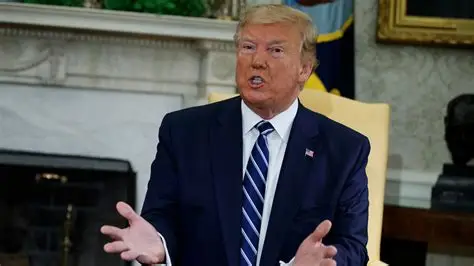
Speaking to reporters on the sidelines of the G7 summit in Evian-les-Bains, France, Trump argued that it would be unfair to deny Iran missiles while other countries in the region continue to possess them.
“If other countries have them, it’s a little bit unfair for them not to have some,” Trump said. “If Saudi Arabia and Qatar, and they all have some, I would say that in relative proportion, I think it’s okay.”
The remarks came as the United States and Iran moved closer to implementing a Memorandum of Understanding (MOU) aimed at ending nearly four months of tensions and conflict in the Gulf region.
Trump disclosed that the agreement would allow Tehran to retain “some” ballistic missiles, while Washington would simultaneously pursue discussions with Gulf Arab states on broader regional security concerns, including Iran’s missile programme and other non-nuclear issues.
The US president also signalled a major shift in emphasis by downplaying the significance of Iran’s missile arsenal.
“Missiles aren’t the problem,” Trump said. “They hurt a little location, but they don’t blow up the planet,” contrasting conventional missiles with nuclear weapons.
His comments have generated unease among security analysts and Israeli officials who have long regarded Iran’s missile programme as one of the most serious threats facing the region.
According to estimates frequently cited by Israeli security agencies, Iran possessed between 2,500 and 3,000 ballistic missiles before the outbreak of hostilities earlier this year. The missile programme was a central justification cited by Israel when it launched military operations against Iran on 28 February, alongside the United States.
For years, both Washington and Tel Aviv argued that Iran’s growing missile capabilities could serve as a protective shield behind which Tehran could pursue nuclear ambitions without fear of external intervention.
Trump’s latest position appears to mark a departure from that approach, although he clarified that Iran’s missile programme would remain on the agenda during follow-up negotiations scheduled to continue over the next 60 days.
The Jerusalem Post reported that Trump’s endorsement of a continued Iranian missile capability has already sparked criticism from analysts who fear it could erode security gains achieved through recent military operations against Tehran.
Despite his willingness to accommodate part of Iran’s missile programme, Trump maintained a hard line on enforcement, warning that the United States could resume military strikes if Tehran fails to comply with the agreement.
The president also revealed that American military forces would remain in the Gulf “for a while” despite the understanding reached with Iran.
Hours after Trump’s remarks, Iran announced that the agreement had been formally signed.
Iranian Foreign Ministry spokesman Esmaeil Baghaei said the text of the agreement had been officially endorsed by both governments, describing it as a crucial test of whether the two sides could move beyond years of hostility.
According to Iranian officials, the memorandum was finalized after signatures by both presidents, following an earlier digital signing ceremony involving US Vice President JD Vance and Iran’s chief negotiator, Mohammad Baqer Qalibaf.
Trump later confirmed the signing following a dinner with French President Emmanuel Macron at the Palace of Versailles.
However, the administration has yet to release the full text of the agreement, fuelling criticism from opponents who accuse the White House of withholding details about concessions granted to Tehran.
The controversy has been amplified by questions surrounding Trump’s repeated claims about Iran’s missile capabilities. Earlier this month, he asserted that Tehran retained only about 21 to 22 percent of its missile inventory following recent US strikes, while insisting that Iran would ultimately have “no choice” but to reach an accommodation with Washington.
Intelligence assessments released in recent years, however, have suggested that Iran remains years away from developing a militarily viable intercontinental ballistic missile capable of reaching the United States, raising questions about some of the administration’s public assertions regarding the immediacy of the threat.
With the agreement now signed but its contents still largely undisclosed, attention is shifting to implementation and to whether Trump’s willingness to permit a limited Iranian missile programme can survive scrutiny from Congress, America’s Gulf allies and, most importantly, Israel, which has consistently viewed the dismantling of Tehran’s missile arsenal as a cornerstone of regional security.
Discover more from Keeping Them Honest
Subscribe to get the latest posts sent to your email.