

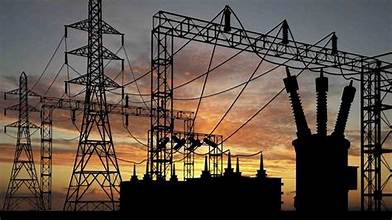
Power generation and supply is not rocket science. From power banks to diesel generators, inverters, solar panels, natural gas, hydro, wind, biomass, waste-to-energy, and turbines, the technology exists. The challenge has never been _how_ to generate power, but _where_ and _who_ controls it.
For over six decades, Nigeria has tied its electricity hopes to one idea: the National Grid. It was supposed to be the backbone of industrialization. Instead, it became our Achilles’ heel. A single point of failure that plunges over 200 million people into darkness at the slightest system collapse. We normalized generators, normalized darkness, and normalized the phrase “NEPA has taken light.” But that era is ending.
*The Myth of Centralized Power*
The National Grid was built on a colonial-era assumption that power must be generated in large plants and transmitted hundreds of kilometers to end users. It worked for small populations. It fails for a nation of 220 million with 36 states, 774 local governments, and thousands of towns and villages with unique energy needs.
Consider this: Lagos State alone consumes more electricity than four West African countries combined, yet receives less than 1,000MW from the grid on a good day. Meanwhile, rural communities across the North Central sit in darkness despite being surrounded by abundant sunlight, flowing rivers, and agricultural waste that could be converted to biogas.
The grid model forces Kano to depend on Kainji, forces Calabar to wait for Egbin, and forces every small business in Nigeria to buy diesel at N1,300 per liter just to stay open. This is not infrastructure. This is economic sabotage by design.
For decades, our major obstacle has been this National Grid power distribution model. This centralized system has created a single point of failure, leaving millions in darkness when it collapses. It has stifled innovation, killed local solutions, and kept communities dependent on a grid that cannot meet demand. The Transmission Company of Nigeria loses 7.79% of power to technical losses. Distribution companies reject power they cannot distribute. And the end user pays for darkness.
*The Case for Embedded, Distributed Generation*
What Nigeria needs is willpower and a shift to embedded, distributed power generation. We must move away from the outdated idea that all electricity must come from one centralized source. The future is local. The future is modular. The future is source-diverse.
A town or village can be powered by mini-grids tailored to their specific needs. This is not theory. It is already happening across Africa. In Kenya, mini-grids power over 500,000 rural homes. In Tanzania, solar mini-grids serve island communities cheaper than grid extension. Nigeria must join this revolution.
Look at the options: Solar for rural communities with 6+ hours of daily sunshine. Natural gas turbines for industrial clusters in Lagos and Ogun with access to pipeline infrastructure. Small hydro for riverside settlements in Kebbi, Niger, and Cross River. Biomass for farming communities in Benue and Kaduna using crop waste and animal dung. Wind for coastal areas in Lagos, Ondo, and Delta. Waste-to-energy for major markets that generate tons of organic waste daily.
Housing estates can install solar-battery systems with diesel backup and sell excess power to neighboring streets. Industrial hubs can build captive gas plants and become net exporters to the grid. Markets can run on biogas from food waste. Shopping malls can combine solar rooftops with gas generators. Each solution is designed for local load, local resources, and local economics. No more one-size-fits-all.
The economics already work. A 1MW solar mini-grid costs roughly $1.2M and can serve 2,000 households at N70/kWh, cheaper than diesel at N250/kWh. A 5MW gas plant can power an entire local government for less than what the state pays for diesel annually. When you remove transmission losses, regulatory bottlenecks, and centralized corruption, power becomes affordable.
*The 2023 Electricity Act: A Legal Revolution*
This is why President Bola Ahmed Tinubu, GCFR, deserves commendation for signing the 2023 Electricity Act into law. This landmark legislation effectively ends the monopoly of the National Grid. For the first time since independence, local governments, states, institutions, and individuals can now legally generate and distribute electricity from any viable source, solar, gas, hydro, wind, biomass, or diesel, without connecting to the national network.
The Act empowers states to make laws for electricity generation, transmission, and distribution within their territories. It allows the Nigerian Electricity Regulatory Commission to cede regulatory oversight to state electricity regulators. It means states can create their own electricity regulatory commissions. They can license embedded generators for industrial zones. Private investors can build 10MW plants for communities without waiting for TCN approval.
This is not just policy. It is economic liberation. It removes the federal government as the middleman between a community and its power. It tells every local government chairman: you are responsible for keeping your people’s lights on. It tells every entrepreneur: the power sector is now open for business.
*What This Means for Nigerian Towns and Cities*
The implications are massive. A local government can build its own 5MW solar-gas hybrid plant for SMEs and households. With 2MW solar during the day and 3MW gas at night, a town can achieve 24-hour power at N85/kWh. That means cold rooms for farmers, welding machines for artisans, and computers for digital skills hubs can run without interruption.
A major market can run on dedicated waste-to-energy, turning daily food waste into electricity and saving traders millions monthly in diesel costs. An industrial hub can install gas-powered embedded generation and attract manufacturers fleeing unreliable grid supply. A housing estate can become energy-independent with solar plus battery storage, selling excess power to the grid during peak hours.
The era of waiting for “PHCN” is over. The era of blaming the Federal Government for local darkness is over. The new question is: what will your state do? What will your local government do? What will your community do?
*The Roadmap to Local Power*
First, states and communities must conduct energy audits. How much power does each LGA actually need? 3MW? 5MW? 10MW? Map every shop, every farm, every household. Second, match resources to need. Is there enough roof space for solar? Is there a gas pipeline nearby? Can agricultural waste power a biogas plant? Third, create Special Purpose Vehicles. Communities and states can float power companies to build and operate plants. Fourth, access financing. The Rural Electrification Agency, Bank of Industry, and private investors are funding mini-grids at single-digit interest. Fifth, train local operators. We don’t need foreign engineers to maintain solar panels and gas engines.
States must move faster. Ekiti, Lagos, and Kaduna have already passed state electricity laws. Others must follow. Local governments must stop seeing electricity as “federal business” and start budgeting for power plants the same way they budget for roads.
*The Entrepreneurship Opportunity*
Nigeria’s purchasing power will run into trillions of naira in the next decade. This makes massive entrepreneurship development urgent. If we fail to build our people’s capacity now, we will remain consumers in an economy we should own.
Power is the foundation of that entrepreneurship. You cannot have a digital economy without electricity. You cannot process cassava without power. You cannot run a cold chain without reliable energy. You cannot compete in the AfCFTA without reducing energy costs for manufacturers.
We must prepare a generation to run solar installation companies, manage mini-grids, operate gas plants, and trade power across communities. The power sector is now the largest open frontier for Nigerian entrepreneurs.
*The Future Is Now*
The future of power in Nigeria is local, distributed, and source-diverse. The law now supports it. The technology is available. The financing exists. All that remains is the willpower to act.
We can continue to complain about grid collapse on social media. Or we can light up one town at a time. We can wait for Abuja to fix our transformer. Or we can build our own power plant. The 2023 Electricity Act has given us the tools. The sun, gas, water, and wind have given us the resources.
The only question is: which state will be the first to declare 24-hour power? Which local government will tell their children, “We used to have NEPA, but now we have our own”?
The darkness was never about technology. It was about control. Now that control is back in our hands. Let’s use it. About the Author
Olubunmi Oluwadare is a renowned expert in entrepreneurship development, a National Business Development Service Provider (NBDSP), and business growth strategies. As the founder of www.uni-preneur.com and www.getajob.ng, he has empowered thousands of entrepreneurs and job seekers across Nigeria and Africa. As Chairman of BEEXO GROUP www.beexogroup.com, he continues to drive business growth and innovation in the region. His book, “I SEE MONEY IN AFRICA”, highlights the vast opportunities for entrepreneurs in Africa.
Get in Touch
Email: [email protected]
WhatsApp: 0816 474 2609
www.olubunmioluwadare.com
Discover more from Keeping Them Honest
Subscribe to get the latest posts sent to your email.