

…”Who Guards the Pipeline Guardians?” – Activist Raises Concerns
By Yinka Giwa
Fresh concerns have emerged over Nigeria’s oil security architecture following a sharp decline in the country’s crude oil production and the discovery of a controversial Nigerian-linked supertanker allegedly involved in crude theft, as activists and security experts warn of possible systemic failures within the nation’s pipeline surveillance regime.
Data released by the Organisation of Petroleum Exporting Countries (OPEC) shows that Nigeria’s crude oil production dropped to 1.31 million barrels per day (bpd) in February, representing a 10.69 per cent decline from the 1.45 million bpd recorded in January.
The development effectively means that Nigeria failed to meet its 1.5 million bpd production quota allocated by the oil cartel, despite billions of naira spent annually on pipeline protection and anti-oil theft operations.
The OPEC figures, obtained through direct communication with Nigerian authorities, indicate that the country fell short of its quota by roughly 190,000 bpd, even though it retained its position as Africa’s top crude oil producer ahead of Libya, which produced 1.28 million bpd during the same period.
Industry observers say the sharp drop in output comes at a time when global crude oil prices are rising amid geopolitical tensions in the Middle East, including the ongoing conflict involving the United States, Israel, and Iran, which recently pushed crude prices above $100 per barrel before easing.
Analysts warn that the production slump could significantly reduce Nigeria’s oil revenues and prevent the country from fully benefiting from the global price rally.
However, the latest production decline has also revived longstanding concerns about persistent crude oil theft, despite the Federal Government’s massive spending on pipeline surveillance contracts across the Niger Delta.
Nigeria has reportedly spent over N17.5 trillion on pipeline protection and energy security operations in recent years, with the responsibility largely outsourced to private security contractors, which oversee critical oil infrastructure protection in parts of the Niger Delta.
But while critics admit that there have been major improvements in oil production, fresh questions are being raised over the inexplicable dips that increasingly point to a sophisticated oil theft scheme.
National President of the United Niger Delta Congress, Julius Malam-Obi, raised alarm over what he described as a “trillion-naira pipeline surveillance scandal,” questioning why crude output has remained far below Nigeria’s installed production capacity of over two million barrels per day.
“For years, the Federal Government has spent trillions of naira on pipeline surveillance contracts designed to stop crude oil theft,” Malam-Obi said in a post on Facebook, “Yet Nigeria’s oil production remains stubbornly low. The contradiction raises a serious national question.”
He warned that the concentration of pipeline security contracts among a small group of powerful operators could create potential conflicts of interest, especially if those responsible for protecting oil infrastructure also possess the capacity to manipulate access to sensitive facilities.
According to him, illegal crude bunkering in remote creeks appears to have declined significantly in recent years, but national output has not improved, raising suspicions that crude diversion may now be occurring closer to export terminals rather than in the creeks.
The controversy has been further amplified by the recent interception of a Nigerian-linked supertanker by American authorities over alleged crude oil theft and other transnational crimes.
The vessel, Skipper, a 20-year-old Very Large Crude Carrier with IMO number 9304667, was reportedly seized by the United States Coast Guard in collaboration with the United States Navy.
Authorities are investigating the vessel over alleged crude oil theft, piracy, drug trafficking, and links to international money-laundering networks.
The tanker is reportedly owned and managed by Nigeria-based Thomarose Global Ventures Ltd, while its registered owner is listed as Triton Navigation Corp, headquartered in the Marshall Islands.
At the time of the arrest, the vessel was allegedly flying the flag of Guyana without authorisation.
Guyana’s Maritime Administration Department later confirmed that the vessel was not listed on its national ship registry, suggesting that its flag was being used illegally.
Further checks at Nigeria’s Corporate Affairs Commission (CAC) reportedly showed that Thomarose Global Ventures is currently inactive, despite being linked to the operation of a massive crude oil carrier capable of transporting millions of barrels of oil.
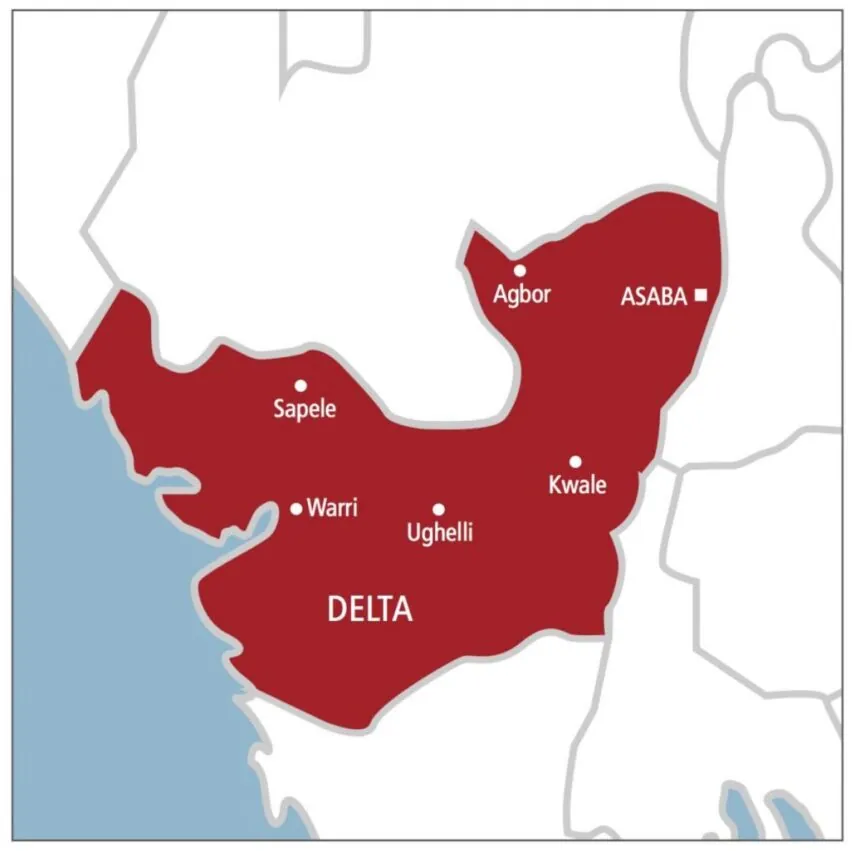
Records indicate that the company’s registered address is 111 Jakpa Road, Effurun, Warri, Delta State, with no publicly available phone contacts.
The development has raised serious questions within Nigeria’s maritime and oil industry circles.
President of the Centre for Marine Surveyors Nigeria, Akin Olaniyan, warned that if the vessel had departed from Nigerian waters before its interception, it could indicate serious lapses in Nigeria’s port and maritime regulatory oversight.
“If the vessel emanated from Nigeria, it suggests our Port State Control is practically non-existent,” he said, adding that vessels departing Nigerian ports could face heightened scrutiny in foreign jurisdictions as a result.
Meanwhile, the Independent Security Experts of Nigeria (ISEN) has called on President Bola Ahmed Tinubu to immediately order an independent investigation into the circumstances surrounding the vessel’s ownership, operations and possible links to crude oil theft networks.
ISEN Lead Expert Dean John described the case as a potentially sophisticated criminal enterprise involving identity theft, corporate manipulation and international oil smuggling.
“We demand that the Federal Government set up a high-powered panel with full prosecutorial powers to unravel every layer of this criminal enterprise,” he said.
The group also alleged that the vessel may be connected to networks operating within Nigeria’s pipeline surveillance system, an allegation that, if proven, could point to deeper structural problems within the country’s oil security framework.
Security analysts warn that failure to address the growing concerns surrounding pipeline protection contracts, maritime oversight and crude export monitoring could further deepen Nigeria’s revenue crisis and erode public trust in institutions responsible for safeguarding the nation’s most vital economic asset.
For many observers, the central question raised by the latest developments echoes the warning by Niger Delta activists: who truly guards Nigeria’s pipeline guardians?
Discover more from Keeping Them Honest
Subscribe to get the latest posts sent to your email.