

Controversy has never been a stranger in the long and colourful career of Tonto Dikeh. Reinvention has also followed her like a loyal companion. Her recent public embrace of faith has therefore attracted both admiration and curiosity, with many observers quietly waiting to see what the next chapter might bring.
On Friday afternoon, 6 March 2026, a video shared by the actress quickly made its way across social media. The footage stirred emotions, reopened old debates and, for some viewers, raised difficult questions about the direction of her new spiritual journey. Reactions poured in almost instantly.
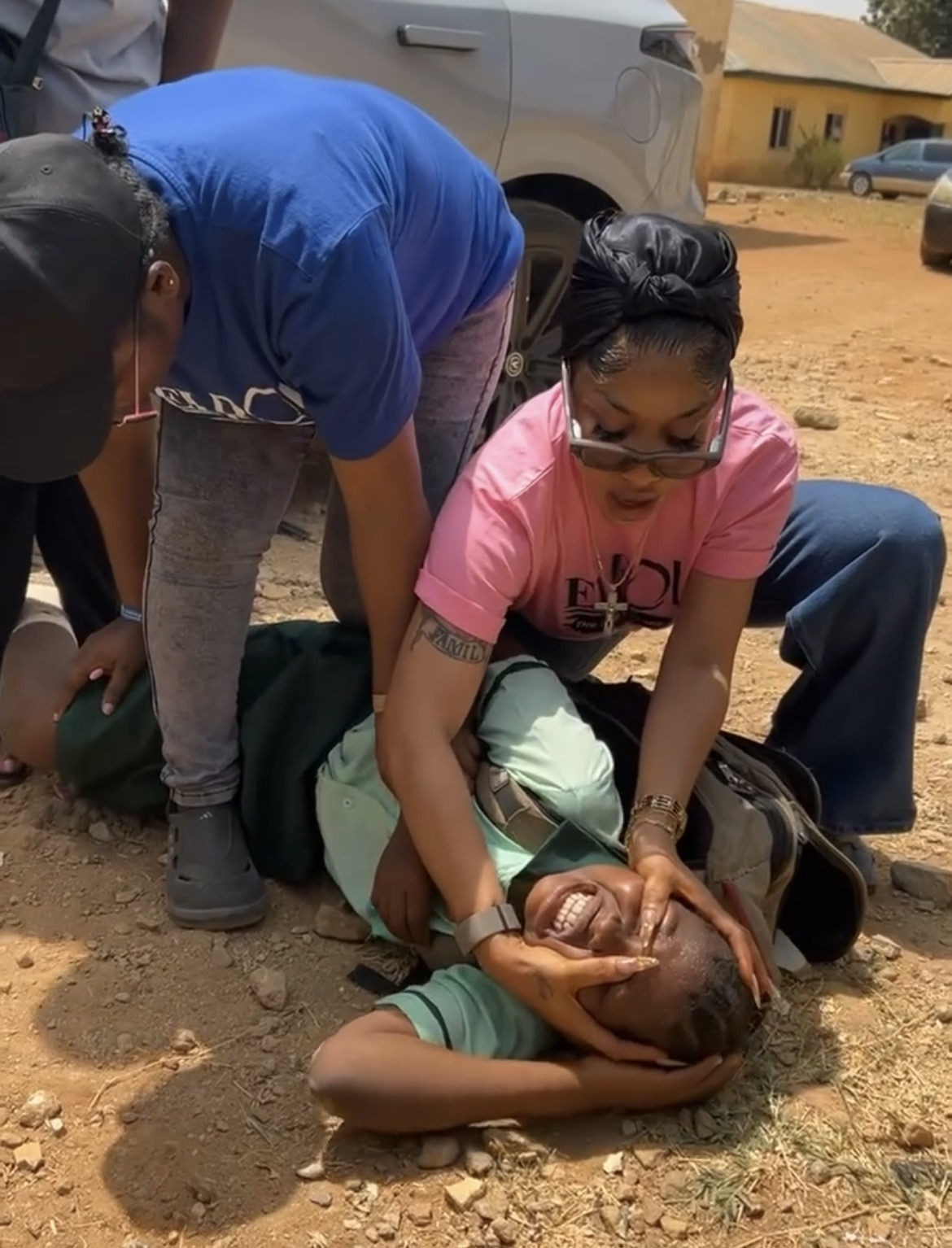
In the video circulating across social media, the Nollywood actress, politician, and now self described evangelist was seen praying for a young school pupil who stood outside her car while she remained seated inside. The prayer quickly took a dramatic turn as she repeatedly declared that she was casting out what she described as a “marine spirit” from the child.
What began as a roadside prayer soon intensified. The session moved from the car to the open ground under the Abuja sun. A follower believed to be accompanying Tonto held the child down while the actress continued praying. At one point, she pressed her long fingernails against the girl’s eyes while delivering the prayer.
A few entertainment figures appeared to see the moment as an opportunity for visibility. Nollywood personalities such as MC Mbakara and Nosa Rex recreated or referenced the moment online, turning it into promotional material for their own pages and projects. The internet, as usual, found a way to mix seriousness with spectacle.
One voice that refused to treat the situation lightly came from social commentator Martins Otse, widely known as VeryDarkMan. In a series of three videos, he criticised what he described as the exploitation of vulnerable children for public attention. His concerns focused on the possible stigma that such public displays could create for young pupils, particularly when suggestions of witchcraft are involved.
Public reaction soon moved beyond social media commentary. Several users called on the National Agency for the Prohibition of Trafficking (NAPTIP) in Persons to examine the matter and ensure the welfare of the child featured in the video.
Questions continue to echo through the online conversation. Faith, after all, often invites reflection. Curiosity remains about why prayers concerning “marine spirits” were directed at a school pupil whose story is largely unknown to the public. The decision to record the moment and share it widely has only deepened that curiosity.
Discover more from Keeping Them Honest
Subscribe to get the latest posts sent to your email.