

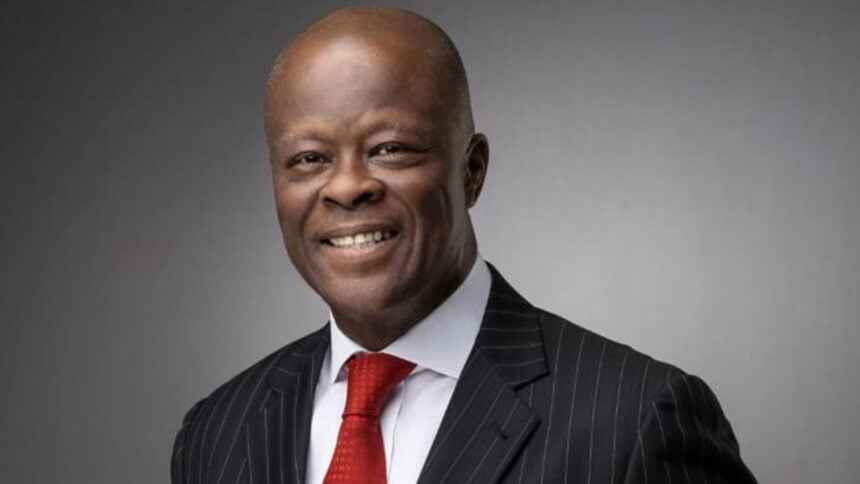
By Kris Ayanruoh
Nigeria’s 2025 federal budget may be large on paper, but recent disclosures suggest it is alarmingly thin in practice.
Reports from credible national media outlets reveal a troubling pattern: key ministries have received only a fraction of their approved capital allocations. The Ministry of Transportation reportedly received just ₦2.5 billion out of ₦256.7 billion.
The Ministry of Health is said to have received ₦36 million from a ₦218 billion capital allocation. The Nigerian Bulk Electricity Trading Plc (NBET) reportedly disclosed that only ₦60 million was released out of ₦858 billion budgeted to bridge the electricity tariff gap.
These figures, if sustained, point to more than administrative delay. They reveal a structural execution crisis.
A budget is not merely a fiscal document; it is a statement of national priorities. But a budget that is not implemented becomes an aspiration rather than an instrument. The credibility of fiscal governance depends not only on how much is appropriated, but on how much is actually released and spent productively.
Capital expenditure is the engine of economic growth. Roads, railways, hospitals, power infrastructure and public works generate multiplier effects that stimulate private sector activity, create jobs and expand productivity. When capital releases shrink dramatically, growth slows almost automatically.
In transportation, minimal releases mean stalled rail expansion, delayed road rehabilitation and persistent logistics bottlenecks. For an economy struggling with inflation and high transport costs, such delays ripple across food prices, manufacturing costs and trade competitiveness.
In the power sector, inadequate funding to address tariff shortfalls risks deepening liquidity challenges within the electricity value chain. Generation companies face payment uncertainties. Distribution companies struggle with cost recovery. Ultimately, businesses and households bear the consequences in the form of unstable supply and economic inefficiency.
In healthcare, near-zero capital releases stall hospital upgrades, equipment procurement and infrastructure expansion. For a country still grappling with uneven access to quality healthcare, this is not merely a fiscal issue — it is a development issue.
The broader concern is fiscal credibility. When large budgets are approved but releases remain minimal, confidence erodes. Investors watch budget execution rates closely because they signal policy seriousness. If execution falters, risk premiums rise and investment decisions are deferred.
This situation also raises deeper structural questions. Is revenue underperforming? Is debt servicing crowding out capital expenditure? Are cash-flow constraints forcing prioritisation of recurrent spending over infrastructure investment?
Nigeria’s fiscal space has tightened significantly in recent years. Debt servicing obligations consume a substantial share of revenue. If capital expenditure is increasingly sacrificed to protect recurrent commitments, the country risks entering a low-growth trap: high debt, weak infrastructure expansion, and constrained productivity.
Transparency becomes critical in moments like this. Timely publication of quarterly budget performance reports, detailed cash release schedules, and clear explanations of fiscal prioritisation can help sustain public trust. Without such transparency, speculation fills the vacuum.
The challenge before policymakers is not simply to pass ambitious budgets. It is to align appropriation with realistic revenue projections and credible implementation capacity. A smaller, fully funded and transparently executed budget is far more valuable than a large one that remains largely unfunded.
Nigeria does not lack plans. It often lacks execution. If capital expenditure continues to lag significantly behind appropriations, the consequences will extend beyond delayed projects. They will manifest in slower growth, weaker investor confidence, strained public services and heightened political tension.
A nation’s budget is a promise. When releases fail to match that promise, credibility becomes the casualty. The solution lies not in rhetoric, but in disciplined fiscal realism, improved revenue mobilisation, stronger expenditure prioritisation and unwavering transparency.
Nigeria cannot afford budgets that exist only on paper.
…Dr. Kris Ayanruoh is an engineer, leadership scholar, and public policy commentator
Discover more from Keeping Them Honest
Subscribe to get the latest posts sent to your email.