

…Claims of Imported ‘Odourless, Colourless’ Poison Shake Nigeria’s Opposition
By Yinka Giwa
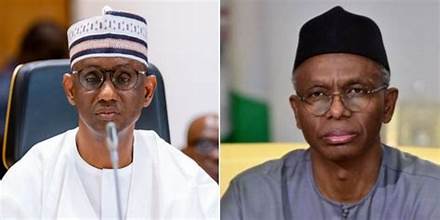
A fierce political storm is brewing between former Kaduna State Governor, Nasir El-Rufai, and the National Security Adviser, Nuhu Ribadu, over allegations of a clandestine plot involving the importation of a deadly toxic substance, a development that has heightened tensions ahead of the 2027 general elections.
El-Rufai, in a letter dated January 30, 2026, accused the Office of the National Security Adviser (ONSA) of procuring approximately 10 kilograms of thallium sulphate, a highly toxic chemical, from a supplier in Poland. The letter, titled “Request for Clarification on the Procurement of Thallium Sulphate,” demanded detailed explanations regarding the purpose, handling, and regulatory oversight of the alleged importation.
Describing himself as a “concerned citizen,” El-Rufai said the information was available to leaders of the political opposition and raised serious public safety concerns. He noted that thallium salts are “highly toxic and tightly controlled substances,” capable of causing death even in small quantities.
In the six-point letter addressed directly to Ribadu, the former governor sought clarification on the intended end-use of the chemical, the identity of the supplier, whether appropriate chemical or defence permits were obtained, and the quantity and concentration of the material allegedly procured.
He also requested details on storage and security arrangements, as well as regulatory coordination with agencies such as NAFDAC and the Nigeria Centre for Disease Control (NCDC). Additionally, he asked whether public-health risk assessments or hazard-mitigation plans had been developed, given the compound’s extreme toxicity.
“I want to stress that this inquiry is made in good faith, solely to ensure that due processes, safety standards, and transparency are observed,” El-Rufai wrote, adding that public confidence in national institutions is strengthened when potential risks are openly addressed.
However, ONSA swiftly pushed back, denying the allegation in its entirety and challenging El-Rufai to provide evidence to substantiate his claims.
In a February 13, 2026 response signed by Brigadier-General O.M. Adesuyi on behalf of the NSA, but publicly released last night, the office stated that it neither procured nor initiated any process to acquire thallium sulphate and had no intention of doing so.
The office further disclosed that the allegation had been formally referred to the Department of State Services (DSS) for investigation. It called on El-Rufai, and any other individuals in possession of relevant information, to forward such evidence to the DSS to aid a comprehensive probe.
According to sources, an earlier attempt to deliver the official response to El-Rufai’s Abuja residence was unsuccessful after security personnel reportedly declined to receive it, citing the absence of their head of security. The letter was eventually delivered and acknowledged on his behalf days later.
The controversy deepened when El-Rufai, speaking during a programme on Arise Television, alleged that he had listened to an intercepted phone conversation purportedly involving Ribadu. He claimed that “someone tapped” the NSA’s phone and that the recording suggested plans to arrest him.
Though he did not publicly release the alleged recording, El-Rufai’s remarks added a dramatic twist to an already explosive exchange, fuelling speculation about political undercurrents within the ruling establishment as the 2027 elections draw closer.
Political analysts say the confrontation signals a widening rift between influential elements within northern power blocs and the national security architecture. According to informed observers in Abuja, both men are prominent political figures with deep roots in Nigeria’s security governance landscape, and their public clash has reverberated across party lines.
Security experts further note that while ONSA maintains that the matter is now in the hands of the DSS, the political implications may prove more enduring than the investigation itself. They argue that the allegation of importing a lethal poison, even if ultimately unsubstantiated, introduces a grave dimension to Nigeria’s pre-election discourse, raising concerns about trust, transparency, and the potential weaponisation of state institutions as 2027 approaches.
Discover more from Keeping Them Honest
Subscribe to get the latest posts sent to your email.