

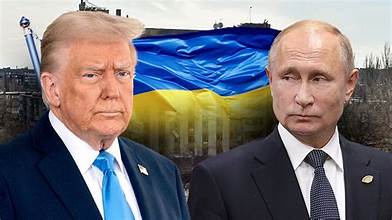
Fighting continued across Ukraine and along the Russian border on Sunday, marking day 1,452 of the war, with both sides reporting casualties and damage to critical infrastructure, while diplomats prepared for a new round of U.S.-brokered ceasefire talks in Geneva.
In Ukraine, Russian forces launched a drone strike on the port city of Odesa overnight Saturday, killing an elderly woman and damaging residential buildings, the State Emergency Service reported. The attack followed Russian drone assaults on Ukrainian energy and transport infrastructure in previous days, part of Moscow’s campaign to undermine Ukraine’s civilian and industrial capacity.
Ukraine, in turn, has escalated its drone attacks on Russian-occupied territory, targeting villages in the Luhansk and Zaporizhia regions. Russian news agency TASS reported that at least 19 people were wounded in Luhansk, while other attacks in Zaporizhia and the Russian border region of Belgorod left three more injured. A Russian civilian also died in a Ukrainian drone strike in Bryansk, according to Governor Alexander Bogomaz.
NATO and U.S. officials highlighted the scale of Russian losses in the conflict. Secretary-General Mark Rutte said Moscow had lost roughly 65,000 soldiers in the past two months, while U.S. Secretary of State Marco Rubio estimated Russian casualties at 7,000 to 8,000 troops weekly. Ukrainian President Volodymyr Zelensky said Russian strikes had damaged every power plant in Ukraine, denouncing Russian President Vladimir Putin as a “slave to war.”
The escalation comes just days before Geneva negotiations between Russian and Ukrainian envoys, scheduled for Tuesday and Wednesday. Zelensky said the talks must address security guarantees for Ukraine and the status of the Donbas region, where Russia demands Kyiv relinquish territory as a condition for peace. Ukrainian negotiators said Kyiv will only accept maintaining current front lines or creating a free trade zone in parts of the Donbas, rejecting proposals for immediate withdrawal.
Speaking in Munich at the Security Conference, Zelensky said he was under pressure from U.S. officials to make concessions, but stressed Ukraine’s insistence on binding security guarantees. “Europe is practically not present at the table,” he said, urging a greater role for the European Union in peace efforts. Chinese Foreign Minister Wang Yi expressed support for this view, advocating for more European engagement.
Zelensky also outlined logistical demands, including a ceasefire monitoring mission and a prisoner-of-war exchange. He said Ukraine holds more than 4,000 Russian troops, while Kyiv estimates 7,000 Ukrainian soldiers remain in Russian custody. He accused Moscow of resisting deployment of French and UK forces post-conflict, suggesting Putin intends to retain strategic leverage.
On the diplomatic front, France and several G7 countries signalled readiness to impose a maritime services ban on Russian oil. European Commission President Ursula von der Leyen called for a renewed EU mutual defence pact in light of ongoing threats from Russia. Meanwhile, Ukraine and the International Monetary Fund agreed to ease some conditions on a new $8.2 billion lending programme, including sensitive tax reforms, Prime Minister Yulia Svyrydenko said.
Zelensky also awarded a state honour to Olympic skeleton racer Vladyslav Heraskevych, who was disqualified from the Winter Olympics in Italy for wearing a helmet commemorating athletes killed in the war. Speaking in Munich, Zelensky praised athletes supporting Ukraine’s position, highlighting the war’s impact on global cultural and sporting platforms.
Analysts warn that the conflict remains protracted, with infrastructure damage, civilian casualties, and escalating military losses on both sides raising stakes ahead of Geneva. Previous U.S.-brokered talks, including rounds in Abu Dhabi, have failed to resolve core issues such as control over the Donbas industrial heartland.
“The upcoming talks must be substantive, not symbolic,” Zelensky said. “Ukraine will not sacrifice its security for temporary peace.”
The situation underscores the continuing volatility across the region as military operations and diplomacy unfold in parallel, nearly four years after the Russian invasion began on February 22, 2022.
Discover more from Keeping Them Honest
Subscribe to get the latest posts sent to your email.