

By Muji Armstrong-Bello
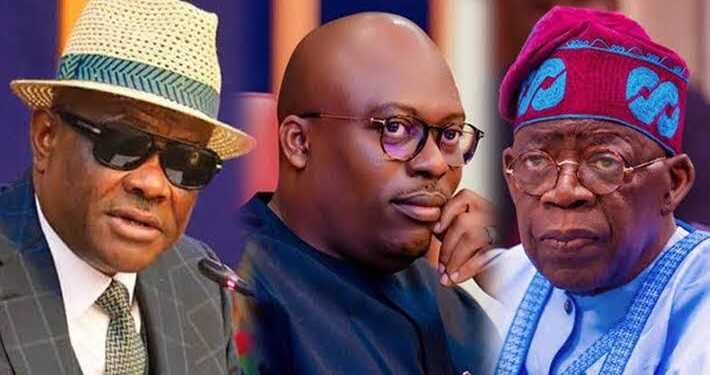
The political crisis in Rivers State is being dishonestly framed. Public commentary has chosen convenience over clarity, emotion over analysis. Barrister Nyesom Wike, former governor of Rivers State and current Minister of the Federal Capital Territory, is being scapegoated for a crisis whose real cause is far more uncomfortable: a sitting governor attempting to govern without a political base. Politics does not reward innocence or good intentions. It rewards structure. Anyone who ignores this truth courts disaster. Governor Siminalayi Fubara did not emerge from a political vacuum. He was produced by a well-established, deeply entrenched political structure built over eight years by Wike. That structure – party leadership, ward networks, the State Assembly and grassroots mobilisation – was not ceremonial. It was functional power. Winning an election through that structure did not automatically transfer ownership of it. To assume otherwise is either naivety or sheer arrogance.
Wike did not “refuse to step aside”. He simply did what every rational political actor does: ‘retain influence where influence still exists’. Power does not evaporate because critics demand it. It disappears only when it is displaced. That displacement never occurred in Rivers. Governor Fubara’s central error was not ambition; it was impatience. He sought autonomy before consolidation, confrontation before control. Instead of quietly building alliances, neutralising opposition, and capturing party organs, he moved openly against the very machinery that guaranteed his emergence. The result was predictable: institutional resistance. The Rivers State House of Assembly crisis did not happen because Wike is vindictive. It happened because legislators understand where political survival lies. In Nigerian politics, loyalty does not follow office; it follows structure. Expecting lawmakers to abandon a tested political anchor for an untested authority is not courage, it is fantasy. Those insisting that Wike should have withdrawn for “peace” misunderstand power dynamics. No serious political general dismantles his army after winning a war simply to prove goodwill. Politics is not governed by moral appeals; it is governed by interests, leverage and continuity.
History supports this reality. In Kwara State, the late Dr. Olusola Saraki built the structure that made Bukola Saraki governor. Bukola did not rush into rebellion. He consolidated patiently, captured institutions, and only then asserted independence, eventually installing Abdulfatah Ahmed as governor against his father’s wishes. He fought only after he had already won. Governor Fubara fought first- and is now discovering the cost. This crisis is therefore not the tyranny of a former governor. It is the consequence of power exercised without preparation. Rivers is not suffering from too much Wike; it is suffering from too little political groundwork of Fubara.
Blame is cheap. Analysis is harder. Until Nigerian leaders accept that authority without structure is hollow, and that independence must be built before it is declared, Rivers State will remain a cautionary tale—not of godfatherism, but of political miscalculation. Power does not forgive impatience.
•Armstrong-Bello is a political analyst and public affairs commentator.
Discover more from Keeping Them Honest
Subscribe to get the latest posts sent to your email.