

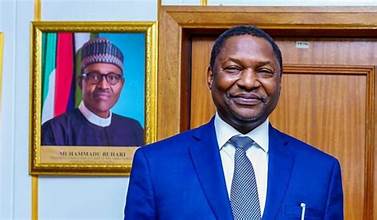
…EFCC Probes $496m Ajaokuta payout, $419m Paris Club Judgement Debts, $200m Mambilla Compensation Saga, Others
New details are emerging on why the Economic and Financial Crimes Commission (EFCC) has zeroed in on Abubakar Malami, former Attorney-General of the Federation (AGF) and the most powerful legal figure of the Buhari years, as a widening probe into a series of controversial “hot deals” executed under his watch gathers momentum. According to reports by The Cable, Malami spent Monday night at the EFCC headquarters after arriving late for a scheduled interrogation, forcing investigators to postpone the session into the next day. He will now be reporting daily to the commission as detectives track what they believe may be an intricate pattern of financial and administrative irregularities tied to his tenure.
A key line of inquiry, according to the report, is the discovery of 46 bank accounts allegedly linked to the former AGF. Investigators are said to be combing through these accounts as part of efforts to understand the financial architecture surrounding a string of high-stakes government transactions that took place during the Buhari administration. Malami had earlier faced questioning on November 29, after which he declared on X that the engagement was “successful” and that he had been scheduled for further sessions as “the truth relating to the fabricated allegations” continued to unfold.
EFCC’s interest in Malami dates back to 2023, when a dossier detailing multiple contentious deals linked to his office first drew national attention. One of these is the eyebrow-raising payment of $496 million to Global Steel Holdings Ltd (GSHL) as a settlement for the collapsed Ajaokuta Steel concession. The puzzle for investigators and critics alike is that GSHL had formally waived all claims to compensation nearly a decade earlier, yet under Malami’s guidance, Nigeria paid almost half a billion dollars in a settlement many experts described as inexplicable and suspicious.
Another hot-button issue is the sale and disposal of assets forfeited to the EFCC by politically exposed persons. Worth billions of naira, many of these assets were reportedly sold under opaque circumstances, with concerns that procedures were flouted, valuations depressed, and oversight sidelined. Malami’s office was repeatedly accused of exercising sweeping control over decisions that, by law, were meant to undergo rigorous inter-agency checks.
The EFCC is also revisiting the controversial $419 million judgement debt awarded to consultants who claimed to have assisted with the Paris Club refunds. That judgement, endorsed despite strong objections from state governors and federal officials, has long been considered one of the most dubious liabilities ever hung around the federal government’s neck. Investigators may want to know how and why Malami approved, or failed to halt what many believed was an attempt to divert public funds under the guise of consultancy.
His involvement in the longstanding dispute over the Mambilla power project is similarly under scrutiny. Malami was tied to a proposed agreement to pay Sunrise Power $200 million in compensation, a move that senior officials argued could have undermined national interests and deepened the project’s already tortuous delays.
Even the repatriation of $321 million in Abacha loot is part of the expanding probe. Detectives are said to be examining allegations of duplicated legal fees and layered representation that ballooned the cost of the transaction far beyond reasonable thresholds.
These cases: spanning steel, power, asset recovery, and foreign judgement debts, form the core of what EFCC sources describe as “pattern transactions”: high-value government decisions marked by irregular processes, unusual payments, or questionable legal advice.
The timing of the probe also intersects with Malami’s political ambitions. On November 17, he formally declared interest in contesting the 2027 governorship election in Kebbi State. Earlier in July, he resigned from the APC and defected to the African Democratic Congress (ADC), citing hardship in the country and “deep personal reflection” as reasons for his departure from the ruling party.
With the EFCC now tightening the screws and re-examining decisions that shaped some of the Buhari administration’s most controversial financial commitments, analysts say Malami faces the most serious test of his public life. Whether the investigations culminate in charges remains to be seen, but the breadth and depth of the transactions under review suggest that Nigeria may be witnessing the opening stages of one of the biggest accountability storms of the post-Buhari era.
Discover more from Keeping Them Honest
Subscribe to get the latest posts sent to your email.