

By Peter Salami
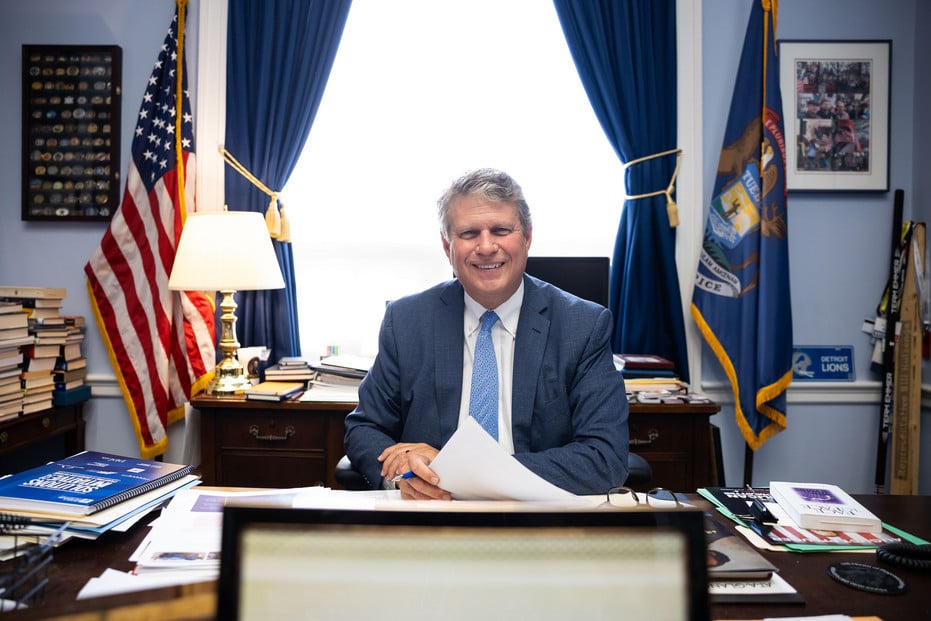
United States Congressman Bill Huizenga has ruled out any possibility of a U.S. military intervention in Nigeria, calling instead for targeted economic sanctions against individuals and groups responsible for religious violence. The lawmaker expressed deep frustration with what he described as the Nigerian government’s “inadequate response” to the continued religion-based killings across the country.
Huizenga, a prominent advocate for Washington’s tougher stance on international religious freedom, said he was “shocked” by recent comments suggesting the United States might consider an invasion of Nigeria. He clarified that while the situation is grave, military action would be counterproductive.
“I don’t envision a surprise attack or a military response,” he said.
“Economic pressure and sanctions on individuals and organisations would be more effective.”
The Congressman warned that the violence in Nigeria bears the hallmarks of early-stage genocidal conflict, urging both Washington and Abuja to act decisively before it spirals out of control.
“We were too late on Rwanda, we were too late on South Sudan… let’s not be too late again on this one,” Huizenga cautioned.
He noted that both Christians and moderate Muslims have fallen victim to attacks by Fulani militants and radical Islamist groups, describing testimonies from survivors who said they were “attacked in their homes and felt very much targeted.”
Huizenga said that once the U.S. Congress resumes full operations following the government shutdown, he would push for hearings to explore the role of foreign and local financiers behind the killings.
“Sanctions really cut off the flow of money and travel. We don’t know who is financing these operations, but economic pressure will have a positive impact,” he explained.
He criticised the Nigerian authorities for what he called a dismissive and insufficient approach to the crisis.
“They need to demonstrate what they are doing to protect not just Christians but all citizens,” he said.
“Their response has been, ‘there’s really not a problem.’ Well, I think there is.”
Huizenga warned that the ongoing instability not only threatens lives but also endangers Nigeria’s economic growth and foreign investment.
“When you can’t guarantee the safety of workers or businesses, you have a problem,” he said.
“It’s in Nigeria’s best interest to address the root causes of this violence.”
The Michigan lawmaker disclosed that his growing frustration with the Nigerian government’s handling of the situation had prompted the introduction of new congressional resolutions calling for stronger oversight and accountability measures.
Meanwhile, Nobel Laureate Professor Wole Soyinka has said that terrorist groups like Boko Haram and ISWAP weaponize religion to pursue political and territorial ambitions, killing both Muslims and Christians.
“This is not a religious war. It’s a war against extremist elements who have hijacked faith to justify murder,” Soyinka asserted.
The US Congressman’s comments align with those of several international rights organisations, including Catholic Arena and Open Doors, which have documented the worsening state of religious persecution in Nigeria. Their latest reports estimate that over 3,000 Christians were killed within a single year, with attacks frequently targeting communities in states governed by Sharia law.
The killings have been compounded by a surge in highway ambushes and kidnappings across Kogi and Kwara States, where gunmen in military uniforms have attacked travellers, abducted civilians, and sown widespread fear. Security analysts warn that the use of military gear by non-state actors is further eroding public trust in Nigeria’s security institutions.
Discover more from Keeping Them Honest
Subscribe to get the latest posts sent to your email.