

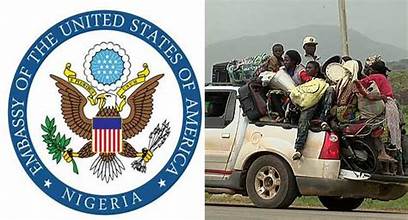
…Diaspora voices call for security reforms; probe of persecution claims
…UK flags six Nigerian states as unsafe for Travel
By Franklin Adole
Nigeria’s worsening insecurity has once again come under global spotlight, as Nigerians living in the United States called on the Federal Government to act decisively to end widespread killings and address allegations of religious persecution. Their plea came amid a fresh and chilling travel advisory issued by the United Kingdom warning its citizens against travel to several Nigerian states due to escalating violence, terrorism, and kidnappings.
The UK’s Foreign, Commonwealth and Development Office (FCDO), in its latest Foreign Travel Advice published on GOV.UK, declared that “insecurity is increasing across Nigeria,” adding that “kidnapping, violent crime, and intercommunal violence occur throughout all regions of the country.” The advisory urged British nationals to “exercise extreme caution,” review safety procedures, and ensure contingency plans are in place.
Specifically, the FCDO warned against all travel to Borno, Yobe, Adamawa, Gombe, Katsina, and Zamfara States, citing “a high and increasing threat from Boko Haram and Islamic State West Africa Province.” The advisory also discouraged all but essential travel to parts of the North-West, North-Central, and Niger Delta regions, including Kaduna, Plateau, Taraba, Rivers, and Bayelsa States.
The document painted a grim picture of the country’s security situation, highlighting ongoing terrorist activities, armed banditry, and political unrest. “There are protests in Abuja from time to time, which can turn violent,” it cautioned, urging travellers to avoid demonstrations and large gatherings.
In the South-East and South-South regions, the FCDO said militant and separatist groups remain active, warning that attacks and violent clashes “often occur with the military and other security forces.” The advisory further described violent crimes, from armed robbery to kidnapping, as “common” in the South-West, including Lagos.
The UK warning coincided with fresh outrage among Nigerians in the diaspora, who voiced their frustration over the unending insecurity and what they described as the government’s failure to protect its citizens. Speaking with the News Agency of Nigeria (NAN) in New York, several Nigerians urged the Federal Government to urgently tackle the spate of killings and to respond credibly to allegations of religious persecution raised by former U.S. President Donald Trump.
“It’s not just about Trump, it’s about human lives,” said Agnes Omotoso, a Nigerian resident in the U.S. for over 30 years. “The killings are heartbreaking. The government should stop the bloodshed and investigate any claims of persecution. Nigerians abroad are worried, and so are Americans who see these reports daily.”
Another diaspora Nigerian, Martins Obor, a U.S.-based security expert, described the security situation as “depressing,” urging the government to restore confidence through decisive action. “We’re tired of reading about kidnappings and killings. The government must protect lives before the world begins to impose sanctions,” he warned.
Others echoed similar sentiments, saying that insecurity back home has made life unbearable for ordinary citizens and tarnished Nigeria’s global image. One respondent, who requested anonymity, said even non-Nigerians in the U.S. now “pray for peace in Nigeria,” describing the situation as “a tragedy that has gone on for too long.”
Meanwhile, the Nigerian Supreme Council for Islamic Affairs (NSCIA) has called on the United States to work with Nigeria in combating terrorism rather than using allegations of religious persecution as grounds for confrontation.
Speaking at a press conference in Abuja, Prof. Ishaq Oloyede, Secretary General of the NSCIA, urged Washington to collaborate with Abuja through intelligence sharing and technical assistance. He cautioned against framing Nigeria’s crisis as “a religious war,” stressing that “the real enemies are poverty, climate change, and criminality.”
Oloyede said the re-designation of Nigeria as a “Country of Particular Concern” by the U.S. was politically motivated and undermines efforts to build genuine partnerships. “There is no Christian or Muslim genocide in Nigeria,” he stated. “What we face is a shared national tragedy that requires global cooperation, not political interference.”
He called on President Trump to retract his recent remarks branding Nigeria “a disgraced country” and instead channel U.S. influence toward strengthening Nigeria’s security architecture. “If the aim is to protect Nigerians, then cooperation with our armed forces is the right path,” he said.
The NSCIA further urged the Federal Government to intensify its counterterrorism campaign, protect all citizens irrespective of faith, and expose those exploiting insecurity for political gain. “We must not allow foreign lobbyists to weaponize our pain for propaganda,” Oloyede added.
Foreign relations watchers say that with the UK’s latest advisory and growing concern among Nigerians abroad, pressure is mounting on Abuja to deliver tangible results in restoring safety and rebuilding global confidence in the country’s security framework.
“For many Nigerians both at home and in the diaspora, the message is simple and urgent: end the killings, restore peace, and prove to the world that Nigeria can protect its people,” said Michael Edegbe, an Abuja resident who spoke with KTH Daily yesterday, in reaction to Trump’s threat against Nigeria.
Discover more from Keeping Them Honest
Subscribe to get the latest posts sent to your email.