

…How Ex-President Detailed U.S. Meddling in 2015 Polls to Make Buhari President
…Book Presentation Was in 2018, Not For Today — Source
By Franklin Adole
As former U.S. President Donald Trump renews his vow to “protect Christians in Nigeria” from what he calls “genocidal violence by radical Islamist groups,” attention has turned to a strikingly similar but less principled episode of American involvement in Nigeria’s affairs: the Obama administration’s open interference in the 2015 elections that brought Muhammadu Buhari to power.
Trump’s declaration, though controversial in diplomatic circles, has been welcomed in many Christian communities across Nigeria’s Middle Belt and northern regions, where thousands have been killed or displaced by Islamist insurgents and armed herdsmen in recent years. For many, his tough rhetoric represents the first time a major Western leader has publicly acknowledged the religious dimension of Nigeria’s security crisis, one that successive administrations in Washington, London, and elsewhere have been reluctant to confront head-on.
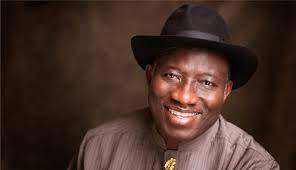
But as Trump speaks out, former Nigerian President Goodluck Jonathan’s 2018 revelation of U.S. interference in his 2015 reelection bid has resurfaced, casting the Obama administration’s foreign policy in a harsh new light. In his memoir, My Transition Hours, Jonathan accused Obama and his Secretary of State, John Kerry, of taking sides in Nigeria’s elections and deliberately undermining his government.
“On March 23, 2015, President Obama himself took the unusual step of releasing a video message directly to Nigerians, all but telling them how to vote,” Jonathan wrote. “He urged Nigerians to open the ‘next chapter’ by their votes. Those who understood subliminal language knew he was prodding the electorate to vote for the opposition.”
Jonathan described the message as condescending and intrusive, arguing that Obama behaved “as if Nigerians could not decide their own future without American direction.” He also accused Washington of withholding military support against Boko Haram at a time when large parts of the North-East were under terrorist occupation.
“How could they have expected us to conduct elections when Boko Haram controlled parts of the North East and were killing Nigerians?” Jonathan asked. “Not even the assurance of a May 29 handover date could calm them down. The Nigerian Constitution is clear—no President can extend his tenure by one day.”
Obama’s pressure on the Jonathan administration was widely seen as decisive in Buhari’s victory, a moment many now view as deeply pivotal in Nigeria’s descent into its current economic and security troubles. Critics argue that Washington’s self-styled “democracy promotion” too often masks covert regime-change operations, as seen in Libya in 2011, where Obama’s NATO campaign toppled Muammar Gaddafi and left the country in chaos.
Observers note that Trump’s approach, by contrast, appears to be more transparent and issue-driven. Rather than seeking to pick winners and losers in Nigerian politics, he has framed his concern around religious freedom and human rights, a stance that resonates deeply among Nigeria’s embattled Christians, especially north of the River Niger. His administration has repeatedly denounced the killing of Christians in Africa and the Middle East, and under his presidency, the U.S. State Department blacklisted Nigeria for religious persecution, a designation later removed under President Biden.
Observers note that while Obama and Kerry sought to shape Nigeria’s politics through diplomatic manipulation, Trump’s focus is on protecting vulnerable populations and demanding accountability for atrocities that the Nigerian state has apparently failed to stop. His message, supporters argue, is by contrast a call to defend the persecuted when local and international systems fail them.
Still, some analysts warn that any talk of U.S. military intervention must be handled with caution to avoid infringing on Nigeria’s sovereignty. They note, however, that Trump’s language may be intended more as a deterrent and moral wake-up call than an actual invasion plan.
Meanwhile, sources close to Jonathan confirmed that the excerpts currently circulating online are from his 2018 book launch, not a new statement. Yet the timing of their reemergence, just as Trump raises alarm over violence against Christians, has sparked renewed debate about America’s contrasting postures toward Nigeria: Obama’s quiet interference versus Trump’s outspoken advocacy.
Discover more from Keeping Them Honest
Subscribe to get the latest posts sent to your email.