

By John Paul
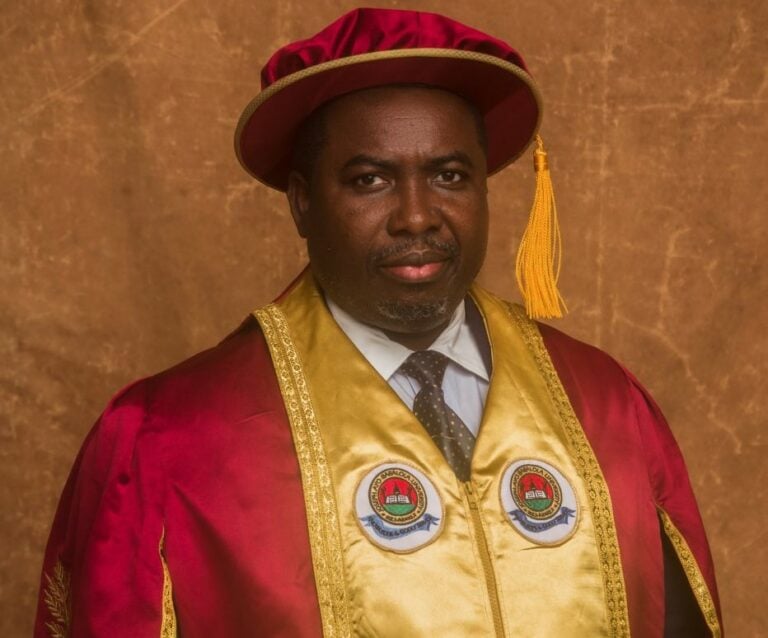
As Nigeria’s new electoral chief, Prof. Joash Amupitan, resumes duties today, Nigerian senators have called for a major overhaul of the country’s electoral laws, proposing that the Independent National Electoral Commission (INEC) should bear the burden of proof in election disputes. This, according to them, is aimed at reducing the avalanche of post-election litigations that trail every electoral cycle.
The lawmakers made the call on Wednesday during the resumed debate on a bill seeking to repeal the Electoral Act No. 13 of 2022 and enact a new Electoral Bill 2025 to regulate the conduct of federal, state, and area council elections.
The debate, previously suspended on October 16 to allow wider consultations, resumed with senators across party lines urging a stronger legal framework that would make INEC directly accountable for the credibility of its elections.
Senate President Godswill Akpabio led the charge, insisting that INEC must be held responsible for the elections it conducts.
“The burden of proof lies with INEC. The commission should be able to show that every election it conducted was in line with the law,” Akpabio said.
He added that since INEC controls logistics, materials, and the entire process, it should be capable of validating outcomes in any post-election challenge.
Corroborating Akpabio, Sen. Seriake Dickson (PDP–Bayelsa) said litigants should no longer shoulder the heavy financial and procedural burden of proving election irregularities, stressing that INEC must carry that responsibility. He also advocated improved technology such as the BVAS and increased funding for the commission.
Sen. Lere Oyewumi (PDP–Osun) called for stiffer penalties for electoral offenders to deter future violations, while Sen. Mohammed Monguno (APC–Borno) urged tighter regulation of party primaries and campaign spending to curb vote-buying.
Sen. Garba Maidoki (APC–Kebbi) pushed for the inclusion of Nigerians in the diaspora in the voting process, citing their vital contributions to the economy through remittances. Similarly, Sen. Adamu Aliero (APC–Kebbi) pressed for the removal of inconsistencies in the Act and advocated enhanced use of BVAS to ensure transparency.
“Let’s improve BVAS so that it announces results instantly,” Aliero said.
Other senators, including Orji Uzor Kalu (APC–Abia) and Ali Ndume (APC–Borno), supported deeper technological integration in Nigeria’s electoral process.
The bill passed second reading and was referred to the Senate Committee on INEC for further legislative work.
Meanwhile, at a separate event in Abuja, political stakeholders urged the newly appointed INEC Chairman, Prof. Amupitan, to consolidate on the institutional and technological gains achieved under Prof. Mahmood Yakubu.
Speaking at a colloquium organised by the Centre for Transparency Advocacy (CTA) themed “Strengthening Nigeria’s Democracy: Reflections on a Decade of INEC Leadership”, scholars and civil society leaders praised Yakubu’s tenure for ushering in a new era of digital transparency and institutional stability.
Keynote speaker Prof. Emmanuel Aiyede noted that INEC under Yakubu delivered unprecedented reforms, including the Bimodal Voter Accreditation System (BVAS) and the INEC Result Viewing Portal (IReV). He urged the commission’s new leadership to evolve technology “from election-day tools to instruments of long-term democratic planning,” and to continue professionalising its human capital.
“Machines can authenticate fingerprints, but only human integrity can authenticate elections,” Aiyede said.
Faith Nwadishi, Executive Director of CTA, hailed Yakubu’s reforms in logistics, technology, and stakeholder engagement, saying they reduced electoral fraud and identity theft while improving public trust. She urged Amupitan to deepen these gains by improving security collaboration, staff welfare, and inclusivity.
Former INEC Resident Electoral Commissioner Dr. Emeka Ononamadu also commended Yakubu’s courage in testing the constitutional recall process for elected representatives, notably in the cases of Sen. Dino Melaye and Sen. Natasha Akpoti-Uduaghan.
“Yakubu had the temerity to test the law on recall. Many before him didn’t,” Ononamadu remarked.
With both lawmakers and stakeholders pushing for reforms, the consensus is clear: the next phase of Nigeria’s democratic evolution must shift from legal battles to electoral accountability, with INEC taking full ownership of the process it oversees.
Discover more from Keeping Them Honest
Subscribe to get the latest posts sent to your email.